Chinese Vice President Han Zheng met with UK Foreign Secretary Yvette Cooper in Beijing on Tuesday.
The two countries' leaders agreed in January to develop a long-term and consistent comprehensive strategic partnership between China and the UK, opening a new chapter of bilateral relations, Han said.
Noting that improving bilateral ties serves the interests of the people of both countries, Han said both sides should jointly shoulder the responsibilities of major countries, strengthen strategic communication, consolidate the positive momentum of bilateral relations, explore new opportunities, and boost people-to-people exchanges.
He called on both sides to work together to practice true multilateralism, jointly advance global governance reform, and bring greater stability and certainty to the world.
Cooper said the UK and China share broad common interests and cooperation potential in areas such as trade and investment, artificial intelligence, green development and addressing climate change.
The UK is ready to work with China to implement the important consensus reached between the leaders of the two countries, engage in constructive dialogue and cooperation, and jointly address challenges, Cooper said.
An international research team led by Chinese scientists at the National Astronomical Observatories of the Chinese Academy of Sciences (NAOC) recently unveiled the first batch of findings of the largest-ever cosmological simulation ever performed, codenamed "HyperMillennium." Its achievements have been hailed by international peers as a "computational marvel."
It also marks an important milestone: China has truly begun to move to the forefront of digital simulation worldwide, project member Wang Qiao, a research fellow at the NAOC, told the Global Times in an exclusive interview. The achievements of the project mark a major leap for China's cosmological numerical simulations — from long-term reliance on foreign computing resources to conducting frontier research based on domestically developed independent systems, Global Times has learned.
The project uses PhotoNs, software independently developed by the NAOC team, and runs on domestic supercomputers. Over more than a decade, the team has continuously worked on algorithms, programming and optimization, eventually achieving long-duration computing capability using tens of thousands of accelerator cards at a domestic supercomputing center.
"In the past, the common approach was to import ready-made code from abroad, cooperate with domestic computing centers, pay for computing time and then finish the task. But this time is completely different — from the design of the scientific project and software development to deep integration with domestic hardware, everything was built independently from scratch. It can be said that this is a fully domestic, end-to-end solution, and one that has achieved a leading position in this field. It carries clear landmark significance," Wang said.
China's leading supercomputer manufacturer Dawning Information Industry Co. Ltd., or Sugon, has provided key computing and storage support for the project. During the project's long-cycle, high-intensity operation, it offered stable and reliable support for the continuous calculation of gravitational evolution involving ultra-large-scale dark matter particles. In the face of the PB-level massive data generated by the simulation, Sugon's storage system also enabled efficient data reading, writing and processing, as well as long-term secure preservation.
Wang also explained to the Global Times that conducting frontier research for the entire HyperMillennium project on domestically developed independent systems offers another key advantage. "Only by leading the project ourselves can we control its future direction," Wang said.
"Next, we plan to incorporate more physical processes into the simulations, such as adding more gas or magnetic fields. This will make the model more complex and require additional computing power. Now that we have established the current framework, we can build on it to further enrich the content and more self-consistently carry out the full-process simulation from dark matter to luminous galaxies. This is very important," Wang said.
According to a press release provided by the NAOC, the simulation covers a cube with a side length of 12 billion light-years and uses 4.2 trillion virtual dark matter particles. By applying a technique called N-body numerical simulation, the team accurately recreated how large-scale structures in the universe evolved over 10 billion years. In simple terms, they built a virtual universe inside a supercomputer, starting from just after the Big Bang and following the force of gravity step by step, read the release.
This provides theoretical support for research into dark matter and dark energy, and also offers strong support for new-generation galaxy survey programs, such as China Space Station Telescope and the European Space Agency's Euclid mission, according to the NAOC.
We are entering an era where surveys of enormous cosmological volumes have the potential to revolutionize our understanding of dark energy, cosmological inflation, and the properties of neutrinos, said Mike Boylan-Kolchin of the University of Texas at Austin, the US. The professor hailed the simulation a "computational marvel."
"For this to happen, we need advanced theoretical tools, and the HyperMillennium Simulation is a computational marvel that will help unlock fundamental physics from observations of the cosmos. It has an unprecedented range of volume and mass resolution, enabling detailed predictions about how huge numbers of relatively common galaxies are distributed across the cosmic web and the properties of inherently rare and interesting objects that are inaccessible with smaller volumes. The HyperMillennium Simulation will be a touchstone for the galaxy formation and cosmology communities for years to come," the professor said.
"The HyperMillennium simulation redefines what is nowadays possible in numerical cosmology. I am extremely impressed that the team could realize this incredibly large and highly accurate simulation. Its enormous statistical power allows us to carry out new precision test of the LambdaCDM cosmological model, something that is very important for the field," said Volker Springel, the director of the Max Planck Institute for Astrophysics in Germany.
By comparing a high-precision virtual universe with real-world observations, the HyperMillennium project provides important support for research into fundamental cosmological questions such as dark matter and dark energy, while deepening understanding of the laws governing galaxy evolution. At the same time, its simulation data will offer important scientific support for major sky survey projects, including the China Space Station Telescope, and the European Space Agency's Euclid space telescope, Wang explained.
"Although cosmological simulations may sound highly sophisticated and far from everyday life, they are in fact closely connected to the public," Wang explained. While the results of numerical simulations are essentially abstract data, they can be transformed through visualization into smooth, cinematic and visually striking images. These images can vividly show the history of cosmic evolution, large-scale structures and the formation of important celestial bodies, presenting a complete history of the universe, he said.
According to Wang, leveraging this capability, the Qianyan project has already partnered with the Beijing Planetarium, the Shanghai Astronomy Museum, several other science and technology museums, as well as institutions such as the China Academy of Art, to convert data into films, images and artistic creations for science popularization.
This approach can present the appearance of the universe to the public in a direct and credible way — supported by real data while also carrying artistic appeal. Therefore, it has positive significance in terms of both science communication and cultural outreach, he added.
On an ordinary afternoon, 26-year-old robotics professional Lin Xiaoyu finished her morning remote meetings and stepped out of her room in a nursing home in Foshan, South China's Guangdong Province. She headed straight to the third-floor communal activity room.
Lin is not there as a visitor, but a full-time resident. In exchange for 30 hours of volunteer service each month, she enjoys accommodation at just 1,000 yuan ($147) per month for one bedroom with bathroom, far below market rates.
Her experience is not unique. On Chinese social platforms such as Xiaohongshu and Douban, "moving into a nursing home" has become a popular lifestyle topic among young people. In late 2025, an East China's Zhejiang Province netizen, 27, posted about moving into a nursing home with her grandmother, garnering over 100,000 likes and sparking widespread attention. She revealed her monthly accommodation cost was only 1,500 yuan.
Recognizing the complementary needs of seniors and youth, nursing institutions in multiple Chinese cities have begun piloting programs open to young people. Through volunteering-for-housing or discounted rent models, they are exploring a new community form known as "youth-elder co-living."
Xinhua Daily reported on May 23 that several cities in East China's Jiangsu Province have launched such programs, allowing young people to live at low or no cost in nursing homes by providing at least 20 hours of volunteer service per month.
A member of the Standing Committee of CPPCC Shanghai Committee proposed earlier in 2026 to pilot an "intergenerational co-living" model in Shanghai's nursing institutions, according to the Shanghai Observer.
Yang Tuan, a researcher at the Chinese Academy of Social Sciences' Social Policy Research Center, described "youth-elder co-living" as both an exploratory attempt by the elderly care industry to optimize resource allocation and upgrade its operations, and a grassroots innovation addressing deeper social issues such as population aging, urban youth loneliness and emotional well-being.
It seeks to reconstruct a micro-social ecosystem of neighborhood mutual assistance and intergenerational integration non-affiliated with blood relations. Its success hinges on a balance between policy guidance, the emotional needs of generations, and market logic, Yang told the Global Times. New models for nursing homes
In parts of Lishui, Zhejiang, nursing homes are no longer seen solely as places for seniors to spend their later years.
Since February 2024, the Jinyun County Civil Affairs Bureau, in collaboration with local nursing homes, has launched a companionship-based elderly care service. Several designated homes now offer housing to young and middle-aged people aged 18 to 45 at a monthly rent of 1,000 yuan, reported CCTV News.
Li Min (pseudonym), head of a Jinyun county nursing home, told reporters that since the project launched, the facility has become a shared home for dozens of young people and dozens of elderly residents.
From morning till evening, she sees young residents accompanying seniors for walks in the courtyard, teaching them how to make video calls on smartphones, sharing workplace stories or simply chatting. The cafeteria is filled with the aroma of food and the sound of laughter.
"Young people need stable, affordable housing, while they bring fresh knowledge, information, sharp minds and youthful energy - exactly what most seniors who crave social participation and fear loneliness need," Li told the Global Times.
Yang noted that this innovative approach helps alleviate the operational pressure caused by underutilized resources in nursing institutions.
Data from China's Ministry of Civil Affairs shows that in 2024, the average occupancy rate of nursing homes nationwide was below 50 percent, with some regions seeing vacancy rates exceeding 60 percent, as per the China City News in October 2025.
At the same time, demand for elderly care services has grown rapidly. By the end of 2025, China's population aged 60 and above had exceeded 320 million, an increase of 16.49 million from the previous year. It is projected to surpass 400 million by around 2035, reported the Minsheng Weekly on March 30.
Young residents directly improve resource utilization and supplement operating funds, Yang explained. "They also reduce the need to hire additional caregivers, adding fresh caregiving capacity. This gives nursing homes a valuable buffer period to develop service models that better match the real needs and payment ability of the elderly, ultimately attracting more seniors through upgraded offerings."
Intergenerational win-win
Beyond the economic motivations of nursing institutions, the pilot programs for intergenerational integration reflect a mutual pursuit between the younger and older generations.
Lin told the Global Times that her decision to live in a nursing home was driven by both practical and emotional needs.
"Living with the elderly has eased my sense of loneliness from leaving home," she said. "The seniors here are like my own grandparents. They gave me homemade snacks and tell stories from their youth, a warmth you can't get in an ordinary rental apartment."
Among young people who have participated in intergenerational co-living projects, 86 percent reported "enhanced sense of social responsibility," and 72 percent said it "improved their interpersonal skills," reported pension service portal linkolder.com in 2025.
In a Foshan nursing apartment, 68-year-old retired teacher Zhang Weiguo, who lives alone, has felt the warmth of intergenerational companionship since young tenants moved in.
"When I first moved in, I mostly sat alone by the window. My children work in other cities and rarely come back to Foshan," Zhang told the Global Times. "Now, young people teach me how to video call my grandchildren on WeChat, help me book medical check-ups online and pull me into handicraft activities."
While cities across China are actively exploring youth-elder co-living, turning these projects into genuine intergenerational mutual assistance communities is no easy task. Li said the biggest challenge is balancing supply-demand matching with service standards.
"We invest considerable effort in interviewing and screening young people who are caring, patient and capable of providing companionship," she explained. "We assess whether they have relevant skills, such as digital literacy, musical or dance talent, or gardening knowledge. Many young people are kind and have potential, but lack direct skills, so we can't accept them."
Li hopes for more policy support and societal backing, such as professional intergenerational communication training or partnerships with universities and companies for volunteer programs, to make the model more sustainable.
Yang emphasized that for the model to develop sustainably rather than becoming cheap rental housing or inexpensive caregiving, it is crucial to deeply understand both sides' needs and achieve genuine value matching. This requires more refined project design and management, clear boundaries between "service" and "companionship," and incentive mechanisms that turn volunteers' time and skills into the emotional comfort and social connection seniors truly need, without replacing professional care.
"Intergenerational mutual assistance builds a true sense of community, helping young people rediscover self-worth and belonging beyond their jobs, while bringing seniors respect and joy through companionship," Yang said. "This exploration is just the beginning. We are just starting to see the prototype of a more diverse, integrated, warm and resilient future community."
Skyscrapers fill the screen. Under the intensive high-rise buildings, Mac Candee and his friend walk on the street. "Today, we have arrived in Shanghai, China." They say, angling the camera to show a view of their surroundings.
Then, there come clips of Western media reporting on China, with some negative tones that overseas audiences have probably been very familiar with. Only seconds later, Candee reappears on the screen: He stands at The Bund in downtown Shanghai, and behind him is the Huangpu River glistening under the clear blue sky.
"We're going to be showing you if what you're told in the media and what you know about China actually match up with what life is like here," Candee says to the camera.
This is a four-hour video about Candee's Shanghai trip that he made after he had stayed in the city for six days.
Candee, a 31-year-old US travel vlogger whose accounts "WorldNomac" have some 2.5 million followers on various social media platforms, is among a surging number of foreign tourists coming to China after the country relaxed its entry policies in recent months.
2024 has become a remarkable year for inbound tourism, since China expanded its 144-hour visa-free transit policy to more countries. In some major transit stops and also tourist destinations, like Beijing, Shanghai, and Chengdu, visitors from different countries and regions carrying travel bags and cameras flood landmarks and popular restaurants in these cities. They have become witnesses of China's prosperous tourism market, and have provided some vivid, individual windows for the world to take a closer look at this big Eastern country.
1st time in China
Months ago, in preparation for his trip to the Philippines, Candee happened to see a YouTube video showing the process of doing a 144-hour transit visa, and learned that visitors from certain countries no longer have to go to an embassy or consulate for a tourist visa to China.
The video inspired Candee to add "China" to his itinerary. "I was like, Oh, I'm actually going to the Philippines. This would be a great time to also at least visit Shanghai and see what China is like," he recalled.
Candee had always wanted to visit China. He told the Global Times that China has always been a very interesting country for him with how massive it is, and how big of a percentage of the world's population is from China. "I wanted to get a small taste of what the culture was like over there," he said.
In his Shanghai trip vlog, Candee showed how he explored many aspects of the metropolis with his friends. They went to Shanghai's iconic places like the Bund, the Oriental Pearl Tower, and Jing'an Temple, and tasted lots of food including sheng jian bao (pan-fried pork bun), hot pot, and a McDonald's restaurant with localized food. They experienced the city's public transport from metro trains to the maglev, and talked to many local residents.
As the first stop for many overseas tourists' trips to China, Shanghai is "a melting pot for multiple cultures" in Candee's eyes. "It's a very beautiful city from the standpoint of there's so much modern architecture, but then you'll see temples built into the city as well, so you get a mix of old times and new times and modern living," he told the Global Times. Candee added that he also encountered lots of similar European architectural styles with a Chinese twist.
A frequent global traveler, Candee said that in Shanghai he didn't encounter massive challenges brought about by cultural differences. Some interesting experiences nonetheless gave him a unique angle to know about Chinese people.
During his stay in Shanghai, Candee went to the "marriage market" in People's Park, a regular matchmaking venue where locals look for spouses for themselves as well as for their adult children.
"I thought that was fascinating, that parents of Chinese people will go and essentially advertise all of their children's qualifications without a photo in order to look for a husband or a wife for them," he recalled.
"This, for me, was a big culture shock to learn about how they do that, and it was really cool to go and experience that."
Candee concluded that he likes Shanghai, as "there's so much to do there."
His love for this city was somewhat reflected in the length of his Shanghai trip video: four hours, the longest ever travel vlog he had ever made.
The length of the vlog seems not to be attractive in today's fast-paced era of hand-held devices. However, the video has attracted more than 200,000 views on YouTube.
"If you are crazy enough to upload a four-hour long vlog, I am crazy enough to watch it all," one commented under the video.
Candee felt great about this vlog.
"A lot of people decided to watch the full length of four hours, which is a large time commitment," he told the Global Times.
"This means the country [China] was very interesting, and [in this vlog] there were a lot of perception=changing moments," he noted. Warming market
More foreigners like Candee coming to China indicates that, after four years since the outbreak of the COVID-19 pandemic, inbound tourism in China has finally entered the fast recovery channel.
The Global Times learned from domestic travel platform Ctrip that the number of inbound tourists to China in the first four months of 2014 (including air and rail travel) has increased by 244 percent compared to the same period in 2023. The top 10 most popular Chinese travel destinations for inbound tourists include Shenzhen, Shanghai, Guangzhou, and Beijing. Inbound tourists mainly come from South Korea, the US, and Singapore, among others.
Inbound tourism has always been an important symbol of China's opening-up to the outside world, Jiang Yiyi, vice president and professor of School of Leisure Sports and Tourism, Beijing Sport University, told the Global Times.
Since 2022, China has taken many measures to further promote China's opening-up level, such as visa facilitation, international flights resumption, and more convenient payment for inbound tourists.
China's tourism industry is also undergoing a transformation. In the past, foreign tourists came to China mainly for sightseeing. Now, through the restructuring of the domestic industry system, China has provided more diversified products for foreign tourists. Foreign tourists can come for vacation, to participate in sports activities or events, such as marathons and skiing.
Tourists from Hong Kong and Macao can conveniently go to provinces around the Greater Bay Area such as Guangdong and Hunan for leisure vacations.
These policies and changes in product systems and industry structures come together and lay a very good foundation for foreign tourists to have more diversified choices, and it is the same with tourists from Hong Kong and Mocao, according to Jiang.
Data from flight tracker Umetrip shows that as of April 5, the number of inbound flights this year has exceeded 86,000, more than three times that of the same period in 2023, and has recovered to about 70 percent of the same period in 2019; the number of inbound tourists has reached 7.7 million, more than three times the increase compared to 2023, New Weekly reported.
As the inbound tourism market gradually heats up, Chinese travel agencies are getting busier receiving tourist inquiries, launching new inbound products, and developing travel routes during the traditional off-season. A shortage of English-speaking guides and lesser-known languages also occurred.
According to New Weekly, the daily salary of foreign language tour guides in various languages has generally increased. Taking the East China market for example, previously, one could hire an English-speaking tour guide for 500-600 yuan ($69-83) per day before the pandemic, but now it may cost 800-900 yuan; for guides of less common languages, taking Indonesian as an example, the fee can reach 1,000 yuan per day.
The COVID-9 pandemic had a significant impact on China's inbound and outbound tourism market, leading to disruptions in the industry chain and talent loss. However, the tourism industry is very resilient. With a good business model and development opportunities, talents will definitely come back, Jiang said.
Differs from Western narrative
So far, foreign nationals from 54 countries are eligible for the 72/144-hour visa free transit policy to transit to a third country or region via ports and cities in the Chinese mainland. China has also expanded its unilateral or mutual visa-free travel policies to more countries.
Following the new policies is a dramatic increase in the number of overseas vloggers visiting China. According to data by statistics platform Meltwater, during the first quarter of 2024, there were about 2,420 YouTube and TikTok videos containing key words like "China," "trip," and "travel" in their titles, five times higher than the same period in 2023.
With more global visitors uploading online their China trip videos with key words like "China is so safe," and "Riding with world's fastest bullet train," overseas audiences find that through these videos, they see a real, fast-developing China that differs from the one under the mainstream narrative in the West.
"I have friends who came to visit China 20 years ago, and they thought China is still the same as 20 years ago because they trust the media 100 percent," a YouTube user commented under a video of vlogger Alina Mcleod's trip to Southwest China's Chongqing.
"I have been to China so many times," the user wrote. "If you have not been to the same cities for 10 years, you will see there are big changes."
Mcleod, the 33-year-old Canadian travel vlogger with some 300,000 subscribers on YouTube, said that her recent trip to China had definitely changed her perception of the country.
"In North America there is a lot of negative press around China," Mcleod told the Global Times via email. But now after exploring the country in person, she feels that China is quite modern and beautiful.
"I was very impressed with how much technology and infrastructure they have built in the last few decades, and what a wide range there is of things to see and do in the country," she said.
Inbound tourism is a very good window for overseas tourists to "enter" China, get to know China and understand China, because only through this kind of close contact can foreigners know what the real China is like. If they know China only from reports in foreign media, then their understanding of China may be one-sided or fragmentary. Only after truly coming to China and seeing China's development with their own eyes can they truly see China's current achievements in all aspects, Jiang noted.
Candee talked about a major misconception that some Westerners may have on China.
"I think that around the world, a lot of people feel that if you visit China, you'll be under extreme surveillance and you'll be, you know, getting in trouble for filming," he said. "But my experience in Shanghai was that it was a lot less strict than I had imagined," he told the Global Times. "I filmed a lot. People were really friendly. I think overall everyone was welcoming and happy to welcome foreigners."
With beautiful memories of his previous trip to Shanghai, Candee said he wants to visit China again in the near future, and would love to have a local who shares more places with him.
"Hopefully that'll be within the next 12 months," he said.
At the end of Candee's four-hour Shanghai trip vlog, he walks along the Huangpu River under the clear blue sky, and smiles to the camera.
"In every country I've been to, especially ones that have intense perceptions about them, I've always found a completely different atmosphere than what the mainstream will share." he says. "For those of you who have made this so far into the video, you probably are seeing a different look at what China is like."
China Association of Science and Technology System Reform and research fellow with China Science Center of International Eurasian Academy of Sciences reviewed the development experience of China's economy over the past 40 years and proposed three opinions based on the current situation in China.
Liu Quanhong, director of Industrial Economics and Technical Economics Institute of Chinese Academy of Macroeconomic Research, said that in order to develop new quality productive forces, it is necessary to innovate the industrial development model comprehensively.
Peng Juan, chairperson of Women's Federation in Changsha, Central China's Hunan Province told the Global Times that the development of new quality productive forces cannot be achieved without the strength of women. According to Peng, the proportion of female talents in Changsha is now at 51.34 percent, and female scientific and technological workers account for 35 percent, and the net inflow rate of middle- and high-end talents to Changsha ranks among the top three in the country.
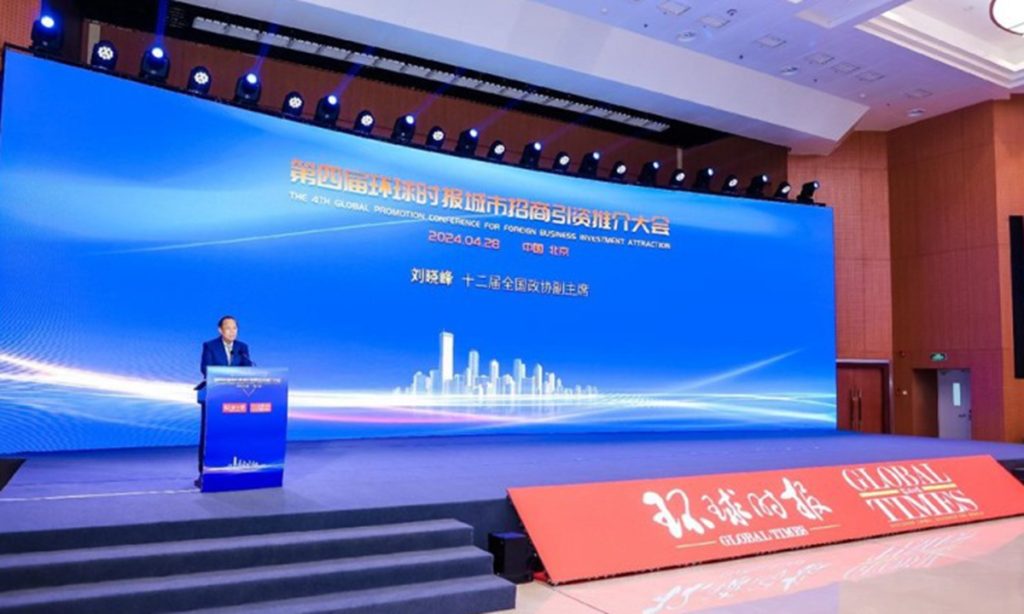
Representatives from various cities across China also discussed their economic strength, resources, and investment promotion policies, and efforts to create a favorable business environment and achieve high-quality urban development. Cities such as Huaihua in Hunan Province, Jinan and Qingdao in East China's Shandong Province, Shishi in East China's Fujian Province, highlighted their strategic industries and development goals, inviting domestic and international investors to explore opportunities in their regions.
Suzhou Industrial Park, Lanzhou New Area, Gongshu district of Hangzhou, and Huadu district of Guangzhou also conducted investment promotion events during the conference.
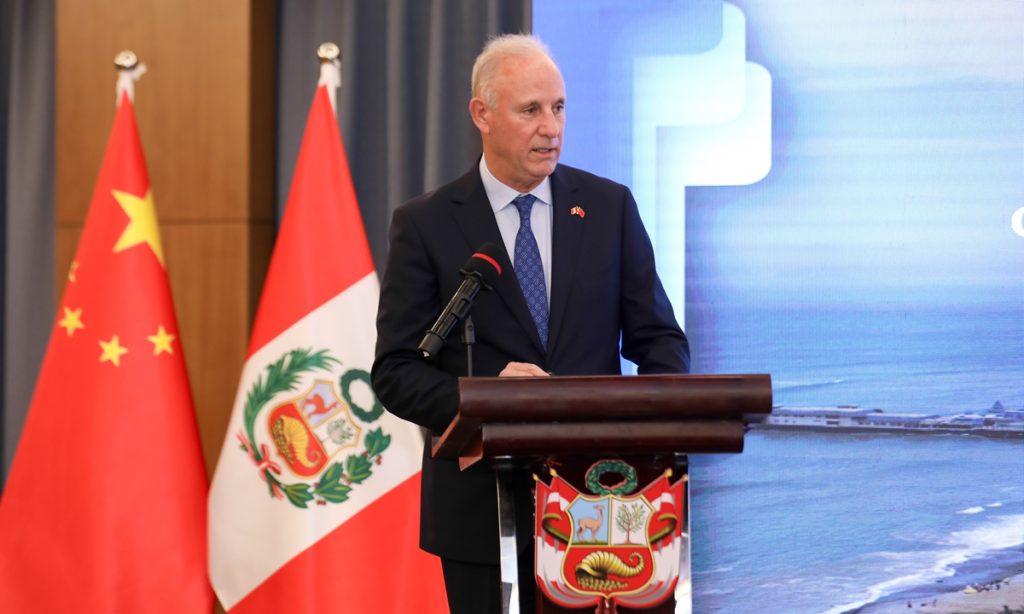
Peru and China are pursuing green transformation and high-quality development. In this regard, there are many opportunities for enhanced collaboration in the green economy, Peruvian Foreign Minister Javier González-Olaechea Franco told the Global Times in an exclusive interview.
The remarks came after his official visit to China from April 28 to 30 - his first visit to the country since he took office - with the clear objective of addressing with the Chinese government the challenges world peace faces. He also dealt with a wide variety of topics related to cooperation and investment in a significant number of priority sectors for Peru and of interest to China, the foreign minister said.
While speaking about the need for cooperation in the green sector, González-Olaechea responded to some "overcapacity" fallacies targeting China's new-energy vehicle (NEV) industry.
Chinese NEVs are setting trends that lead to the green transformation of Latin American countries. Regional countries such as Peru, Chile and Brazil have been among the top destination markets for Chinese NEVs.
During a meeting between Chinese Foreign Minister Wang Yi and González-Olaechea in Beijing, the two sides agreed to deepen cooperation in fields such as green development, in addition to other sectors including infrastructure construction, the digital economy and health, the Xinhua News Agency reported.
The Peruvian foreign minister also highlighted Peru's keen interest in Chinese NEVs. He told the Global Times that the reason for this interest is "quite simple."
Chinese NEVs have become a popular choice for many developing countries because of their cost-effectiveness and environmental friendliness, González-Olaechea said.
Responding to the "overcapacity" rhetoric, the Peruvian foreign minister said that "evidence shows that, despite the rapid growth of Chinese electric vehicle exports, there remains a consistent global demand that far exceeds current production capacity. Reality and potential must drive our decisions."
"In addition, let us remember that there is a consensus on climate change and the urgent need to triple renewable energy capacity by 2030," González-Olaechea said, adding that Peru commits its words and its policy to this global goal for the benefit of humanity.
China has been Peru's largest trading partner for nine consecutive years, and Peru is China's second-largest investment destination and fourth-largest trading partner in Latin America.
In the first quarter, bilateral trade between China and Peru reached 70.97 billion yuan ($9.82 billion), a year-on-year increase of 14.3 percent, with both imports and exports expanding, according to the data from China's General Administration of Customs.
In addition to traditional sectors, new energy offers potential for cooperation in sectors where both sides can further tap into the market for win-win outcomes, Chinese experts said.
Many developing countries in Latin America, including Peru, are embracing green development to a significant extent, comparable to many developed countries worldwide, Wang Youming, director of the Institute of Developing Countries at the China Institute of International Studies in Beijing, told the Global Times on Wednesday.
The demand for green transformation in the region aligns with the advantages that Chinese companies offer, not only in the NEV industry but also in the solar and wind power sectors, Wang said.
As Chinese companies expand their global presence with competitive products, Latin American countries could enhance their industry upgrades by deepening cooperation with Chinese investors in the new-energy sector, Wang said, noting that this collaboration could also reduce regional countries' heavy reliance on exporting raw materials for economic development.
The end of the year and the start of a new one is a time for reflection and anticipation. Throughout 2023, the Chinese society has undergone various developments and changes, which manifests the exploration and practice of the Chinese path to modernization.
In light of this, the Global Times is launching a series that elaborates on this unique path through the stories of ordinary people's New Year's wishes. These wishes serve as a window to the changes and achievements of Chinese society as Chinese modernization has brought Chinese people more concrete consensus, a more vibrant countryside, more imaginative innovation, more balanced education, a more dignified old age with stronger security, and a more confident civilization. This shows that Chinese modernization is the prerequisite and driving force for the great rejuvenation of the Chinese nation.
This is the second installment in the "Wish List" series, telling the story of a soccer player from the Village Super League in Southwest China's Guizhou Province who has realized his dreams through sports over the year and witnessed the tremendous changes in his hometown. As 2024 approaches, he makes a wish to score more goals with his teammates and lift the championship trophy. If possible, he also dreams of competing with world-class soccer stars. His wish portrays a more vibrant countryside brought about by Chinese modernization. As the year ends, Dong Yongheng busies himself with the year's final to-do list.
Media line up to interview him, eager to hear a rundown of the last year from the Village Super League top scorer; after being hired as a soccer consultant for local primary and secondary schools, he has assumed the role of instructor, teaching students about soccer in a weekly class; his family's rice starch roll diner is booming, and equally demands his attention… At the beginning of the year, Dong didn't imagine such an eventful life.
Back to the end of July, on a sultry night, the open-air sports stadium in Rongjiang county, Qiandongnan Miao and Dong Autonomous Prefecture of Guizhou was transformed into a spectacular carnival site. Crowds surged, drums roared, and locals dressed in splendid ethnic attire, singing and dancing. Tens of thousands of spectators arrived, eagerly anticipating the birth of the first Village Super League champion.
As the leader of the "Loyalty" team, Dong and his teammates - friends with whom he has played street soccer for years - emerged under the pitch floodlights. For two months prior, they had been striving toward this very goal.
An opening goal, an equalizer, a comeback, a buzzer-beater… no winner emerged from the 90-minute match. In the penalty shootout round, the "Loyalty" team narrowly lost.
After failing to lift the championship trophy with his teammates, Dong felt a sense of regret. "The ball is round," he consoled himself with the famous words of Sepp Herberger, the former West Germany national team coach who created the "Miracle of Bern."
Soon after, however, he was happily lifting the tournament's top scorer prize - several Rongjiang small fragrant chickens - and was overcome by the joy of soccer.
That match became the most memorable moment of 2023 for him.
Dong recalled that at the beginning of the Village Super League competition, only team cheerleaders would be present at the stadium, but as the competition's popularity grew through social media and celebrity visits, the fame of the Village Super League also increased. "One afternoon, as I drove past a bridge near the stadium, I found the whole place filled with spectators."
"I realized that our Village Super League had really shot to fame, which was unbelievable," he told the Global Times.
Dong started playing soccer during the 2002 Korea-Japan World Cup. Never having received professional soccer training, he has always been a street soccer kid. At the beginning of the Village Super League competition, he just wanted to participate as part of a fitness kick.
As the event gained more attention, he began to build team stamina by reviewing past game footage, and studying opponents' weaknesses. "As a soccer enthusiast, I can show my skills and keep fit; and for Rongjiang, we have really made a name for ourselves," he said.
After a year of "craziness," Dong feels his life has become more fulfilling. "Before, life might have been just about daily necessities, but through the Village Super League, I began to pursue my passion. My life has become more colorful," he said.
Dong still runs his rice starch roll diner. He is personally overseeing everything from the rice wrapping to the filling and the cooking of the establishment's offerings.
"Making rice starch rolls is a very tedious task, similar to challenges in soccer, but once you get through them, you will be pleasantly surprised," he said.
Dong's carefully made rice noodles have received high praise from customers and he was even crowned the "Rice Starch Roll King" of Rongjiang in 2022. Becoming a top scorer in the Village Super League made his shop even more popular, selling out every day by 10 am.
"I am the best soccer player among those who wrap rice starch rolls, and the best at wrapping rice starch rolls among soccer players," he laughed.
When asked about his dream in soccer, Dong said: "I want inspire young people to persist and not give up in the face of difficulties with my personal experience. If I have the chance, I want to compete with my idol Messi."
And his goal for the New Year is clear - to win the Village Super League championship alongside his teammates. A colorful fest
The Village Super League, or "Cun Chao," was created by the locals and primarily features village players in Rongjiang. Since its inception in May, it has rapidly gained popularity online, attracting numerous soccer tourists. It has brought joy to the villagers and spectators, and boosted the local economy, allowing the world to recognize the colorful culture of Rongjiang and Guizhou, and showcasing the happiness of Chinese rural life.
Match venues are regularly packed, with tens of thousands of spectators per game, sometimes exceeding 50,000 fans at peak times. The event has enjoyed sustained online popularity, with over a hundred related topics on Douyin alone, garnering over 5 billion views.
Notable figures, including Chinese soccer commentator Han Qiaosheng, Foreign Ministry spokesperson Hua Chunying, and British football legend Michael Owen, have all praised the event on their social media accounts, showing its immense influence and widespread appeal.
A Yahoo Finance article stated that the Village Super League is a passion that transcends sports. The simple times are history; villagers no longer worry about affording food or clothing. They have more confidence in their lives and strive for better things. The Village Super League showcases the vitality of rural life and people's hopes for the future.
Similarly, An Asia International News article mentioned that this rural soccer event has awakened a sleepy Chinese county amid a tourism boom. The surge in tourists has been a boon for Rongjiang's economy, with visitors flocking to rural areas, purchasing local delicacies, staying in villagers' homes for a fee, and engaging with local ethnic minorities to learn about their respective cultures.
The success of the Village Super League goes beyond the soccer field. During the event, the area around the field becomes a stage for cultural display, allowing spectators to enjoy not only exciting soccer matches but also local ethnic minority cultures. Vibrant ethnic costumes, melodious music, and enthusiastic dances all showcase the area's rich cultural heritage. Moreover, local specialties have found a great platform for display and sale during the event.
The Village Super League has helped locals create new income sources, bolstering the local economy and promoting rural tourism and cultural industries. During the 2023 Dragon Boat Festival in June alone, Rongjiang, a small county with a population of just 385,000, welcomed 358,900 visitors, a 345.84 percent increase compared to 2022, generating a total tourism revenue of 444 million yuan ($62.2 million).
The success of the Village Super League reflects the stability and development of the nation. In November 2020, Rongjiang county, as one of the last nine counties to be removed from the poverty list in Guizhou, marked a significant milestone. The unprecedented poverty alleviation campaign has helped Guizhou shed its old label and leap forward by centuries. According to the Xinhua News Agency, since the 18th CPC National Congress in 2012, Guizhou has lifted 9.23 million people out of poverty at a rate of over 1 million people annually, the highest number in China.
The report to the 20th CPC National Congress also highlights the comprehensive promotion of rural revitalization, calling for coordinated rural infrastructure and public service layout to build livable and business-friendly beautiful villages. In recent years, culture, sports, and technology have continuously empowered rural revitalization, increasing people's happiness and creating a more vibrant rural atmosphere in China.
Dong feels deeply about the changes in his hometown. "When I was in college, it took over 8 hours to travel from Rongjiang to Guiyang, the capital of Guizhou. Now, with highways and high-speed rail, it only takes a little over an hour."
"It is only because the country is prosperous and the hometown has shaken off poverty that we have enough time to participate in such competitions and have such enthusiasm and unity. The success of the Village Super League is the result of everyone's joint efforts," he said.
According to Dong, the new season of the Village Super League will kick off in January 2024 and last until about May, "to avoid clashing with major sports events like the European Championship held in the summer." Rongjiang will also host an invitation tournament in the second half of the year. He heard that teams from countries participating in the Belt and Road Initiative (BRI) will also come to compete.
The Premier League of England has already taken action. In late November, a delegation from the Premier League, led by senior international advisor Graham Robinson, conducted a cooperation survey in Rongjiang county. They subsequently signed a strategic cooperation memorandum with the Village Super League management center to aid the sustainable and healthy development of Chinese soccer. In mid-December, the first training session organized by the Premier League commenced in Rongjiang, where 44 soccer players, referees, and coaches from the Village Super League learned about training techniques and coaching philosophies. Showing vitality to world
The Village Super League is just one of many examples that showcase the vitality of rural China.
This spring, a young model from the rural area of South China's Guangxi Zhuang Autonomous Region took Paris Fashion Week by storm.
Lu Xianren, born in 1999 in Hengxian county, Guangxi, stood out with his meticulously tailored black suit, pristine white trousers, and unique hairstyle.
Unlike traditional models, Lu's journey began on a country road in Guangxi. In 2019, he left his job in Guangdong and returned to Guangxi with dreams of making short videos. His fashion creations, made entirely by hand using materials from woven bags to old lampshades, leaves, and branches, revealed his unique fashion sense.
In the vast fields, Lu Xianren showcased the "mod" of China's countryside to the world. In a recent interview, he said that as a new face on the international runway circuit, he represents a new force, a driving power, and new opportunities.
The growing popularity of short video content creators has thrust the likes of Lu Xianren to the fore, introducing a vibrant and colorful rural world that is not only rich but also culturally diverse to the international stage. In recent years, with the acceleration of rural revitalization, a new generation of young people's innovative ideas has flocked to the countryside, injecting fresh energy and vitality into rural development. Their new ideas and technologies have further boosted the momentum of rural revitalization.
The Global Times learned from the China Agricultural University that the school established its first "science and technology backyard" in Quzhou county, North China's Hebei Province, in 2009, and the project has expanded nationwide, seeing the establishment of 139 courtyards across 91 counties in 24 provinces. These have not only solved practical agricultural problems but also cultivated a group of idealistic and capable agricultural science and technology talents.
In Xihuai village, Tongzhou district, in the suburbs of Beijing, a new variety of ice cream-flavored radish was introduced through the "science and technology backyard," enhancing the market competitiveness of local agricultural products. Students also teach farmers how to use online platforms to sell products, opening up new channels of income.
In Gusheng village, Dali of Southwest China's Yunnan Province, the focus was on the environmental protection of Erhai Lake and green agriculture. Students worked daily with villagers to test water quality and explore sustainable development models.
Hao Jiaxuan, a graduate student from the China Agricultural University stationed in Gusheng village, shared with the Global Times that initially, it was not easy to join the villagers' tables. However, through continuous communication, they became friends.
Hao and his team have provided the locals with healthier and more environmentally friendly dietary suggestions related to Erhai Lake. The "science and technology backyard" there also organized various training programs according to the actual needs of the villagers, including water saving, hydration and nutrition knowledge popularization, and waste management.
The influence of the "science and technology backyard" has crossed national borders and extended to international cooperation projects. A student from Burkina Faso who studied at the Sino-African Science and Technology Courtyard in Quzhou county, Hebei Province, for example, learned the entire process of growing grains, from seed selection to plowing and fertilizing. After returning home, he applied these techniques, doubling millet yields.
In recent years, more and more young people have been pouring into underdeveloped areas of China, venturing into rural communities, becoming a new force in the process of rural revitalization. Their arrival not only injects vitality into rural areas previously plagued by the issue of workforce flight, but also helps young people to "remember their hometowns." Those who choose to work and develop in rural areas grow in their roles, finding a sense of belonging and achievement.
Indeed, every innovative step on this vibrant land is a testament to the rhythm of the Chinese path to Modernization. This is not just a story of rural revitalization but also about a nation keeping pace with the times, drawing its grand blueprint in the process of national inheritance. This land reflects the soul of modern China - a magnificent panorama of a nation forging ahead in pursuit of its dreams through down-to-earth work.
Japan's central bank moved on Tuesday to raise the benchmark interest rate for the first time since 2007. The hike calls an end to the eight-year negative interest rate in Japan, which has been suffering from protracted deflation.
In a widely anticipated move, the Bank of Japan (BOJ) raised its short-term interest rates to around 0 percent to 0.1 percent from -0.1 percent, according to the bank's statement following a two-day policy meeting.
The central bank also abandoned yield curve control (YCC), a policy which had been in place since 2016 that capped long-term interest rates around or even below zero.
In response to the adjustment, major stock indexes in Japan rallied on the Tuesday. The Nikkei 225 closed Tuesday, up 0.66 percent, while the Tokyo Stock Price Index rose by 1.06 percent.
The BOJ said that it assessed the "virtuous cycle" between wages and prices, realizing that the price stability target of 2 percent rise would be attained this year.
The year-on-year rate of increase in the country's CPI is likely to come in at above 2 percent this year, the bank said.
The Japan's largest labor union organization, Rengo, announced Friday that it has reached an agreement for a 5.3-percent annual wage increase in spring wage negotiations, which is 1.5 percentage points higher than last year and the largest salary increase in 30 years.
As Japan's rising wages are expected to lead to positive growth in spending and consumer prices, it is necessary for tighten the country's monetary policy now, Zhao Qingming, a Beijing-based veteran financial analyst told the Global Times on Tuesday.
Overall, the impact on China is not expected to be significant as Japan's rate hike is relatively cautious, Zhao said.
Chen Zilei, director of the Research Center for Japanese Economics at Shanghai University of International Business and Economics, told the Global Times on Tuesday that Japan's rate hike would not significantly affect the Chinese economy.
Chen dismissed concerns that the return of overseas money to Japan would produce a significant impact on China's economy.
The BOJ cautioned that it's not about to embark on aggressive rate hikes, saying that it "anticipates that accommodative financial conditions will be maintained for the time being."
Fitch Ratings said it expects the BOJ to raise the interest rates at a very gradual pace, possibly reaching 0.25 percent at the end of 2025, according to its Global Economic Outlook for March sent to the Global Times. The international rating agency anticipates the Japanese economy will grow by 0.6 percent in 2024.
Whether the Chinese economy needs a stronger stimulus to achieve its growth target this year has become a focus of attention for some Western media outlets, especially after the Government Work Report was submitted to the national legislature for deliberation on Tuesday.
With relatively weak fiscal stimulus, it will be challenging for the economy to meet its 2024 growth target of about 5 percent, a report from the Chinese edition of VOA said on Tuesday. The report noted that it remains uncertain whether future fiscal stimulus spending will be strong enough to overcome difficulties like "sluggish consumption, a property bubble and the local debt crisis."
According to the Government Work Report unveiled at the opening meeting of the second session of the 14th National People's Congress, the nation's proactive fiscal policy and prudent monetary policy will continue in 2024, with enhanced consistency of the macro policy orientation.
China has set a deficit-to-GDP ratio for this year at 3 percent, meaning that the deficit is expected to reach 4.06 trillion yuan ($560 billion), an increase of 180 billion yuan from the deficit target for 2023 set at the beginning of last year.
The Western media's conclusion that the 3 percent deficit-to-GDP ratio is relatively weak stimulus is actually a hint of Western pessimism about the Chinese economy. Usually, only greater economic challenges call for a larger-scale fiscal stimulus.
However, while the deficit-to-GDP ratio is an important indicator of a government's fiscal policy strength, it cannot fully represent China's fiscal expansion or stimulus.
This year's deficit ratio target is slightly lower than the adjusted deficit ratio of 3.8 percent last year, caused by the issuance of an additional 1 trillion yuan in special-purpose treasury bonds. But it is arbitrary to simply view the fiscal support for the economy as inadequate, because there are other policy tools that can be used to support the economy.
A steady and appropriate deficit ratio is in line with the overall recovery of the economy, sending a positive signal to the outside world and showing confidence that China can handle problems at its own pace.
The Chinese economy is entering a critical period of transitioning toward high-quality development. During the process, it is inevitable for the economy to encounter problems and challenges, especially amid a complicated and volatile international environment. But that doesn't change China's long-term economic fundamentals, which remain resilient and are full of positive factors.
Last year, China's GDP grew 5.2 percent year-on-year, higher than the estimated global growth rate of about 3 percent, contributing more than 30 percent of the world's economic growth. Although some countries have been promoting a "decoupling" strategy to contain China's technological development, they cannot stop China's pace of technological innovation and industrial upgrading.
China is gradually transforming from a pattern of traditional manufacturing to high value-added, high-tech sectors, with the digital economy and green and low-carbon industries developing vigorously. In 2023, led by new-energy vehicles, China overtook Japan as the world's largest car exporter for the first time.
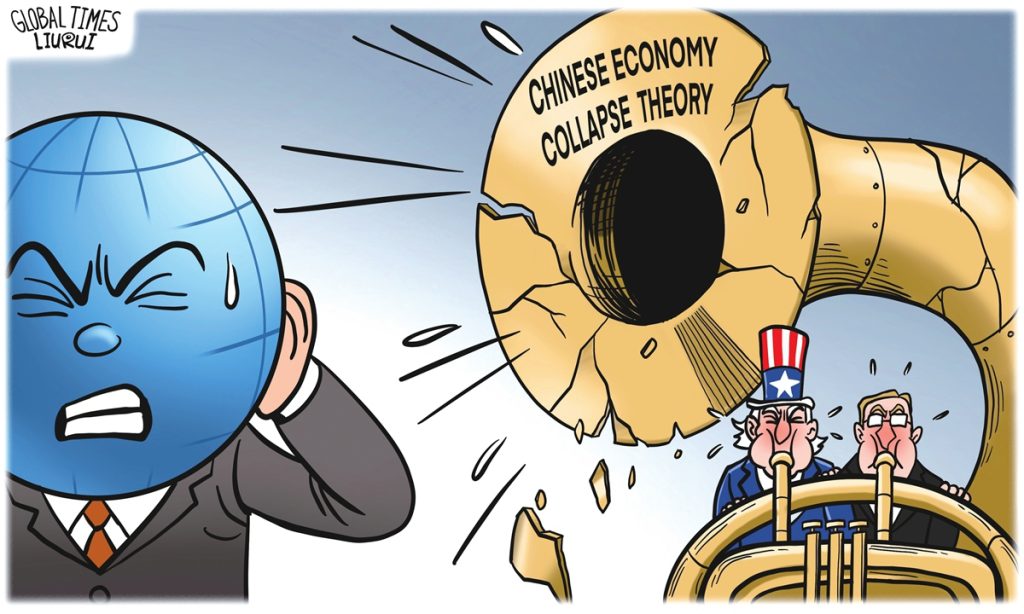
No matter how hard some Western media outlets play up the "China collapse" theory, the fact that the Chinese economy can maintain its recovery momentum and achieve its annual growth target despite negative factors at home and abroad is the best proof that its economic development remains stable and resilient.
In this context, simply measuring China's stimulus for economic growth in terms of the deficit ratio is clearly a misunderstanding of the Chinese economy. Whether it is fiscal policy, monetary policy or structural reform, the ultimate goal of policy measures is to support targeted economic transformation and effectively stabilize economic growth, rather than create extra risks with excessive stimulus.
Police in Meigu county in Liangshan, Sichuan, recently received a report from the School of Ecology and Nature Conservation, Beijing Forestry University, which said that a black-necked crane with a tracker for scientific research had remained in a static status for an extended period. The institute asked for an investigation into the condition of the migratory bird.
The police immediately formed a task force to investigate into the incident in the outskirts of a sparsely populated hamlet.
After extensive investigations and visits, the police finally tracked down the suspect surnamed Jike.
Jike confessed under interrogation that he illegally captured and killed the rare species of the endangered wildlife animal black-necked crane.
According to Jike, he happened to see the big bird resting on the river bank on his way home and the idea of catching and eating the bid just occurred to him. A thought that he soon followed up on.
According to the judicial appraisal results by a forestry judicial appraisal center in Sichuan, the bird killed by the suspect was a black-necked crane, which is one of China’s national first-class key protected animals. The tracking device tied to the bird’s foot and the serial number show that the black-necked crane was exactly the one that was used for ecological study of migration of the crane by the college institute.
Jike has been placed under criminal detention by the police for the suspicion of the crime of endangering precious and endangered wildlife animal. The case is currently under further investigation.
According to media reports, the black-necked crane is the only species of crane endemic to China and is among the 15 crane species that currently exist in the world. It is also the only crane species in the world that grows and breeds on plateaus, earning it the titles of “plateau fairy” and “plateau divine bird.”
China’s top legislature passed regulation on February 24, 2020 to strictly ban the illegal wildlife trade and eliminate bad habits of eating wild animals in China to safeguard people’s health and livelihoods.
According to China’s Criminal Law, anyone who illegally captures, kills, transports, purchases or sells national protected, precious, endangered wildlife and their products, shall be sentenced to imprisonment for up to five years or faced with criminal detention, along with a fine.
In cases of serious circumstances, the punishment may be extended to 5-10 years of imprisonment, along with a fine. In particularly severe cases, the sentence may be more than 10 years of imprisonment, along with a fine or confiscation of property and assets.