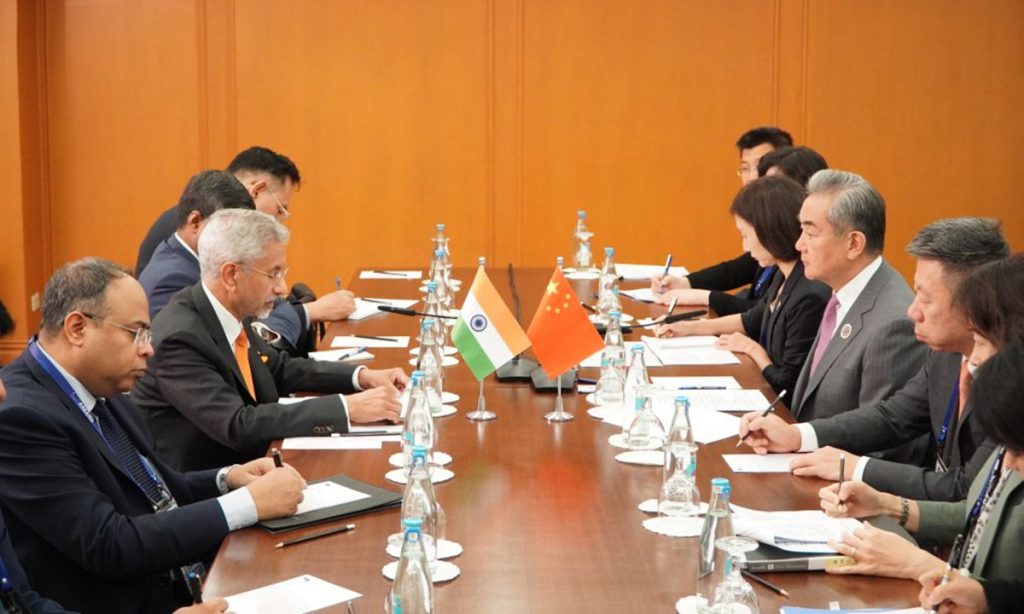
China stands ready to work with India to implement the important common understandings reached by the leaders of the two countries, maintain close high-level exchanges, strengthen cooperation in areas including economy and trade, media, and people-to-people and cultural exchanges, and properly handle sensitive issues, Chinese Foreign Minister Wang Yi said on Wednesday, according to a readout released by Chinese Foreign Ministry earlier on Thursday.
Wang, also a member of the Political Bureau of the Communist Party of China Central Committee, made the remarks when meeting with Indian External Affairs Minister Subrahmanyam Jaishankar.
Chinese experts noted that these remarks clearly outlined the current trajectory of China-India relations, which have overcome difficulties, seen an overall improvement and stabilization, and are advancing practical cooperation.
Wang said China and India should bear the well-being of humanity in mind, demonstrate a sense of responsibility as major countries, consolidate the positive momentum in bilateral relations, and strengthen coordination and cooperation in international and regional affairs.
He called on the two countries to make positive contributions to advancing multipolarity and greater democracy in international relations.
China will continue to support India in hosting a successful BRICS summit this year, Wang added.
According to Xinhua, Jaishankar said that India's positions on issues concerning Taiwan and Xizang have not changed, and India respects China's sovereignty. He added that India has consistently advanced a positive and cooperative bilateral relationship with a forward-looking approach.
The meeting between the two foreign ministers was the latest in a series of recent high-level interactions between China and India, and was held in a highly positive tone. The focus was on consolidating the strategic consensus reached by the leaders of the two countries and mapping out future cooperation, injecting new momentum into bilateral ties, Lan Jianxue, director of the Department of Asia-Pacific Studies at the China Institute of International Studies, told the Global Times.
Chinese foreign minister reviewed the past development of China-India relations while also outlining the "correct way for the two countries to get along." He stressed that the improvement of China-India relations was hard-won and should be cherished. Taking a broader global perspective and elevating the strategic dimension, Wang highlighted the need for China and India, as representatives of emerging economies, to strengthen "greater BRICS cooperation" amid "profound changes unseen in a century" and the rise of the Global South, reflecting the shared interests of the two countries within multilateral frameworks, Lan said.
Earlier, India has offered various signals of an intention to strengthen economic cooperation with China. Rakesh Mohan, a part-time member of Indian Prime Minister Narendra Modi's Economic Advisory Council, said New Delhi should use its low-cost manufacturing base to attract investment from Chinese companies instead of relying mainly on protectionist measures. Such a strategy, he said, could help create jobs, strengthen exports and make India more competitive in global supply chains, according to The Economic Times.
China and India have taken various measures to rebuild strategic trust and promote the recovery of bilateral ties in recent years, Qian Feng, director of the Research Department at Tsinghua University's National Strategy Institute, told the Global Times on Thursday.
Experts noted that India last year resumed issuing tourist visas to Chinese citizens, simplified procedures for technology and business visas, and agreed to resume direct flights in October.
Meanwhile, China has also made a series of goodwill gestures, including resuming Indian pilgrims' visits to Mount Gang Renpoche and Lake Mapam Yun Tso in Xizang, and adjusting visa policies to facilitate people-to-people exchanges, experts said.
Regarding Jaishankar's remarks, Lan noted that they were generally positive, clearly stating that India's position on issues including Taiwan and Xizang had not changed and that India respects China's sovereignty. This was undoubtedly an important positive signal from the Indian side. At the same time, Jaishankar stressed the need to "maintain peace and stability along the border and properly handle differences", showing that India also recognizes the need to pursue cooperation while managing divergences, Lan stressed.
Qian particularly highlighted Jaishankar's reaffirmation of the positioning of China and India as "partners rather than rivals" and his emphasis that China-India relations carry regional and global significance. "This shows that the Indian government views bilateral ties from a strategic perspective and is willing to work with China in both bilateral and multilateral areas, creating a positive atmosphere for the continued improvement of relations," expert said.
By a three-to-one margin, Americans are more likely to say that China, not the US, is more advanced when it comes to developing artificial intelligence, according to a Pew Research Centre survey.
Released on Thursday, the survey was conducted in June and polled a total of 3,488 adult participants.
According to the survey, 36 percent of Americans think that China is further advanced than the US when it comes to developing AI, while only 12 percent hold the view that the US is more advanced than China.
Another 18 percent say the two countries are about equally advanced, while 33 percent are not sure which nation is more advanced in developing AI, per the survey.
A closer look at the survey also revealed that both men and women tend to support China's advancement in AI, with 31 percent of men and 41 percent of women holding this view respectively.
While the survey said that there are also some differences based on whether people ever use AI chatbots, an identical 36 percent of US adults, regardless of whether they use such tools or not, believe China is more advanced than the US.
In recent years, a growing array of Chinese AI products have been deployed on a large scale across industrial operations, urban governance and other real-world scenarios, giving the general public a more tangible sense of China's AI advancement. This trend has also caught the eye of overseas netizens via social media platforms, serving as a factor behind the improved global perception of China's artificial intelligence sector, Liu Wei, director of the Human-Machine Interaction and Cognitive Engineering Laboratory at the Beijing University of Posts and Telecommunications, told the Global Times on Friday.
In addition, the intensive release of domestic open‑source models with massive parameter counts, coupled with the global dissemination of cutting‑edge technological breakthroughs, has further prompted foreigners to recognize the sophistication of China's AI development, Liu added.
Chinese AI startup Moonshot AI on July 16 released its latest model, Kimi K3, which features 2.8 trillion parameters, making it the largest-parameter open-source AI model globally, the company said, the Xinhua News Agency reported.
Kimi K3 natively supports visual understanding and boasts a context window of 1 million tokens. It has been optimized for complex tasks including software engineering, knowledge-intensive work, deep research and multimodal understanding, Moonshot AI noted.
Benchmark AI products such as Kimi K3 can drastically cut operational costs. Their prowess in handling intricate, multifaceted tasks amplifies the global outreach of Chinese AI offerings, emerging as a pivotal force reshaping international perceptions of China's artificial intelligence prowess, Liu said.
The expert also noted that China's consistent innovation capacity in AI, sound industrial ecosystem, and sustained state investment in technological advancement have laid bare the sector's immense potential to global audiences, who have grown increasingly convinced of China's robust AI development momentum.
However, the survey also said that "as the US and China compete for AI dominance, 43 percent of Americans say it is extremely or very important that the US is the world's leader in developing AI."
While some in the US are uneasy about China's breakneck progress in AI, China's practical applications and its global initiatives should make it clear that its AI drive has consistently been oriented toward serving the wider public good, said the expert.
The development of AI in China comes from greater self-reliance and strength in science and technology, and is fueled by China's vision of extensive consultation and joint contribution for shared benefit, Chinese Foreign Ministry spokesperson Lin Jian said on Thursday, in response to a question regarding a top White House official accusing Chinese AI start-up Moonshot AI of covertly copying the most advanced model of an American company.
All countries should take a people-centered approach and develop AI for the positive and for good to ensure the open and inclusive development of AI for good and for all so as to better contribute to social progress and the common welfare of the international community, Lin added.
Shanghai Jiao Tong University School of Medicine vowed thorough investigation regarding recent reports circulating online about medical research paper published by Qiu, a researcher at the school, as well as a clinical study conducted at Xinhua Hospital, an affiliated hospital of the school, according to the website of the school.
According to the academic journal Science and academic integrity watchdog Retraction Watch, a six-year-old girl died after undergoing a gene-editing trial at Xinhua Hospital in Shanghai in March 2025. The case has drawn widespread attention online, CCTV News reported.
The school statement said it attaches great importance to the matter and has established a special working group to conduct a comprehensive investigation into the case.
According to the statement, the school said it has always placed great emphasis on research integrity and research standards, and firmly opposes conducting medical research in violation of research ethics and regulations. It vowed to handle the matter seriously based on the findings of the investigation and thanked all sectors of society for their attention and oversight.
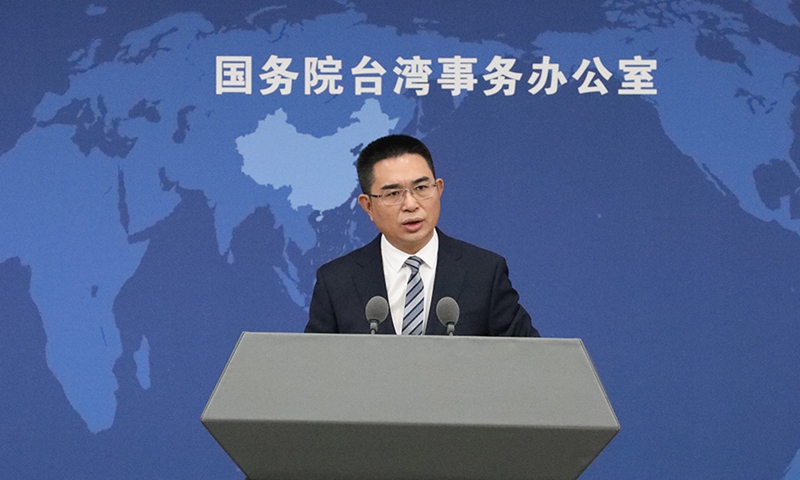
The Democratic Progressive Party (DPP) authorities have rushed to hype up an incident in which Japanese former reporter Akio Yaita, who supports the DPP's secessionist agenda, was reportedly attacked by a Hong Kong resident in Taichung, Taiwan region, using it to smear the Ethnic Unity and Progress Promotion Law with the aim to stoke cross-Straits friction while misleading and intimidating Taiwan residents, a spokesperson for the State Council Taiwan Affairs Office said on Wednesday.
The remarks were made when asked to comment on the incident, with Taiwan regional authorities describing the incident as the "first cross-border repression case" seen since the law was put into effect and claimed possibility of using Hong Kong resident's convenience on the island for relevant cases.
The spokesperson Chen Binhua said during Wednesday's press conference that the man from Hong Kong acted out of righteous indignation, and the episode amounts to nothing more than an isolated ordinary public security incident.
"The DPP's malicious acts have drawn disapproval even from people in Taiwan. We solemnly caution the DPP authorities against violating the Hong Kong man's legitimate rights and interests and demand they guarantee the inviolability of his personal and property safety," Chen added.
The 33-year-old suspect, surnamed Liu from Hong Kong, was arrested Monday afternoon after he punched Yaita in the face on Monday, per Taiwan local media on Wednesday. The attack occurred following the Japanese figure delivered a speech at a hotel in Taichung. An investigation is underway to establish a motive for the attack and whether Liu had an accomplice, police said.
Holding Hong Kong permanent residency, Liu arrived in the Taiwan region on Thursday as a tourist and checked into a Taichung hotel. Police said Liu had attempted to leave Taiwan from the Taichung airport before being arrested, per the media report.
The matter has been reported by multiple Taiwan media outlets, with the Taiwan regional authorities hyping up the law in connection with the attack.
Zheng Jian, a professor at the Graduate Institute for Taiwan Studies of Xiamen University, told the Global Times on Wednesday that the DPP authorities rely on anti-mainland confrontation to sustain their rule, so they connect any policy and measure rolled out by the Chinese mainland to the island.
Their deliberate smear of the law stems from a simple truth - the more united and cohesive the country and Chinese nation become, the less room there will be for separatist forces, Zheng said.
Furthermore, Yaita has also repeatedly issued hostile remarks targeting China, and he once claimed that there existed no credible evidence to confirm the exact death toll of victims in the Nanjing Massacre, one of the most barbaric episodes of World War II, according to media reports. Zheng said that people with a sense of justice, will all hold grievances against his acts, whether they are from the mainland, or compatriots from Hong Kong, Macao or Taiwan island.
Regarding the law, Chen also said on Wednesday that it clearly stipulates that legal means shall be adopted to counter all illegal acts involving ethnic affairs. Rooted in China's national conditions, consistent with legal principles and aligned with international common practices, this law constitutes a just and necessary measure to safeguard national sovereignty, unity and territorial integrity, Chen said.
DPP attacks on the law are aimed to fabricate excuses for its acts that betray the nation, separate the country, jeopardize cross-Straits relations and restrict exchanges.
"Should 'Taiwan independence' forces dare to engage in acts that split the nation and undermine ethnic unity, we will impose resolute punishment on them in accordance with the law," Chen added.
China has consistently attached great importance to bird conservation over the years, noted the National Forestry and Grassland Administration (NFGA) at a news conference on the achievements of bird conservation in 2026.
In particular, in September 2025, 17 government departments jointly launched a three-year bird conservation campaign and a special campaign to crack down on the illegal hunting and trade of birds.
Focusing on three core tasks - bird conservation activities, special enforcement actions, and publicity and education - the departments worked closely together and coordinated their efforts to combat the illegal hunting, trading and transportation of wild birds and other related violations throughout the entire chain, while striving to establish a long-term mechanism for regular supervision and governance.
The efforts have achieved phased results, with the populations of 19 nationally protected bird species, including the crested ibis, remaining stable or continuing to grow. Home to rich bird resources
Wang Zhen, director of the publicity center of the NFGA, pointed out at the news conference that birds are an important component of natural ecosystems.
Protecting bird resources is an important part of promoting ecological conservation, as well as an important measure to preserve biodiversity and safeguard the community of life on Earth.
China is one of the countries with the richest bird resources in the world, with 1,505 bird species, accounting for about one-sixth of the world's total bird species.
More than 800 species are migratory birds. China is also an important corridor for the cross-border migration of migratory birds. Of the world's nine major migratory bird flyways, four pass through China, covering almost the country's entire land territory and territorial waters.
Building a conservation framework
Wang Weisheng, director-general of the department of wildlife conservation of the NFGA, introduced that a three-year nationwide bird conservation campaign and a special campaign were launched in September 2025.
The campaign has severely cracked down on illegal hunting and trading, promoted the improvement of regular and long-term conservation mechanisms, carried out extensive publicity and science education on bird conservation, built a joint conservation framework featuring multi-department coordination, rapid response and full-chain supervision, and effectively safeguarded the safety of bird populations, including migratory birds, and their habitats.
The country has also strengthened the legal foundation for bird conservation. China revised and adopted the Wildlife Protection Law of the People's Republic of China in 2022.
In 2021 and 2023, respectively, it adjusted and released the List of National Key Protected Wild Animals and the List of Terrestrial Wild Animals of Important Ecological, Scientific and Social Value.
The number of nationally protected bird species has been expanded to 394, while the number of birds among China's "three haves" list, of animals considered to have ecological, scientific or social value, has increased to 1,028.
A total of 98.4 percent of bird species are now covered by legal protection, laying a solid legal foundation for bird conservation. Conservation monitoring network
China has identified 1,140 important habitats along migratory bird flyways and further selected 821 key habitats, comprehensively strengthening protection and restoration, improving the conservation monitoring network, and providing a favorable ecological environment for migration, breeding and wintering.
Fourteen bird species, including the crested ibis, green peafowl and red-crowned crane, have been included in the scope of emergency conservation species during the 14th Five-Year Plan period (2021-25).
Efforts are also underway to include another 21 bird species, including Baer's pochard and the Oriental stork, in the scope of emergency conservation species under the 15th Five-Year Plan (2026-30), while comprehensively strengthening surveys and monitoring, patrols and guarding, rescue and rehabilitation, captive breeding and release, and habitat restoration.
Cracking down on illegal and criminal activities that damage bird resources, China has carried out special campaigns for six consecutive years, strengthening joint law enforcement by multiple departments and severely cracking down on illegal and criminal activities that damage bird resources.
In particular, the three-year nationwide bird conservation campaign and special campaign to crack down on the illegal hunting and trade of birds have promoted coordinated efforts both online and offline and established a full-chain supervision system covering field patrols, market regulation and judicial accountability.
Deepening international cooperation, publicity and education, China has joined multilateral agreements such as the East Asian-Australasian Flyway Partnership and signed bilateral agreements with Japan, South Korea, Singapore, Russia and New Zealand on the protection of the crested ibis and other migratory birds and their habitats.
Together with the international community, China has promoted cooperation in bird banding, population monitoring, information sharing, scientific research and joint conservation.
Every year, China organizes themed publicity campaigns such as World Wildlife Day, Bird-loving Week and Wildlife Protection Publicity Month, and carries out a wide range of science popularization and public awareness activities both online and offline.
Since the spring of 2026, it has organized Bird-loving Week activities nationwide under the theme "protecting feathered spirits, painting an ecological landscape together," further fostering a stronger public atmosphere for loving and protecting birds. The populations of 19 nationally protected bird species have remained stable or increased.
China's Ethnic Unity and Progress Promotion Law officially took effect on Wednesday, with multiple regions in the country introducing measures to implement it, including ethnic autonomous regions such as Inner Mongolia and Xizang, as well as ethnic autonomous prefectures, counties and townships.
The law helps further clarify China's position and approach on ethnic affairs, promotes ethnic unity and common development, and provides a stronger legal basis for advancing the building of the Chinese national community, Wang Jiang, deputy director of the Institute of China's Borderland Studies at Zhejiang Normal University, told the Global Times on Wednesday.
China's National Ethnic Affairs Commission said on Tuesday that local government departments in Inner Mongolia Autonomous Region had put forward 23 specific measures to promote the study, publicity and implementation of the law. The measures cover legal education, implementation of the law, and coordination among relevant departments to ensure that the law is carried out effectively.
According to the commission, Inner Mongolia will organize study and publicity activities to foster a sound atmosphere of respecting, studying, observing and applying the law. The region will also strengthen the alignment between institutions and regulations, review relevant local regulations, government rules and normative documents, and promote revisions to local regulations related to ethnic unity and progress.
The measures also include pushing the revision of regulations of the Inner Mongolia Autonomous Region on promoting ethnic unity and progress, promoting extensive interaction, exchange and integration among all ethnic groups, and steadily advancing common modernization among all ethnic groups.
In Xizang Autonomous Region, local government departments have also introduced 20 measures to promote the law's implementation. The regional ethnic affairs department said the measures are designed to create a sound legal environment for safeguarding ethnic unity, improve institutional systems and strengthen legal guarantees.
The relevant measures in Xizang also focus on the development of all ethnic groups, including coordinating infrastructure construction, public services, border stability and border-area development. They also call for solid efforts to promote the shared modernization of all ethnic groups and to integrate the study, publicity and implementation of the law into the daily production and life of people of all ethnic groups.
The implementation of the law comes after it was adopted at the annual session of the National People's Congress in March. The law contains chapters on building a shared spiritual home, promoting interaction, exchange and integration among all ethnic groups, advancing common prosperity and development, and strengthening guarantees and supervision.
On June 24, Vice Minister of Justice Hu Weilie said China's provision in its Ethnic Unity and Progress Promotion Law holding organizations and individuals outside the country legally accountable for engaging in ethnic separatism is justified, lawful and necessary, according to Xinhua News Agency.
"We also firmly oppose all acts of smearing, suppression, infiltration and sabotage targeting China under the guise of ethnic, religious, human rights, or other issues," Hu said.
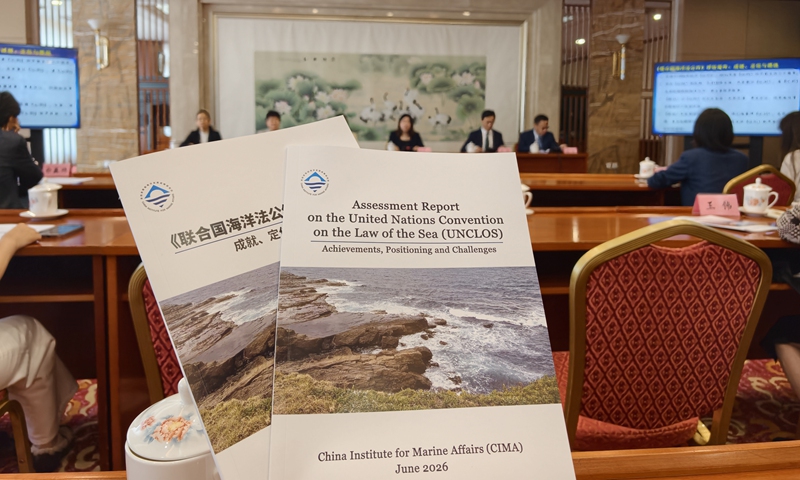
China's Ministry of Natural Resources released the "Assessment Report on the United Nations Convention on the Law of the Sea - Achievements, Positioning, and Challenges" on Tuesday. The report conducts a comprehensive evaluation of the historical achievements, legal nature, roles and functions, as well as its problems and challenges of the United Nations Convention on the Law of the Sea (UNCLOS, or "the Convention"). It was launched amid the Philippines' continued abuse of the Convention to promote its illegal so-called South China Sea arbitration case.
The report notes that 2026 marks the 30th anniversary of China becoming a State Party to the UNCLOS. Over the past three decades, China has consistently and faithfully fulfilled its obligations under the Convention and has been an active participant, builder, and contributor to the Convention and its mechanisms. However, the implementation of the Convention continues to face inherent difficulties and external challenges that urgently need to be addressed.
Philippines' tricks
"Particularly against the current backdrop where the authority of the United Nations is being challenged and the foundations of multilateralism are being eroded, practices such as misinterpreting and distorting the meaning of the Convention's provisions, abusing its dispute settlement procedures, and arbitrarily expanding judicial or arbitral jurisdiction have quietly emerged. All of these are gradually undermining the Convention's seriousness, integrity, and authority," the report further points out.
A typical example of such behavior is the so-called "South China Sea Arbitration" initiated by the Philippines.
Luo Gang, a researcher at the Ministry of Natural Resources' China Institute for Marine Affairs and the lead author of the report team, told the Global Times that the biggest trick in the Philippines' "South China Sea Arbitration" is packaging a territorial sovereignty dispute as a maritime rights dispute in an attempt to use the Convention to resolve it. In reality, however, territorial sovereignty disputes fall outside the jurisdiction of the Convention.
"The UNCLOS only regulates matters related to maritime rights and has no authority to handle territorial sovereignty disputes. The core of the China-Philippines dispute is precisely the issue of territorial sovereignty over islands and reefs," Luo said. "Since the Convention has no jurisdiction over territorial sovereignty, if the Philippines wanted to initiate compulsory arbitration under the Convention, it had no choice but to rely on litigation tactics to deliberately package the dispute - disguising the essential territorial sovereignty issue as a purely maritime rights dispute in order to meet the conditions for arbitration. This is the core tactic of the Philippines' malicious abuse of the Convention."
The report explains the operational logic behind the Philippines' fabrication of "mixed disputes": The arbitration claims submitted by the Philippines encompass both territorial sovereignty and maritime rights issues, yet it unilaterally demands that the tribunal avoid the territorial sovereignty aspect and rule only on maritime rights. Luo illustrated this legal trap with a dough metaphor: "If maritime rights are likened to green dough and territorial sovereignty to white dough, the Convention only has authority over the green dough. Yet the Philippines mixes the two into a multicolored dough and asks the tribunal to separate and adjudicate only the green part. However, the two types of rights are deeply intertwined and cannot be fully separated. Although the tribunal appears to rule solely on maritime rights, it is in fact making implicit determinations on territorial sovereignty throughout the process."
In short, by relying on deliberate litigation packaging, the Philippines forcibly transforms a territorial dispute that the Convention has no authority to handle into an admissible issue. This seriously distorts and undermines the original purpose and operational logic of the dispute settlement mechanism established by the Convention, Luo emphasized.
The report quotes French Professor Jean-Louis Iten at Paris 8 Vincennes-Saint-Denis University, who, commenting on the South China Sea Arbitration, said the dispute adjudicated by the so-called arbitral tribunal is in fact a dispute detached from the substance of land territorial sovereignty, one that has been "artificially determined by the claimant" (French: artificiellement déterminé par le demandeur). The claimant's manner of initiating the proceedings appears to be a kind of "procedural trick" (French: astuce procédurale) designed to prevent the arbitral tribunal from losing jurisdiction. The report said such "procedural tricks" not only damage the credibility of the Convention's dispute settlement mechanism and the legitimacy of its outcomes, but may also trigger tensions and conflicts.
Objective interpretation
The assessment report also details the inherent difficulties and external challenges facing the implementation of the Convention that urgently need to be addressed. It explicitly points out challenges such as misinterpretation of provisions and abuse of procedures. For example, certain countries maliciously distort "freedom of the seas," abuse "freedom of navigation," and invent the term "international waters."
The report states that some countries advocate a so-called "rules-based international order" while adopting an opportunistic attitude toward international law - using it when it suits them and abandoning it when it does not. Such double standards also endanger the foundation of the international maritime rule of law.
To safeguard the international rule of law and uphold the Convention's seriousness, integrity, and authority, the assessment report urges the international community, especially governments, academia, and policy circles, to view the Convention objectively and dialectically, interpret and apply it in good faith, properly balance its inheritance and development, and firmly resist practices that distort its provisions, abuse procedures, or exceed jurisdiction.
The report also calls on countries around the world to jointly implement China's Global Development Initiative, Global Security Initiative, Global Civilization Initiative and Global Governance Initiative, address the difficulties and challenges in implementing the Convention, promote the building of a more just and reasonable global ocean governance system, and steadily advance toward a community with a shared future for humanity.
China: defender of the Convention
China has always been a staunch defender and builder of the international maritime rule of law. As one of the first countries to sign and ratify the UNCLOS, China has defended the authority and integrity of the Convention through concrete actions.
On issues concerning territorial sovereignty and maritime rights and interests, China maintains that disputes should be resolved through dialogue among the countries directly concerned, in accordance with international law, including the UN Charter. Together with ASEAN countries, China has fully and effectively implemented the Declaration on the Conduct of Parties in the South China Sea (DOC) and is accelerating consultations to reach a Code of Conduct in the South China Sea (COC) in 2026, in order to promote fair regional maritime governance, Chinese Vice Foreign Minister Sun Weidong said in his keynote speech at the opening ceremony of the Sixth Symposium on Global Maritime Cooperation and Ocean Governance on December 10, 2025.
Committed to the well-being of all humanity, China consistently advances shared maritime development and safeguards common maritime security from the perspective of its people's interests.
At the Third United Nations Ocean Conference in June 2025, China announced it would launch 100 bilateral and multilateral cooperation projects and provide 5,000 training opportunities to support small island developing states and others in implementing the Sustainable Development Goals. China has made contributions in areas such as maritime navigation safety, disaster prevention and reduction, and ecological protection. It has dispatched 48 escort fleets to the Gulf of Aden and the waters off Somalia for routine escort missions and has provided disaster prevention and early warning services to over 130 countries, according to China's Ministry of Foreign Affairs.
China has always been an active participant in and faithful practitioner of the Convention. It strictly fulfills its obligations under the Convention and safeguards the international rule of law through concrete actions. Certain countries, driven by self-interest, have misinterpreted and abused the provisions of the Convention to level unfounded accusations against China, which are entirely contrary to the facts, Chen Xiangmiao, a research fellow at the National Institute for South China Sea Studies, told the Global Times. "Some international cases, including the illegal arbitration initiated by the Philippines, are undermining the seriousness and integrity of the Convention with serious legal flaws and political manipulation."
This report seeks to advance the progressive development of the Convention and uphold the long-term stability of the maritime order. Only by maintaining an objective and impartial position can the authority of the Convention be effectively preserved and properly implemented, the expert said.
China's Ministry of Emergency Management activated a Level-IV national emergency response for geological disasters in the country's southwestern Sichuan Province on Monday, following a 5.5-magnitude earthquake.
No deaths were reported, while 13 people sustained minor injuries as of 3:30 a.m. Monday after the quake struck Gaoxian County in Yibin City, according to local authorities.
The ministry urged local authorities to guard against secondary geological hazards, strengthen coordination, monitor disaster risks in the affected areas, enhance inspections and early warnings, and relocate people from danger zones promptly to minimize casualties.
The office of the State Council earthquake relief headquarters and the Ministry of Emergency Management have dispatched a working group to the quake-hit area to guide relief and rescue efforts.
For the US, which is about to celebrate its 250th birthday, the atmosphere this year is far from celebratory. The smoke of the war against Iran has not only impacted the global economy and disrupted international order but has also caused the major pillars of American economic hegemony to shake simultaneously. Scholars have noted that US economic hegemony rests on five pillars: economic strength, dollar hegemony, military hegemony, political hegemony and rule hegemony. For years, the major pillars of American economic hegemony have been steadily loosening under America's domestic and foreign policies. The war against Iran has merely thrust this structural decline into the spotlight. How much longer the US can sustain its economic hegemony has become a topic of ongoing heated discussion in global public opinion.
Dollar status and military hegemony waning
"The dollar's status is gradually waning." This is how South Korea's Hankyoreh assessed the impact of the military action against Iran on the US. In the past, whenever a global crisis struck, capital would habitually flow into dollar assets for safety, a pattern that had almost become an "iron law" of the market. However, in this conflict, that rule failed for the first time. Due to the blockade of the Strait of Hormuz, oil exports from Middle Eastern producing countries were obstructed and revenues plummeted. Liquidity strains forced them to reduce holdings of US Treasuries. At the same time, soaring international oil prices imposed heavy fiscal burdens on oil-importing countries. To resist pressure from currency depreciation, some nations also chose to sell off US debt.
The large-scale sell-off of US Treasuries is a market reflection of the shaking of dollar hegemony, and the war against Iran has served as a catalyst for its further decline. For years, the global trend of "de-dollarization" has continued to advance. This is not due to any single unexpected event or short-term US policy misstep but the result of multiple structural factors intertwined over the long term. The US has long leveraged the dollar's status in international payments, reserves, investment and financing to exert economic pressure and impose unilateral sanctions on other countries, prompting more and more nations to actively seek to reduce their dependence on the dollar.
Meanwhile, the US government's direct interference in the Federal Reserve's decision-making independence has led the outside world to begin questioning this "anchor of dollar credibility." As doubts about the dollar's credibility spread, central banks around the world have accelerated their purchases of gold, as if quietly stockpiling for a "post-dollar era."
Dollar hegemony is only one pillar of US economic hegemony. He Weiwen, executive council member of China Association of International Trade, pointed out in an interview with the Global Times that, in addition to dollar hegemony, US economic hegemony is also built on four other pillars: economic strength, political hegemony, military hegemony and rule hegemony. Over the years, these pillars have continued to loosen.
In the dimension of economic strength, America's former advantages are steadily narrowing. The Wall Street Journal has pointed out that over the past half-century, the growth of America's economic pie has been slow. After inflation adjustment, the annual income of ordinary American households has grown by less than 1 percent per year. In 2025, the median weekly wage for full-time male workers was $1,325; after inflation adjustment, it is roughly the same as the income level in 1979.
The relative decline in economic strength is only one side of the issue. The loosening of military hegemony reveals America's difficulties from another dimension. Although the US still maintains its position as the world's largest military power, in this military operation against Iran, US forces consumed about one-third of its Tomahawk cruise missiles. The rapid depletion of precision-guided munitions has drawn external attention to its sustained combat capabilities. More critically, NATO, once seen as the world's strongest deterrent force, has shown clear internal fissures. European countries exhibit obvious distrust toward the US government. Now marking its 77th anniversary, NATO is deeply mired in a crisis of division, and the foundations of its continued existence are widely questioned.
Political prestige slumped; technological strength weakened At the level of political influence, America's decline is even more evident. He Weiwen noted that strong comprehensive national power has given the US enormous dominance in world affairs, compelling many small and medium-sized countries to submit to its will. British scholar Susan Strange once argued in the 1980s that America's real power stems from its central role in major international institutions and strategic alliances. This institutional hegemony once made Washington's dominant position far exceed mere material advantages. After the end of the Cold War, the US relied on multilateral institutions such as NATO, the Group of Seven and the International Monetary Fund to extend its influence globally.
However, in recent years, the US has pursued unilateralism and the "law of the jungle," making enemies everywhere and constantly clashing with its allies, resulting in a sharp decline in its political prestige. This shift toward coercive hegemony is rooted in a short-sighted international outlook. America's opportunistic and unstable image has eroded the trust of its allies.
Within the framework of international rules, following World War II, the US took the lead in establishing a host of international institutions including the United Nations, the World Bank and the International Monetary Fund. These bodies were tasked with overseeing international security and the global monetary system respectively, enabling Washington to shape the world order while maximizing its own national interests. Today, however, the US has repeatedly violated the principles of sovereign equality and the prohibition on the use of force against the territorial integrity or political independence of any state enshrined in the United Nations Charter on the political front, often bullying smaller nations and meddling in other countries' internal affairs.
The technological prowess and free trade policies that have underpinned US economic dominance are also being eroded. Eighty-one years ago, Vannevar Bush, science advisor to President Franklin Roosevelt during the WWII, issued a landmark report that established the strategic direction for US scientific research. The model of government-funded, academic-led research propelled the US to leadership in numerous fields. However, today, according to the US National Center for Science and Engineering Statistics, federal R&D spending as a share of GDP has fallen from 1.86 percent in 1964 to roughly 0.66 percent in 2021. At the same time, the US has tightened international scientific exchanges and stepped up screening of foreign researchers, citing so-called "national security concerns" - thereby undercutting the openness and appeal that have long sustained its research ecosystem.
Is the gradual decline irreversible? The US declared independence in 1776, but until the late 19th century, it remained a relatively marginal player on the world stage. World War I offered the first historic opportunity for the US to emerge as a major global economic power. For American corporations and the wealthy elite, the four-year catastrophe was a moment of immense financial opportunity. During the war, the US government suspended antitrust enforcement, ramped up support for scientific research and eased arms-sale restrictions - measures that, in retrospect, created institutional space for the rise of new technology industries after the war. By the war's end, the US had transformed from a debtor nation into a primary creditor to other countries, completing a dual reversal - from capital importer to exporter, and from debtor to creditor.
It was WWII that firmly entrenched America's economic supremacy. No previous event had driven wealth accumulation in the US on such an unprecedented scale and scope. According to the Securities Times, by the end of WWII, US GDP was several times greater than that of Britain, with its gold reserves hitting $20 billion, accounting for roughly two-thirds of the world's total global reserves of $33 billion. This overwhelming economic advantage laid the groundwork for the US dollar to emerge as the world's primary reserve currency.
Between 1939 and 1945, America's economic output nearly doubled, while Western Europe's economy contracted by 18 percent. This shift in relative economic strength cemented the US' dominant position in the global economy, according to the Council on Foreign Relations.
"From my perspective, the US is still one of the most powerful economies in the world, but it no longer enjoys the overwhelming advantages it once did," Gavin Cooley, a 24-year-old American influencer, told the Global Times. Cooley believes that the greatest risk for the US is not competition itself, but failing to recognize how quickly the global balance is changing. "For decades, American economic leadership was treated as a permanent reality. Today, that assumption is being challenged," he said.
The US still holds a prominent leading position in the global economic landscape. In a commentator's article published by Egypt's Ahram Online in March, it was pointed out that the US accounts for roughly one-quarter of global GDP, with its economic volume exceeding $26 trillion. In the technology sector, US enterprises make up more than 70 percent of the total market value of the world's leading tech firms. Companies including Apple, Microsoft, Google and NVIDIA are not merely participants in innovation, but are shaping the technological evolution of artificial intelligence and advanced computing.
In terms of scientific research, US institutions consistently deliver a large number of globally influential research outcomes, firmly backed by an annual funding ecosystem worth hundreds of billions of US dollars, especially in artificial intelligence and biotechnology. Multiple estimates show the US leads the world in AI investment. "This is not merely a matter of scale. It is a system capable of reproducing its own dominance and shaping the architecture of the future," Ahram reported.
Yet advantage does not equal permanence. A commentary in The New York Times opens with the headline "America Is Officially an Empire in Decline." He Weiwen told the Global Times that the gradual decline of US hegemony is a certain and irreversible trend, but that this trend is a long historical process, not an abrupt change. At the same time, he noted, the decline in US political, military and rule-making influence is closely tied to its policy direction and, in particular, to who occupies the White House.
"If the US continues to rely on past advantages while other countries continue investing aggressively in the industries of the future, it risks seeing its economic influence gradually diminish over time. Whether that happens or not will depend on how successfully the country adapts to a much more competitive and multipolar world," Cooley told the Global Times.