Chinese scientists have recently constructed the first three-dimensional spatial single-cell atlas of the lamprey whole brain, which is equivalent to drawing a detailed spatial "map" of the brain. Using this map, the researchers reconstructed some ancestral features of the vertebrate brain and revealed important innovations in neurons and brain structures during the approximately 500-million-year evolutionary process, the Global Times has learned from the research team from the Kunming Institute of Zoology, Chinese Academy of Sciences.
A complex brain is a key hallmark that distinguishes vertebrates from invertebrates and serves as the foundation for various behaviors and cognitive abilities. However, what the earliest vertebrate brain actually looked like, which genes it expressed, and what types of cells it contained have long lacked direct evidence.
To answer this question, Chinese scientists turned their attention to an ancient vertebrate - the lamprey. As one of the few surviving jawless vertebrates, the lamprey diverged from the ancestors of jawed vertebrates (including humans) approximately 450 million years ago. Remarkably, its core morphological features have remained almost unchanged for about 360 million years in the fossil record, making it a classic "living fossil" species and a critical group for reconstructing the ancestral state of the vertebrate brain.
The research team was led by Su Bing with the Kunming Institute of Zoology, in collaboration with teams from BGI Life Science Research Institute and Liaoning Normal University.
Su Bing told the Global Times on Monday that "by studying a living fossil species, we have gained a fresh understanding of the origin, diversification patterns, and underlying mechanisms of the vertebrate brain."
The researchers compared the brain atlas of the lamprey with that of the mouse. They found that, despite diverging hundreds of millions of years ago, the two species exhibit highly similar functions and gene expression patterns in multiple brain regions. Significant conservation was also observed in the neurogenesis trajectory of the olfactory bulb, the segmental organization of the hindbrain, and the core cell types across different brain areas.
These findings suggest that even in the common ancestor of vertebrates, the brain had already evolved a well-partitioned structure with complex molecular expression profiles.
This study reconstructed important ancestral features of vertebrate brain evolution, providing a new perspective for understanding how complex brain structures originated and evolved. With the development of spatial omics technologies, it is expected to become a valuable reference resource for future brain evolution research, read a statement the Kunming institute provided to the Global Times on Monday. The research findings were published as a cover article in the journal Science on June 19.
A reported remark by a senior Solomon Islands official to "sideline" so-called China's policing plans in the Pacific island country has become the latest trigger for Australian media to hype claims about Beijing's security cooperation with the South Pacific country.
According to Sydney Morning Herald (SMH) report on local time Monday, Peter Kenilorea Junior, the minister of national planning and development coordination of Solomon Islands, claimed the new government was seeking "a rebalancing of relations" with its development partners after the nation moved closer to China under previous governments.
Asked by the SMH if he wanted to see a winding back of China's role in policing and security in the Solomons, Kenilorea told this masthead that "we would like to focus more on economic development." The minister also claimed that "the security space, in my own personal opinion, is a little bit too crowded for a small country like the Solomons. So I would definitely emphasize the development aspect of China's involvement."
Yet behind the latest round of hype lies a broader question: is Australia willing to respect Pacific island countries' right to make independent diplomatic choices, or is it trying to turn the region into a closed security circle under Canberra's approval, a Chinese observer asked on Tuesday. The renewed hype says less about the actual content of China-Solomon Islands policing cooperation than about Australia's persistent attempt to draw an exclusionary security boundary around the South Pacific.
The issue has been put under media spotlight again after Solomon Islands Prime Minister Matthew Wale visited Canberra and said his government would review the 2022 security agreement signed with China, while also agreeing to begin negotiations on a comprehensive strategic treaty with Australia. Reuters reported on June 3 that Wale said he had only recently seen the full China agreement and that his government would review it alongside other security arrangements. The same report said Australian Prime Minister Anthony Albanese pledged to elevate bilateral ties while offering to move forward on a policing partnership.
Chinese observers pointed out that as a sovereign country, Solomon Islands has the right to assess its foreign partnerships according to its own domestic political priorities and development needs. The real problem, they said, is that some Australian voices have used the review to revive an old narrative that smears China's role in the South Pacific.
Notably, the SMH Monday report wrote that the Albanese government has insisted that Pacific nations' security and policing cooperation should be limited to other island nations including Australia.
"This shows that Australia is promoting a security arrangement that sets limits in the name of regionalism, while in effect placing itself at the center," Chen Hong, director of the Australian Studies Center of East China Normal University, told the Global Times on Tuesday.
This round of media hype by Australian media is not an isolated incident, but a psychological projection of Australia's changing role in the region, Chen noted.
For a long time, Australia has been accustomed to viewing the South Pacific as its strategic backyard, and to holding a dominant position in security, aid, infrastructure and diplomatic agendas. After China developed normal relations with Solomon Islands and other island countries, Australian public opinion quickly interpreted this change as a "challenge" and "infiltration," turning cooperation issues that should belong to the island countries' own development agenda into an arena of China-Australia competition, the expert explained.
By amplifying issues such as China's policing cooperation, the Australian media are in effect exerting public opinion pressure on the new Solomon Islands government. The most dangerous part of this narrative is that it marginalizes the island countries' real development and governance needs, he added.
Asked on June 3 about Wale's remarks, Chinese Foreign Ministry spokesperson Mao Ning said China and Solomon Islands are "comprehensive strategic partners featuring mutual respect and common development for a new era," and that China stands ready to work with the new Solomon Islands government "to expand practical cooperation in various fields and better benefit the people of both countries."
According to the Australian local media, Prime Minister Anthony Albanese will conduct a Pacific diplomacy blitz in July, including a visit to the Solomons to drive forward negotiations on a new comprehensive treaty while finalizing pacts with Fiji and Vanuatu.
This statement by the Solomon Island official seemingly has a political timing link with Albanese's planned visit to Solomon Islands in July and his push for negotiations on a comprehensive treaty, according to Chen.
The idea of "moving closer to Australia on security while continuing to work with China on trade and development" is understandable, but carries clear risks, Chinese observers warned.
If Solomon Islands believes concessions on security issues will be enough to secure Australia's acceptance of its economic cooperation with China, that may be overly optimistic, observers said. What Australia seeks is not merely security cooperation, but greater influence over the direction of island countries' external partnerships.
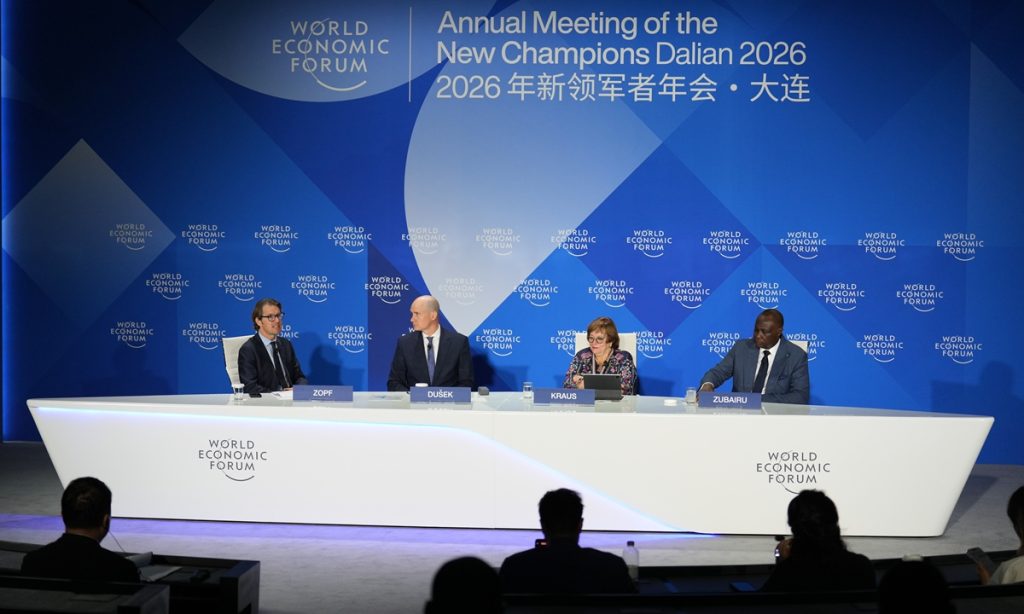
The Dalian International Conference Center was alive with activity on Tuesday as the World Economic Forum's Annual Meeting of the New Champions, better known as Summer Davos, opened in Northeast China's Liaoning Province.
This year's gathering has drawn a noticeably larger international presence, with foreign participants up nearly 30 percent from last year. Attendance by China's "little giant" firms — specialized and sophisticated small and medium-sized enterprises — and unicorn companies has also risen by 40 percent. Over three days, more than 100 sessions will explore topics spanning technology, the economy, energy, culture and other fields.
Meanwhile, in Beijing, the China International Supply Chain Expo (CISCE) is in full swing, bringing together 676 companies and institutions, including leading supply-chain players, from 85 countries, regions and international organizations.
Together, the two events underscore China's continued push for high-standard opening-up and its willingness to share development opportunities with the world.
At a time of rising protectionism and unilateralism, experts said China's forums and expos offer open and practical platforms for global businesses. They said the approach stands in contrast to countries that are raising barriers and fueling confrontation, while showing that win-win cooperation remains the prevailing trend in the global economy.
Openness, transformation
Outside the main Summer Davos venue, new energy vehicles, hydrogen buses and autonomous driving shuttles are neatly lined up. Inside, a cool atmosphere prevails, powered by a stable 100 percent green electricity supply, expected to cut carbon dioxide emissions by about 800 tons, the Xinhua Daily Telegraph reported.
Green is an important theme of this year's Summer Davos, though not the only one. It is being held in Dalian from Tuesday to Thursday, under the theme "Innovating at Scale."
The agenda of this year's forum shows strong anticipation around topics such as artificial intelligence (AI), robotics and green transition. More than 30 AI-related sessions make it the clear centerpiece, expanding beyond pure technical discussion into applications, according to media reports.
This year, world leaders, including Prime Minister of Bangladesh Tarique Rahman, Prime Minister of Guinea Amadou Oury Bah, Prime Minister of Kazakhstan Olzhas Bektenov and Prime Minister of the Republic of Korea Kim Min-seok will attend the forum. More than 1,700 representatives from the political, business, academic and media communities from over 90 countries and regions will take part in the event.
Al Mamun Mridha, former secretary general of the Bangladesh China Chamber of Commerce and Industry, said he is closely following the key topics at this year's Summer Davos, particularly AI, advanced manufacturing, robotics and green energy technologies.
"China has made remarkable progress in these sectors over the past decade. What attracts my attention is not only the technological advancement itself but also how quickly China has been able to commercialize innovation and apply it across industries," Mridha told the Global Times on Tuesday.
For Bangladesh, AI and intelligent manufacturing can help improve productivity, especially in sectors such as garments, logistics, agriculture and financial services, Mridha said, noting that he is also closely following how China is integrating AI into business operations and public services. "There is much that developing countries can learn from this experience," the Bangladeshi business representative said.
"Events such as Summer Davos provide an important platform for policymakers, business leaders, and innovators to exchange ideas and identify new opportunities for international cooperation in these emerging sectors," Mridha said.
DSM-Firmenich has participated in the Summer Davos Forum for three consecutive years. Zhou Tao, DSM-Firmenich China Country President, told the Global Times on Tuesday that this year's forum, themed "Innovating at Scale," explores how frontier technologies can be transformed into tangible drivers of economic growth and social progress, a vision that aligns closely with the company's commitment to integrating global scientific expertise with local insights in China, bringing science-driven solutions to hundreds of millions of consumers.
"For the Swiss company operating in the nutrition, health and beauty sectors, China has always been one of the most strategic markets, and its growth certainty provides a more predictable environment and long-term strategic confidence for us," Zhou said. "We also clearly see the Chinese government's continued efforts to optimize the consumer market and foster deeper integration between technological and industrial innovation... these measures further strengthen their confidence as a multinational company committed to long-term development in China."
Clifford Kang, director, board of directors & vice president of Chinese automaker the SERES Group, is also participating at this year's Summer Davos. Talking about his biggest takeaway, Kang told the Global Times that AI is driving a new wave of intelligent transformation, noting "this year's forum, which focuses on 'Innovating at Scale' in the AI era, is highly relevant to the global auto industry's evolution."
Connecting the world
If Summer Davos is a window into China's openness and transformation, the supply chain expo is a platform for seeking practical cooperation and sharing China's development opportunities.
At the expo, being held in Beijing from Monday to Friday, a Global Times reporter noticed the expo's theme displayed in 12 languages: "Connecting the World for a Shared Future." The event itself is a vivid embodiment of that message.
The number of exhibitors at the fourth CISCE has increased from 515 at the inaugural edition to 676 this year. Foreign exhibitors account for 36.5 percent, while Fortune Global 500 companies and industry-leading firms make up more than 65 percent of participants, CCTV Finance Channel reported.
Australia participates as the Guest Country of Honor at the 4th CISCE, marking its first official national-level participation in the event, the Global Times learned from a media release shared by the Australian Trade and Investment Commission.
During the CISCE, there were opportunities for Australian and Chinese companies to engage in cooperation in areas such as solar, wind and energy storage through matchmaking sessions.
Dominic Trindade, general manager at the Australian Trade and Investment Commission (Austrade), said: "In an increasingly complex global environment, resilient and efficient supply chains are critical to economic growth."
"China remains Australia's largest trading partner, and the two economies are highly complementary. CISCE provides a valuable platform for businesses to connect, explore opportunities and develop partnerships," Trindade said.
Vaughn Barber, chair of AustCham China, told the Global Times on Tuesday that this year's expo is a significant moment for Australia, as it marks Australia's first national-level participation. "It's also the first time as Guest Country of Honor - in China's APEC host year - anchored by a national pavilion that leads with clean and smart energy, alongside agriculture, health and services," he said.
For Australian businesses, taking part at this level says something straightforward - that this is a relationship our members want to build on, not simply manage, Barber said.
"Over the past 20 years, we have established a strong network of Chinese suppliers that provide goods to our company and our customers. China is a vast market, offering suppliers ranging from low to top quality, and our role is to help our customers identify and work with the right partners," Fabrizio Galluzzi, CEO of TB Engineering, an Italian consulting and trading company and a first-time participant, told the Global Times on Tuesday at the CISCE.
Speaking of the CISCE, Galluzzi said that the expectation is to find suitable suppliers or customers to expand business, adding that he has already had some promising initial contacts with companies on the second day.
Xu Feng, CEO of Rio Tinto China, said that the CISCE has continuously enhanced its internationalization and professionalism, becoming an important platform for promoting global industrial and supply chain cooperation over the past four years, according to a corporate statement sent to the Global Times.
"This year marks the third consecutive year that Rio Tinto and Baowu Steel Group Co are jointly exhibiting, demonstrating the deepening of our partnership. Amid the profound adjustments in the global industrial landscape, China's firm commitment to openness and cooperation is particularly significant," Xu said.
Nebiyu Mohamed Bogale, a minister in the Embassy of Ethiopia in Beijing, told the Global Times on Tuesday that this is his third time participating in the CISCE, and that he appreciates the event as a platform to seize the opportunity to explore the Chinese market.
Bogale noted that in the dynamic world, the global fair-trade model advocated by China has provided important support to developing countries. The zero-tariff import policy offers African countries policy convenience and a green channel to enter the Chinese market. By utilizing this mechanism, Ethiopia will further expand its access to the huge consumption market, he added.
This is the fourth time that Loh Wee Keng, chairman of the Malaysian Chamber of Commerce and Industry in China, has attended the supply chain expo. Compared with previous editions, Loh said that he noticed "there are more foreign companies participating this year, and AI is being applied more extensively, with exhibits covering everything from industrial uses to household appliances and everyday life."
Loh said that more than 60 Malaysian companies have come to take part in forums and business matchmaking events, and "they have spoken highly of the expo and have also gained many business opportunities."
From Summer Davos to the CISCE, China has kept up a strong development momentum, injecting greater stability and predictability into the global economy.
Looking back to 2007, when the World Economic Forum came to China for the first time after expanding beyond Switzerland, China's GDP stood at about 25.7 trillion yuan, ranked fourth in the world and accounting for roughly 6 percent of the global economy. By 2025, China's GDP had surpassed 140 trillion yuan, ranking second globally and making up about 17 percent of the world total, firmly establishing the country as a major engine of global growth, CCTV Finance Channel reported.
Against the backdrop of rising protectionism and unilateralism, China has hosted a series of major international forums and expos to offer foreign companies open and practical platforms for cooperation. This stands in sharp contrast to the barriers and confrontation promoted by some countries and once again underscores that win-win cooperation, rather than zero-sum games, will define future global economic development, Hu Qimu, a professor at the Maritime Silk Road Institute of Huaqiao University, told the Global Times.
Amid deepening global geopolitical shifts and rising calls for fairer global governance, Beijing held a grand reception on Monday to mark the 25th anniversary of the Shanghai Cooperation Organisation (SCO). The event brought together high-profile guests, including diplomatic representatives from SCO member states, observer states and dialogue partners, senior Chinese government officials, as well as delegates from international organizations, business sectors, civil society, think tanks and media outlets at home and abroad.
Addressing the event, Chinese Foreign Minister Wang Yi said that "over the past 25 years the SCO member states have upheld equality and justice by fighting terrorism, separatism, and extremism, fending off external interferences, safeguarding the international rule of law, and advocating the political settlement of conflicts and disputes, all of which contributed to shaping a more just and equitable international order."
Wang, also a member of the Political Bureau of the Communist Party of China (CPC) Central Committee, reaffirmed China's commitment to a path of high-quality development. Regarding the SCO as one of the priorities in building relations with neighboring countries, China stands ready to share opportunities with SCO countries for cooperation and mutual benefit.
In his welcoming speech, SCO Secretary-General Nurlan Yermekbayev noted that the 25th anniversary of the SCO is a milestone symbolizing decades of dedicated work and a shared future-oriented vision of the Organisation's member states.
Speaking about achievements and prospects, Nurlan Yermekbayev stressed that the joint efforts of member states have contributed to economic growth, social progress, and enhanced security. The Secretary-General emphasized the unwavering commitment to the SCO's guiding principles, based on the Shanghai Spirit, which enables member states to find consensus and move forward in a spirit of mutual trust and respect.
Rising role
Founded in East China's Shanghai on June 15, 2001, the SCO is the first regional international organization that was co-founded by China and is named after a Chinese city.
"We are witnessing the rising role of the SCO in our global landscape. As we turn 25 years old, we have evolved from the Shanghai Five, which was focused on the protection of borders, specifically in Central Asia," Oleg V. Kopylov, SCO Deputy Secretary-General, who also attended the Monday event, told the Global Times.
"And we continue to evolve. It is not just about growing bigger; we are now about functionality, rising potential, and increasing the well-being of our people. This is our objective," said Kopylov.
Naheed Naveed Atif, Permanent Representative of Pakistan to the SCO who also attended the event, told the Global Times that a lot of credit goes to the member states, especially China, for the evolution of the SCO across all three areas of regional security, regional development, and connectivity.
Commenting on the unique role the SCO can play in safeguarding regional stability, promoting multilateralism, and advancing a more equitable global governance system, Atif said that it can play a vital role because the region's key countries are members of this organization. Decisions are taken by consensus and the organization provides extensive opportunities for negotiation, allowing countries to understand each other's positions and reach a consensus through consultation. Because of this unique framework, the SCO is highly effective at bringing diverse nations together on a shared agenda.
"After 25 years of development, the SCO has grown into a comprehensive regional cooperation organization that covers the biggest area and population with enormous development potential," Chinese Foreign Ministry spokesperson Lin Jian said at a press conference on Monday.
"Over this period, SCO member states, acting on the Shanghai Spirit and working in solidarity and coordination, have continuously deepened cooperation in political, security, economic, and people-to-people exchanges, and built and reinforced regional security safeguards, bridges for cooperation, and friendly ties. Together, we have successfully explored a new path of regional cooperation and set a stellar example for a new type of international relations," he said.
Under the new circumstances, China will work with other member states to carry forward the Shanghai Spirit, strengthen practical cooperation, and make the SCO a reliable anchor for the common development and prosperity of all nations, the spokesperson added.
True multilateralism
As the SCO anniversary was celebrated in Beijing, the G7 nations' leaders are due to meet on Monday in the French lakeside resort of Evian-les-Bains to discuss the wars in Ukraine and Iran, global economic imbalances that threaten financial stability, and the irrepressible rise of AI, according to a Reuters report.
One day before the summit, thousands of demonstrators rallied in Geneva, Switzerland, on Sunday against the G7 gathering, with protesters throwing bottles, stones, pieces of cement and firecrackers at police, who responded with tear gas and water cannons, according to Euronews.
"The G7 is essentially a small Western clique that has for a long time claimed a sense of uniqueness and superiority, while seeking to dominate the global agenda and shape the international order. This mindset runs counter to genuine multipolarity and inclusive globalization, and has become an obstacle to a fairer international order and common development," Li Haidong, a professor at China Foreign Affairs University, told the Global Times.
The SCO's role is increasingly prominent due to the current international landscape marked by geopolitical fragmentation, the erosion of traditional Western-led international institutions, and rising demand for new development models. The SCO offers a unique, inclusive and consensus-driven framework that respects sovereign equality and non-interference, appealing especially to Global South countries, Sheradil Baktygulov, director of the Institute of World Policy of Kyrgyzstan, told the Global Times on Monday.
For now, the SCO's greatest contribution is demonstrating that a multipolar, cooperative security architecture is not only possible but already functioning in one of the world's most geopolitically complex regions, said Baktygulov.
The Kyrgyzstan scholar also noted that SCO represents a new paradigm of international cooperation that stands in contrast to closed-door and interest-driven blocs like the G7. Its emphasis on non-alignment, non-confrontation, and openness to the Global South and Global North reflects a broader shift toward a more democratic, balanced, and multipolar world order. Thus the SCO is functioning as the influential driver of inclusive and equitable global governance since it is offering a viable, cooperative alternative to zero-sum bloc politics.
Cui Heng, a scholar from the Shanghai-based China National Institute for SCO International Exchange and Judicial Cooperation, said that the SCO has grown into the world's largest regional organization, with 27 participating countries and member states accounting for about one quarter of global GDP. The SCO has played an irreplaceable role in Eurasian security and helped fill the gap left by the absence of a comprehensive regional security framework, Cui said.
The SCO has set an example for reforming and improving global governance, and amid profound global changes, has become an increasingly important anchor of stability and certainty in a turbulent world, said Cui.
The office of the State Council earthquake relief headquarters and the Ministry of Emergency Management activated a Level-IV emergency response after a 6.3-magnitude earthquake struck northwest China's Qinghai Province Tuesday.
A work team has been sent to the affected areas to guide emergency response and disaster relief work, according to the ministry.
One person had been confirmed dead and four others injured as of 6:40 p.m. Tuesday after the earthquake jolted Haixi Mongolian and Tibetan Autonomous Prefecture of Qinghai at 5:06 p.m. at a depth of 10 km.
The ministry called for stronger coordination and the swift dispatch of rescue teams to the affected areas, while urging all-out efforts to search for and rescue trapped people, deliver relief supplies, resettle affected residents, and closely monitor seismic activities.
The national comprehensive fire and rescue force has dispatched 320 rescuers, 78 vehicles and 10 search-and-rescue dogs to the site.
A total of 10,000 disaster relief items, including tents, folding beds, quilts, blankets, family emergency kits and emergency lighting equipment, have been allocated to the Qinghai response.
The supplies were sent by the office of China's national commission for disaster prevention, reduction and relief and the Ministry of Emergency Management, together with the National Food and Strategic Reserves Administration.
An emergency supplies coordination mechanism has also been activated to mobilize social resources, with Alibaba Group, the Chinese Red Cross Foundation and others providing emergency food, drinking water and other supplies to quake-hit areas.
China has a four-tier emergency response system, with Level I being the most severe response.
Xi Jinping, general secretary of the Communist Party of China Central Committee, has urged further efforts to boost coordinated regional development and secure solid progress in advancing common prosperity for all.
Xi, also Chinese president and chairman of the Central Military Commission, made the remarks in recent instructions on steadily advancing cooperation between China's eastern and western regions. He also stressed the need to summarize and apply the valuable experience gained from Fujian-Ningxia cooperation.
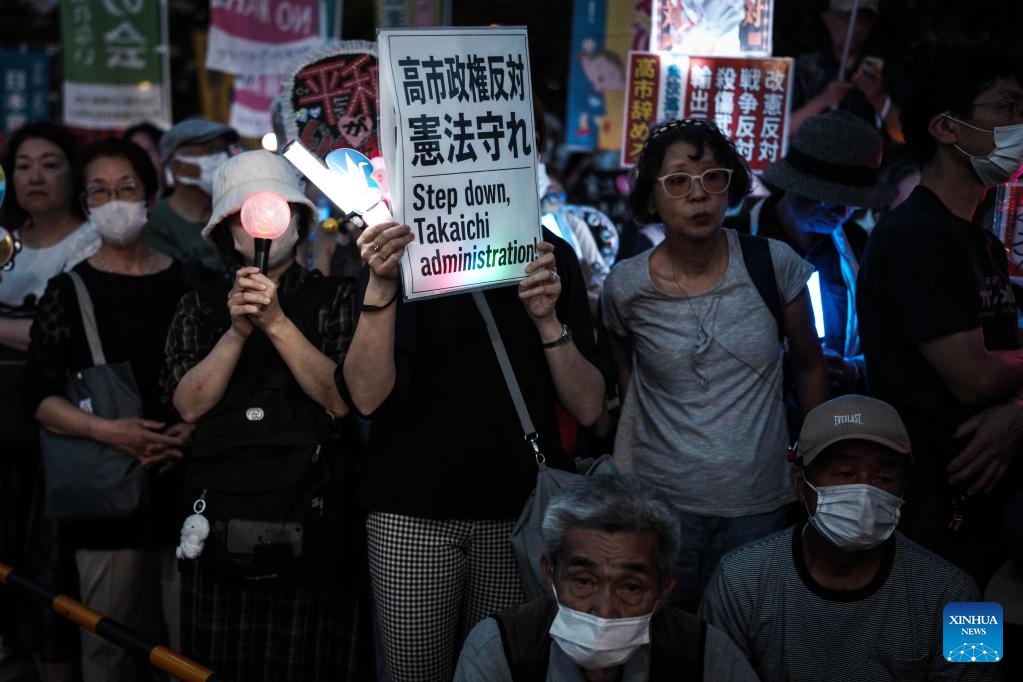
China on Wednesday blasted Japan's draft proposal that seeks to revise the country's three key security documents, saying the proposal smears China's normal military activities, deceives Japanese public and the international community to justify its acceleration of re-militarization and China called on the international community to remain vigilant on such moves.
Japan's ruling Liberal Democratic Party (LDP) on Tuesday adopted a draft proposal related to revising the country's three major security documents, calling for an unprecedented strengthening of institutional support for its military industry, according to a Yomiuri Shimbun report on Wednesday.
A Chinese expert said the move revealed Tokyo's continued use of the so-called "China threat" narrative to justify military expansion and a departure from its long-standing post-war security restraints.
The Chinese expert said the draft proposal along with Japan's 2026 Defense White Paper that portrays China as a major security challenge are closely linked, adding that these documents use China as a justification for military buildup, while Tokyo is steadily advancing policies aimed at loosening restrictions on military capabilities, expanding arms exports and pursuing a neo-militarist agenda under Sanae Takaichi's administration.
Security documents revision
When asked to comment on LDP's adoption of the draft proposal on revising the country's three key security documents, Chinese Foreign Ministry spokesperson Lin Jian said at the regular press conference that the draft proposal adds to existing evidence that exposes some Japanese forces' attempts and moves to seek re-militarization, break free from post-war norms, and accelerate military buildup.
By wantonly criticizing and smearing China's normal military activities and hyping up tensions surrounding Japan, the proposal seeks to deceive the Japanese public and the international community and justify the need to speed up re-militarization at home, Lin said.
They seek to embed military expansion and war preparedness into national institutions, economic infrastructure and public opinion, chip away at the constraints imposed by Japan's constitution, international law and domestic legislation, renounce their obligations under international law, and challenge the post-war international order. This trajectory is becoming more pronounced and posing a real danger. The international community needs to stay highly vigilant and nip it in the bud, Lin said.
According to Mainichi Shimbun, besides calling for a higher military budget, the draft urges Japan to clearly demonstrate its "national will" to strengthen self-defense.
The LDP is expected to submit the recommendations to Takaichi later this month. The government plans to take into account recommendations from an expert panel expected this autumn before formally approving a new set of the three key security documents at a Cabinet meeting in December, Mainichi Shimbun reported, adding that "further expansion of defense expenditures could result in increased financial burdens on Japanese people."
Apart from the expected revision of the security documents, according to Yomiuri Shimbun, the Japanese government is also set to publish a 2026 Defense White Paper. The white paper is expected to state that Japan will "strengthen cooperation with allies and like-minded countries and enhance deterrence and response capabilities" in response to what it describes as China's rapidly growing military power.
The white paper also mentioned the planned revision of Japan's three security documents this year, and detailed efforts to strengthen Japan's defense industrial foundation. Following revisions in April to the Three Principles on Transfer of Defense Equipment and Technology and related implementation guidelines, it emphasized the importance of expanding military equipment transfer to strengthen the deterrence and response capabilities of its allies and like-minded partners, according to the Yomiuri Shimbun.
"The Japanese government has used the China threat as a pretext to intensify military expansion, particularly in the area of lethal weapons exports, a trend that should raise concerns within the international community," Liu Jiangyong, a professor at the Institute of International Studies of Tsinghua University, told the Global Times.
Japan's military buildup
Japan is also taking concrete steps to boost its military industrial base. The Yomiuri Shimbun reported on Wednesday that the government is considering establishing a new organization to support the military industry through measures including promoting exports of military equipment.
The plan would potentially introduce a "Japanese version of Foreign Military Sales (FMS)," under which the government would act as an export intermediary on behalf of private companies.
Japan has already concluded several arms export arrangements under the framework established by its 2025 Defense White Paper. These include the planned export of Mogami-class destroyers to Australia.
Such developments have also sparked concerns abroad and within Japan. In March, the Japan Federation of Bar Associations issued a statement opposing the expansion of lethal weapons exports through the removal of restrictions under the "five categories" framework governing defense equipment transfers.
The organization warned that implementing the ruling party's proposals would effectively allow Japan-produced and exported weapons to contribute to and expand global conflicts.
The statement further argued that the proposals undermine Japan's long-standing principle of restricting arms exports, weaken its commitment to achieving international peace through peaceful and diplomatic means, and erode the foundations of the country's pacifist identity under its Constitution.
Neighboring countries are also worried. Yahoo Japan previously reported on opposition to the Japan-Philippines Comprehensive and Strategic Partnership. One Filipino resident identified as Mel expressed concern that growing defense cooperation between Japan and the Philippines could draw Manila further into US- and Japan-led military strategies in the region.
"Japan's re-militarization and the expansion of the military role of the Self-Defense Forces are not good for the Asia-Pacific region," he said, adding that memories and consequences of World War II continue to affect people today.
China's Ministry of State Security (MSS) warned that overseas espionage and intelligence agencies are using new types of spy equipment, including detection buoys, sensor-fitted marine animals, wave gliders and shipborne electronic devices, to steal China's sensitive maritime data, noting that such activities pose serious threats to the country's territorial, military and economic security, according to an article released by the Ministry's WeChat account on Friday.
The article disclosed more details of the new types of spy equipment. For example, a spherical ocean monitoring buoy found in a certain Chinese sea area was deployed by an overseas marine research institute. It was equipped with a meteorological sensor package on top and dragged an anchor chain underneath for fixation. It also carried a high-precision acoustic sensor array, enabling it to collect surrounding sound wave data and the acoustic signatures of Chinese submarines in real time.
Also, it was exposed that in a certain Chinese sea area, relatively large living marine animals were found to have been fitted with sensors, turning into "spy turtles and spy fish." As they swam in designated areas, they collected sensitive marine environmental data, such as water temperature, salinity and ocean currents, and transmitted the data overseas via satellite in real time.
A new type of wave glider deployed by overseas actors was also found in a certain Chinese sea area. Powered by wave motion and solar energy, it carried positioning, radio communication and other sensors, allowing it to receive real-time satellite instructions and transmit overseas military-related maritime environmental data and information on vessel activities, according to MSS.
The article also noted that a foreign company promoted "new shipborne electronic equipment" for commercial cargo ships under the guise of "maritime services," but the equipment was in fact a multimodal intelligence-gathering device capable of tracking port activities in real time and integrating meteorological, navigational and other data to build a "maritime surveillance network."
Sensitive maritime data and materials, such as ocean current dynamics, water temperature characteristics, temperature distribution and seabed topography, would seriously endanger China's territorial security, military security and economic security if stolen by overseas espionage and intelligence agencies, read the article.
Maritime security is an important component of national security, and safeguarding it requires joint efforts from all, the ministry said. It reminded the public to beware of suspicious cooperation and report suspicious devices, while calling shipowners to remain alert to unfamiliar businesses promoting suspicious maritime service devices and not to casually purchase or install equipment from unknown sources.
General Secretary of the Lao People's Revolutionary Party Central Committee and Lao President Thongloun Sisoulith lays a wreath at the Monument to the People's Heroes on Tian'anmen Square in Beijing, capital of China, June 5, 2026. (Xinhua/Dai Tianfang)
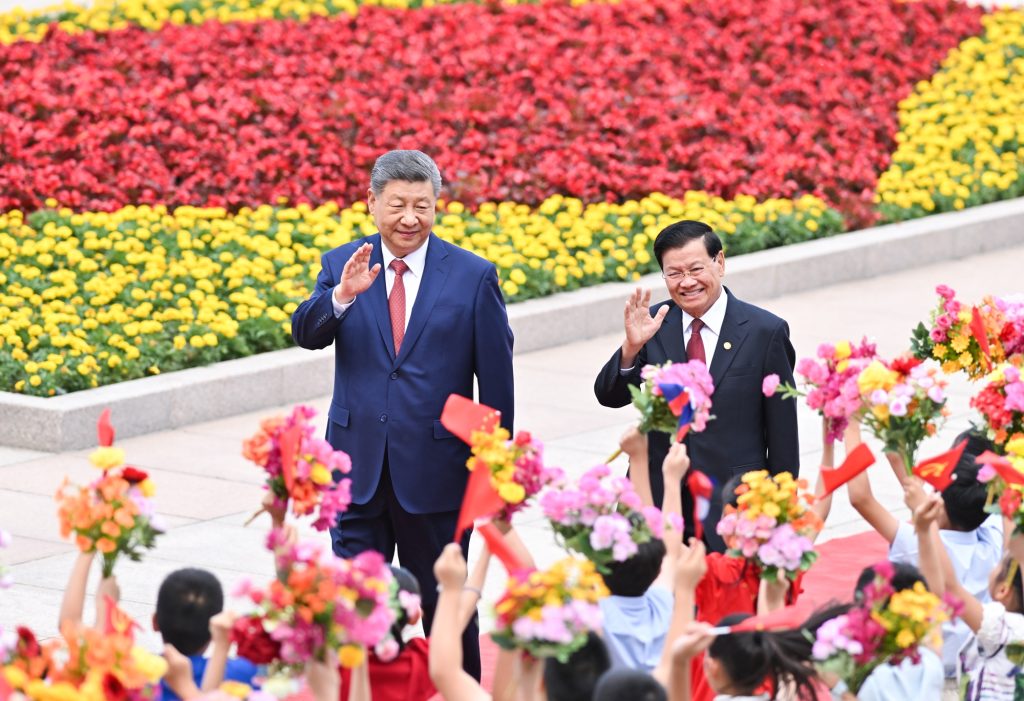
General Secretary of the Communist Party of China Central Committee and Chinese President Xi Jinping held talks with General Secretary of the Lao People's Revolutionary Party Central Committee and Lao President Thongloun Sisoulith in Beijing on Friday, the Xinhua News Agency reported.
According to Xinhua, Xi said China is willing to work with Laos to achieve a new leap in bilateral ties and build an all-weather China-Laos community with a shared future in the new era.
Laos fully agrees with China and supports the upgrading of bilateral ties, and stands ready to work with China to consolidate high-level political mutual trust, Thongloun said, per Xinhua.
After the talks concluded, the two sides jointly witnessed the signing of cooperation documents covering areas such as inter-party exchanges, people's wellbeing, finance, customs, trade, youth exchanges and media.
2026 marks the 65th anniversary of diplomatic relations between Laos and China and the China-Laos Friendship Year. Standing at a new historic juncture, experts note the two countries will not only expand pragmatic cooperation to nurture new growth drivers, but also ramp up regional coordination. Leveraging the exemplary role of their bilateral partnership in the neighborhood, China and Laos are poised to inject positive momentum into regional peace, stability and development.
Promising prospects
During the talks, the Chinese leader made four points to advance bilateral ties, which included keeping to the socialist path, building a strong foundation for mutually beneficial cooperation, strengthening the traditional friendship between the two peoples, and improving coordination on foreign policies, according to Xinhua.
He called on the two sides to take the establishment of the "3+3" strategic dialogue on diplomacy, defense and public security as an opportunity to deepen law enforcement and security cooperation, and resolutely crack down on cross-border crimes.
Noting that China is ready to work with Laos to upgrade the China-Laos Economic Corridor cooperation, Xi said the two sides should accelerate railway connectivity among China, Laos and Thailand and achieve greater regional connectivity at an early date, according to Xinhua.
China and Laos should boost cooperation in traditional areas such as agriculture and electricity, and tap into emerging fields like artificial intelligence and the digital economy, Xi said, adding that China will continue to provide assistance to Laos within its capacity.
Xi said that the two countries should take the Year of China-Laos Friendship in 2026 as an opportunity to expand cooperation in culture, education, health, and at subnational levels.
China now stands as the leading banner for the socialist system and developing countries, and a mainstay in safeguarding world peace and promoting the building of a multipolar world, said Thongloun, adding that China's development has provided valuable experience for the vast number of developing countries, including Laos.
He stressed that the Lao side firmly adheres to the one-China principle and supports the series of major global initiatives put forward by General Secretary Xi.
Xu Liping, director of the Center for Southeast Asian Studies at the Chinese Academy of Social Sciences, told the Global Times that guided by head-of-state diplomacy, political mutual trust between China and Laos has continued to deepen.
Drawing on the institutional strengths inherent to socialist systems, the two sides can further align their medium- and long-term development strategies to pursue common development, Xu added.
Ahead of his summit with Chinese leaders in Beijing, Thongloun kicked off his China itinerary with visits to Hangzhou in East China's Zhejiang Province. While touring the country's renowned tech hub, the Lao leader paid site visits to Deep Robotics as well as Alibaba. His cheerful laugh while testing out domestically developed Chinese quadruped robots has gone viral across Chinese social media platforms.
In Zhejiang, the Lao leader also learned about China's practices in green development at Yucun village in Anji county, the birthplace of the concept of "lucid waters and lush mountains are invaluable assets," which has guided the village to pursue an eco-friendly development path.
Upon his arrival in Beijing on Thursday, Thongloun visited the Party School of the CPC Central Committee, and returned to the room where he stayed for one month 26 years ago when he studied for an exchange program, as well as the China Academy of Space Technology.
Per Thongloun's visit itinerary and bilateral official statements, China-Laos cooperation is expanding beyond traditional sectors into emerging fields, said Xu. "Boasting strong complementarities in emerging growth drivers including green economy, digital economy as well as aerospace, the two nations enjoy enormous room for collaboration, promising deeper and more substantial pragmatic cooperation ahead."
According to China's Foreign Ministry, China-Laos economic and trade ties have continued to deepen in recent years, with China now serving as Laos' largest source of foreign investment and second-largest trading partner.
Bilateral trade reached $9.82 billion in 2025, up 19.3 percent year-on-year. China's exports to Laos totaled $4.32 billion, an increase of 17.6 percent, while imports from Laos rose 20.7 percent to $5.5 billion, according to the ministry.
Positive demonstration effect
During the Friday meeting with Thongloun, Xi said that China has always regarded Laos as a priority in its neighborhood diplomacy, Xinhua reported.
China hopes to see Laos play a bigger role in international and regional affairs, and the two sides should work closely in multilateral settings to safeguard the common interests of the Global South, the Chinese leader added.
Along with Cambodia, Laos was one of the first countries among ASEAN members to sign an agreement to build a community with a shared future with China. Transcending bilateral ties, China-Laos pragmatic cooperation plays a leading and exemplary role in China-ASEAN relations, analysts said.
China's first 500-kV cross-border alternating-current power link went into operation in April this year, marking a new step in energy cooperation between China and Laos.
The project, the largest and highest-voltage power connection between the two countries, triples cross-border transmission capacity from 50 megawatts to 150 megawatts. It is expected to transmit 3 billion kWh of clean electricity annually, 30 times the capacity of previous lines, according to Xinhua.
As an important member of the Lancang-Mekong Cooperation, Laos boasts abundant hydropower resources and functions as a regional energy "battery" for the ASEAN Power Grid initiative, Xu said.
Deep bilateral energy cooperation and cross-border grid upgrades between China and Laos facilitate regional integration, complementary growth and offer a robust benchmark for China-ASEAN cooperation on infrastructure, green transition and capacity synergy, Xu noted.
The year 2026 also celebrates five years since the China-Laos Railway went into service. According to a statement sent to the Global Times by China Railway Kunming Group on May 28, the China-Laos Railway has reached a new milestone, with cumulative passenger train runs surpassing 100,000 since its launch on December 3, 2021. The flagship project under the Belt and Road Initiative has handled 73 million passenger trips.
"Beyond transforming Laos from a landlocked country into a land-linked hub, the railway has boosted regional trade and economic integration and become a flagship project for regional cooperation," Ma Bo, an associate professor with the School of International Studies, Nanjing University, told the Global Times on Friday.
Boasting fruitful cooperation spanning infrastructure, clean energy and modern agriculture as well as the promising emerging track of artificial intelligence, China and Laos have yielded substantial achievements across diverse fields, said Ma. "Expected to keep delivering exemplary effects, Laos will serve as a key practical model for China's efforts to advance the building of a community with a shared future with neighboring countries."
In a signed article by Thongloun released by Lao News Agency on Friday, the Lao leader said that "Today, the Laos-China relationship stands at its highest point in history, serving as a model of equality, mutual respect and mutually beneficial cooperation."