Chinese vice president meets UK foreign secretary

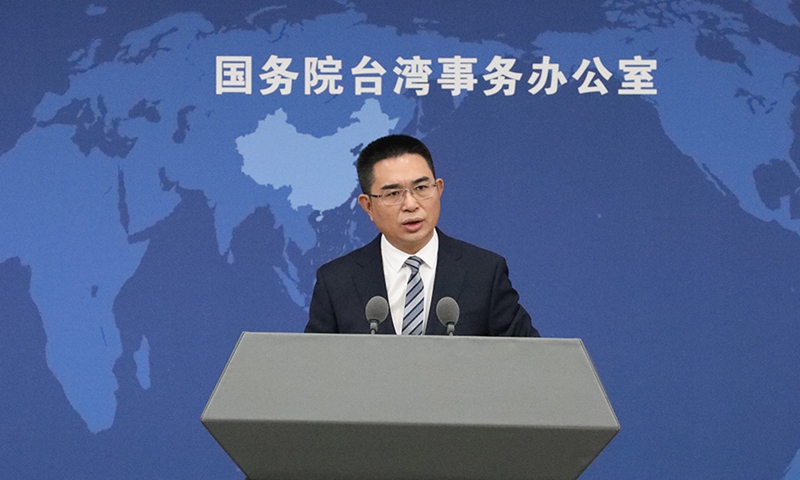
Chinese Vice President Han Zheng met with UK Foreign Secretary Yvette Cooper in Beijing on Tuesday.

The two countries' leaders agreed in January to develop a long-term and consistent comprehensive strategic partnership between China and the UK, opening a new chapter of bilateral relations, Han said.

Noting that improving bilateral ties serves the interests of the people of both countries, Han said both sides should jointly shoulder the responsibilities of major countries, strengthen strategic communication, consolidate the positive momentum of bilateral relations, explore new opportunities, and boost people-to-people exchanges.

He called on both sides to work together to practice true multilateralism, jointly advance global governance reform, and bring greater stability and certainty to the world.

Cooper said the UK and China share broad common interests and cooperation potential in areas such as trade and investment, artificial intelligence, green development and addressing climate change.

The UK is ready to work with China to implement the important consensus reached between the leaders of the two countries, engage in constructive dialogue and cooperation, and jointly address challenges, Cooper said.

Exclusive: Chinese-led HyperMillennium project marks country’s milestone in cosmological simulation and domestic supercomputing capabilities: insider

An international research team led by Chinese scientists at the National Astronomical Observatories of the Chinese Academy of Sciences (NAOC) recently unveiled the first batch of findings of the largest-ever cosmological simulation ever performed, codenamed "HyperMillennium." Its achievements have been hailed by international peers as a "computational marvel."

It also marks an important milestone: China has truly begun to move to the forefront of digital simulation worldwide, project member Wang Qiao,  a research fellow at the NAOC, told the Global Times in an exclusive interview. The achievements of the project mark a major leap for China's cosmological numerical simulations — from long-term reliance on foreign computing resources to conducting frontier research based on domestically developed independent systems, Global Times has learned.

The project uses PhotoNs, software independently developed by the NAOC team, and runs on domestic supercomputers. Over more than a decade, the team has continuously worked on algorithms, programming and optimization, eventually achieving long-duration computing capability using tens of thousands of accelerator cards at a domestic supercomputing center.

"In the past, the common approach was to import ready-made code from abroad, cooperate with domestic computing centers, pay for computing time and then finish the task. But this time is completely different — from the design of the scientific project and software development to deep integration with domestic hardware, everything was built independently from scratch. It can be said that this is a fully domestic, end-to-end solution, and one that has achieved a leading position in this field. It carries clear landmark significance," Wang said.

China's leading supercomputer manufacturer Dawning Information Industry Co. Ltd., or Sugon, has provided key computing and storage support for the project. During the project's long-cycle, high-intensity operation, it offered stable and reliable support for the continuous calculation of gravitational evolution involving ultra-large-scale dark matter particles. In the face of the PB-level massive data generated by the simulation, Sugon's storage system also enabled efficient data reading, writing and processing, as well as long-term secure preservation.

Wang also explained to the Global Times that conducting frontier research for the entire HyperMillennium project on domestically developed independent systems offers another key advantage. "Only by leading the project ourselves can we control its future direction," Wang said.

"Next, we plan to incorporate more physical processes into the simulations, such as adding more gas or magnetic fields. This will make the model more complex and require additional computing power. Now that we have established the current framework, we can build on it to further enrich the content and more self-consistently carry out the full-process simulation from dark matter to luminous galaxies. This is very important," Wang said.

According to a press release provided by the NAOC, the simulation covers a cube with a side length of 12 billion light-years and uses 4.2 trillion virtual dark matter particles. By applying a technique called N-body numerical simulation, the team accurately recreated how large-scale structures in the universe evolved over 10 billion years. In simple terms, they built a virtual universe inside a supercomputer, starting from just after the Big Bang and following the force of gravity step by step, read the release.

This provides theoretical support for research into dark matter and dark energy, and also offers strong support for new-generation galaxy survey programs, such as China Space Station Telescope and the European Space Agency's Euclid mission, according to the NAOC.

We are entering an era where surveys of enormous cosmological volumes have the potential to revolutionize our understanding of dark energy, cosmological inflation, and the properties of neutrinos, said Mike Boylan-Kolchin of the University of Texas at Austin, the US. The professor hailed the simulation a "computational marvel." 

"For this to happen, we need advanced theoretical tools, and the HyperMillennium Simulation is a computational marvel that will help unlock fundamental physics from observations of the cosmos. It has an unprecedented range of volume and mass resolution, enabling detailed predictions about how huge numbers of relatively common galaxies are distributed across the cosmic web and the properties of inherently rare and interesting objects that are inaccessible with smaller volumes. The HyperMillennium Simulation will be a touchstone for the galaxy formation and cosmology communities for years to come," the professor said. 

"The HyperMillennium simulation redefines what is nowadays possible in numerical cosmology. I am extremely impressed that the team could realize this incredibly large and highly accurate simulation. Its enormous statistical power allows us to carry out new precision test of the LambdaCDM cosmological model, something that is very important for the field," said Volker Springel, the director of the Max Planck Institute for Astrophysics in Germany.

By comparing a high-precision virtual universe with real-world observations, the HyperMillennium project provides important support for research into fundamental cosmological questions such as dark matter and dark energy, while deepening understanding of the laws governing galaxy evolution. At the same time, its simulation data will offer important scientific support for major sky survey projects, including the China Space Station Telescope, and the European Space Agency's Euclid space telescope, Wang explained.

"Although cosmological simulations may sound highly sophisticated and far from everyday life, they are in fact closely connected to the public," Wang explained. While the results of numerical simulations are essentially abstract data, they can be transformed through visualization into smooth, cinematic and visually striking images. These images can vividly show the history of cosmic evolution, large-scale structures and the formation of important celestial bodies, presenting a complete history of the universe, he said. 

According to Wang, leveraging this capability, the Qianyan project has already partnered with the Beijing Planetarium, the Shanghai Astronomy Museum, several other science and technology museums, as well as institutions such as the China Academy of Art, to convert data into films, images and artistic creations for science popularization. 

This approach can present the appearance of the universe to the public in a direct and credible way — supported by real data while also carrying artistic appeal. Therefore, it has positive significance in terms of both science communication and cultural outreach, he added. 

Young Chinese volunteer at nursing residences for affordable living, bringing vitality to seniors

On an ordinary afternoon, 26-year-old robotics professional Lin Xiaoyu finished her morning remote meetings and stepped out of her room in a nursing home in Foshan, South China's Guangdong Province. She headed straight to the third-floor communal activity room.

Lin is not there as a visitor, but a full-time resident. In exchange for 30 hours of volunteer service each month, she enjoys accommodation at just 1,000 yuan ($147) per month for one bedroom with bathroom, far below market rates.

Her experience is not unique. On Chinese social platforms such as Xiaohongshu and Douban, "moving into a nursing home" has become a popular lifestyle topic among young people. In late 2025, an East China's Zhejiang Province netizen, 27, posted about moving into a nursing home with her grandmother, garnering over 100,000 likes and sparking widespread attention. She revealed her monthly accommodation cost was only 1,500 yuan.

Recognizing the complementary needs of seniors and youth, nursing institutions in multiple Chinese cities have begun piloting programs open to young people. Through volunteering-for-housing or discounted rent models, they are exploring a new community form known as "youth-elder co-living."

Xinhua Daily reported on May 23 that several cities in East China's Jiangsu Province have launched such programs, allowing young people to live at low or no cost in nursing homes by providing at least 20 hours of volunteer service per month.

A member of the Standing Committee of CPPCC Shanghai Committee proposed earlier in 2026 to pilot an "intergenerational co-living" model in Shanghai's nursing institutions, according to the Shanghai Observer.

Yang Tuan, a researcher at the Chinese Academy of Social Sciences' Social Policy Research Center, described "youth-elder co-living" as both an exploratory attempt by the elderly care industry to optimize resource allocation and upgrade its operations, and a grassroots innovation addressing deeper social issues such as population aging, urban youth loneliness and emotional well-being.

It seeks to reconstruct a micro-social ecosystem of neighborhood mutual assistance and intergenerational integration non-affiliated with blood relations. Its success hinges on a balance between policy guidance, the emotional needs of generations, and market logic, Yang told the Global Times.
New models for nursing homes

In parts of Lishui, Zhejiang, nursing homes are no longer seen solely as places for seniors to spend their later years.

Since February 2024, the Jinyun County Civil Affairs Bureau, in collaboration with local nursing homes, has launched a companionship-based elderly care service. Several designated homes now offer housing to young and middle-aged people aged 18 to 45 at a monthly rent of 1,000 yuan, reported CCTV News.

Li Min (pseudonym), head of a Jinyun county nursing home, told reporters that since the project launched, the facility has become a shared home for dozens of young people and dozens of elderly residents.

From morning till evening, she sees young residents accompanying seniors for walks in the courtyard, teaching them how to make video calls on smartphones, sharing workplace stories or simply chatting. The cafeteria is filled with the aroma of food and the sound of laughter.

"Young people need stable, affordable housing, while they bring fresh knowledge, information, sharp minds and youthful energy - exactly what most seniors who crave social participation and fear loneliness need," Li told the Global Times.

Yang noted that this innovative approach helps alleviate the operational pressure caused by underutilized resources in nursing institutions.

Data from China's Ministry of Civil Affairs shows that in 2024, the average occupancy rate of nursing homes nationwide was below 50 percent, with some regions seeing vacancy rates exceeding 60 percent, as per the China City News in October 2025.

At the same time, demand for elderly care services has grown rapidly. By the end of 2025, China's population aged 60 and above had exceeded 320 million, an increase of 16.49 million from the previous year. It is projected to surpass 400 million by around 2035, reported the Minsheng Weekly on March 30.

Young residents directly improve resource utilization and supplement operating funds, Yang explained. "They also reduce the need to hire additional caregivers, adding fresh caregiving capacity. This gives nursing homes a valuable buffer period to develop service models that better match the real needs and payment ability of the elderly, ultimately attracting more seniors through upgraded offerings."

Intergenerational win-win

Beyond the economic motivations of nursing institutions, the pilot programs for intergenerational integration reflect a mutual pursuit between the younger and older generations.

Lin told the Global Times that her decision to live in a nursing home was driven by both practical and emotional needs.

"Living with the elderly has eased my sense of loneliness from leaving home," she said. "The seniors here are like my own grandparents. They gave me homemade snacks and tell stories from their youth, a warmth you can't get in an ordinary rental apartment."

Among young people who have participated in intergenerational co-living projects, 86 percent reported "enhanced sense of social responsibility," and 72 percent said it "improved their interpersonal skills," reported pension service portal linkolder.com in 2025.

In a Foshan nursing apartment, 68-year-old retired teacher Zhang Weiguo, who lives alone, has felt the warmth of intergenerational companionship since young tenants moved in.

"When I first moved in, I mostly sat alone by the window. My children work in other cities and rarely come back to Foshan," Zhang told the Global Times. "Now, young people teach me how to video call my grandchildren on WeChat, help me book medical check-ups online and pull me into handicraft activities."

While cities across China are actively exploring youth-elder co-living, turning these projects into genuine intergenerational mutual assistance communities is no easy task.
Li said the biggest challenge is balancing supply-demand matching with service standards.

"We invest considerable effort in interviewing and screening young people who are caring, patient and capable of providing companionship," she explained. "We assess whether they have relevant skills, such as digital literacy, musical or dance talent, or gardening knowledge. Many young people are kind and have potential, but lack direct skills, so we can't accept them."

Li hopes for more policy support and societal backing, such as professional intergenerational communication training or partnerships with universities and companies for volunteer programs, to make the model more sustainable.

Yang emphasized that for the model to develop sustainably rather than becoming cheap rental housing or inexpensive caregiving, it is crucial to deeply understand both sides' needs and achieve genuine value matching. This requires more refined project design and management, clear boundaries between "service" and "companionship," and incentive mechanisms that turn volunteers' time and skills into the emotional comfort and social connection seniors truly need, without replacing professional care.

"Intergenerational mutual assistance builds a true sense of community, helping young people rediscover self-worth and belonging beyond their jobs, while bringing seniors respect and joy through companionship," Yang said. "This exploration is just the beginning. We are just starting to see the prototype of a more diverse, integrated, warm and resilient future community."

China Coast Guard patrols Huangyan Dao

China Coast Guard (CCG) said it conducted law-enforcement patrols in the territorial sea of China's Huangyan Dao and its surrounding areas on Sunday.

The service noted it has enhanced law-enforcement patrols since May, and regulated ships engaged in illegal rights-violation activities in accordance with laws and regulations.

Such patrols are meant to further strengthen orderly management of relevant waters and resolutely safeguard China's territorial sovereignty and maritime rights and interests, the CCG stressed.

Chinese defense ministry slams Dutch warship helicopter’s intrusion into airspace over Xisha Qundao, urges it to stop provocations

A shipborne helicopter from the Dutch Navy frigate De Ruyter illegally intruded into the airspace over China's Xisha Qundao, seriously violating China's sovereignty and undermining China's security interests, and the Chinese military organized maritime and aerial forces to take effective measures to dispel the helicopter out of the area and has lodged solemn representations with the Dutch side, a spokesperson for the Chinese Ministry of National Defense (MND), said on Thursday.

"The Xisha Qundao is China's inherent territory. The Chinese military remains on high alert and resolutely defends national territorial sovereignty and maritime rights and interests. We urge the Dutch side to stop its infringements, risky and provocative acts, and strictly restrain frontline sea and air forces to avoid any unexpected incidents at sea or in the air," said Jiang Bin, spokesperson for the Chinese Ministry of National Defense.

The response followed on Wednesday a spokesperson for the Chinese People's Liberation Army (PLA) Southern Theater Command also expressed firm opposition to the intrusion.

According to the WeChat account of the Command, Senior Captain Zhai Shichen said that a Dutch Navy frigate, De Ruyter, illegally trespassed into China's Xisha Qundao in the South China Sea and conducted multiple shipborne helicopter operations violating China's territorial airspace.

The PLA Southern Theater Command organized maritime and air forces to take necessary measures in accordance with laws and regulations to expel and drive away the trespassing vessel, according to Zhai.

Troops of the PLA Southern Theater Command remain on high alert and are resolute in their duty to safeguard national sovereignty, security and regional peace and stability, Zhai added.

Shop fire leaves 5 dead, 1 injured in central China's Hunan

Five people were dead and another was injured after a fire broke out in a shop in central China's Hunan Province on Sunday, according to local authorities.

The fire broke out in a shop in Qidong County at 12:45 a.m., and the injured person is receiving medical treatment with non-life-threatening injuries, the county's emergency management bureau said.

Relevant aftermath work and investigation of the cause of the accident are underway.

Marcos to visit Japan with security ties reportedly topping agenda; Tokyo trip reveals Manila's intent to exploit seabed resources around Taiwan island, interfere in China's maritime security: Chinese expert

Philippine President Ferdinand Marcos Jr. will undertake a state visit to Japan from May 26 to 29, during which he is set to meet Japanese Prime Minister Sanae Takaichi and they are reportedly expected to discuss "cooperation toward realizing a free and open Indo-Pacific" and "coordinating responses to China's maritime expansion," according to media reports.

Several media reports previewed the agenda for the talks, with Manila Bulletin releasing a report titled "Security ties with Japan top Marcos' agenda during Tokyo trip." Philippine media GMA News reported that the Philippine president and the Japanese prime minister are expected to discuss the future trajectory of the Philippines and Japan's strengthened strategic partnership. The Japan Times reported that Marcos and Takaichi will discuss Japan's evolving defense and security posture, and will also likely to involve another subject that has garnered headlines in recent days: Taiwan.

A Chinese expert said that beyond economic and trade cooperation, the talks between Japan and the Philippines will inevitably involve military and security cooperation, defense exports, particularly on maritime security, the South China Sea, and Taiwan-related issues. 

Coordination and cooperation on maritime issues between the Philippines and Japan has been gradually closer, extending into the South China Sea, the East China Sea and even the Taiwan Straits. Against this backdrop, Marcos' repeated claims that he adheres to the one-China principle are fundamentally contradictory and inconsistent to his actual actions, revealing a highly two-faced strategic posture, and the real objective of the Philippines and Japan is to exploit seabed resources and gain access to undersea mineral wealth in waters around the Taiwan Straits, the expert said. 

An X user claiming to be Philippine media figure Benjamin Alejandro recently released a report titled "hidden agendas behind Marcos's visit to Japan," claiming that on maritime issues, Philippine and Japan are expected to reaffirm the arbitral ruling on the South China Sea and coordinate positions on the East China Sea and the Taiwan Straits. There is even talk of consultations with Taiwan authorities on maritime delimitation, potentially expanding into the western Pacific east of Taiwan island.

Some netizens expressed their voices of criticism in the comment section under the X of the article, with one saying "Ugly things are never put in the sun!" and another saying "Marcos is crazy to hype up those maritime issues, I expect China to hit back hard."

It is worth noting that in an interview with Japanese media on Monday, Marcos just reaffirmed the Philippines' adherence to the one-China policy and stressed that the country would not interfere in issues concerning Taiwan island, the Philippine News Agency reported.

When asked by foreign media reporter to comment on Marcos's remarks on Monday that his country would likely be involved in any conflict over Taiwan due to his country's proximity to the island, claiming that "we do not have a choice because Taiwan is so close to the Philippines, and we have almost 200,000 Filipino nationals living and working in Taiwan," Chinese Foreign Ministry spokesperson Guo Jiakun said at Tuesday's press briefing that China noted that the Philippine leader reiterates his commitment to the one-China policy and non-interference in China's internal affairs. It should be emphasized that, "large number of Filipinos living and working" on the Taiwan island and "geopolitical proximity" should not serve as the excuse for one country to interfere in another country's internal and sovereign affairs.

We hope the Philippines will honor its commitments, match its words with actions, and abide by the one-China principle through concrete actions, Guo said.

Marcos' remarks exposed contradictions between Manila's repeated claims of adhering to the one-China principle and its actual strategic behavior. If they discuss maritime delimitation issue, it reflects the long-standing ambitions of both the Philippines and Japan to pursue maritime and military expansion, Chen Xiangmiao, a research fellow at the National Institute for South China Sea Studies, told the Global Times on Thursday. 

The expert emphasized that the Philippines' real objective is to secure rights to exploit seabed resources and gain access to undersea mineral wealth in waters around Taiwan island. By attempting to use the Japan's defense related-advantages and the Taiwan authorities to expand its own access to mineral resources, the Philippines is in essence interfering in China's internal affairs, Chen said.

Chen noted that with right-wing forces increasingly dominating Japanese politics and pushing what many see as a dangerous revival of militarism, Tokyo has in recent years continuously sought to expand its continental shelf claims. If the Philippines further enables and advances such a proposal, it would first have a severely destabilizing impact on maritime security.

The key issue now is whether Manila will match its public commitment to the one-China principle with concrete actions. If the Philippines continues to insist on such a contradictory approach, it will further erode mutual trust and inevitably bring negative consequences to bilateral ties and regional stability, Chen said.

Wuhan University removes entry reservation requirement; Greater social engagement fuels demand for openness: education expert

Wuhan University, one of the most prestigious universities in China, officially dropped its reservation requirement for public campus entry on Wednesday. Visitors can now enter on foot through Luojia Gate and Hongyi Gate with valid IDs — no reservations needed - on weekdays, weekends and holidays, reported Hubei Daily, citing sources from the university.

The university introduced a reservation system in July 2023, requiring visitors to book their visits in advance. Access was limited to weekends and holidays, while weekday entry was not allowed. The policy was first eased in September 2024. Visitors were allowed to enter on foot during weekends and holidays by presenting their ID cards without making reservations, although the campus remained closed on weekdays.

"University management should not stop at the campus walls," Chu Zhaohui, a research fellow at the National Institute of Education Sciences, told the Global Times on Thursday, adding that universities need to take on broader social responsibilities and engage more with society, while finding ways to remain open and maintain orderly campus operations.

Wuhan University boasts a rich academic environment and is widely celebrated for its breathtakingly beautiful campus, often hailed as one of China's most beautiful university campuses, according to the Xinhua News Agency. 

The cherry blossoms at the university are undoubtedly one of its most spectacular highlights. They usually begin blooming in mid-March, peak in late March and last only about 13 to 20 days. Every year when the cherry blossoms are in full bloom, tourists from all over the country flock to the campus in large numbers, Xinhua said.

The university's decision to reopen its campus more broadly to the public also sparked discussion on social media.

Xu Shunda, a campus-focused blogger who has 2.55 million followers, voiced support for the move. "Breaking down the barriers created by campus walls," Xu wrote, adding that universities are public educational resources and "should not be locked away behind layer upon layer of walls."

Some social media users expressed concerns about the decision, arguing that allowing visitors to enter the campus without reservations could attract large numbers of social media influencers and tourists checking in for photos, potentially disrupting teaching and campus order.

Some students from other universities expressed concern that the policy was impractical, arguing that unrestricted public access could lead to more crowded campuses, reduced order and great in convenient for students. 

Chu said people should see the experience as part of a learning process, one that involves mutual respect as well as exposure to and appreciation for campus culture. 

According to the official website of Fudan University, visitors who wish to visit the campus are required to register through the university's e-campus WeChat mini program. Information on the platform shows the registration process is relatively simple. After completing registration, visitors can enter the campus during their selected time slot using valid IDs or by scanning a QR code.

Meanwhile, Peking University and Tsinghua University, both popular tourist destinations in Beijing, still require reservations for campus visits, though visitors can enter after completing a similarly simple registration process through their WeChat mini programs.

Former Tsinghua University professor Zheng Yuhuang has posted multiple videos praising Wuhan University for opening its campus to the public. In 2026, Zheng launched a project called the "Campus Gate Experiment," where he has personally taken his mother to visit 26 universities in Beijing, Zhejiang, and Shanghai. 

He pointed out online that most Chinese universities are not open to the public, whereas many university campuses abroad are open to society. He hopes that all universities in China can adopt a policy allowing entry simply by scanning an ID card.

Chu suggested that other universities could also consider gradually expanding public access based on practical conditions and social demand. He added that campus openness should go beyond simply allowing public entry, with universities encouraged to organize more public welfare activities and lectures, and create opportunities for students to engage with the broader society, which he said would also benefit talent cultivation and students' personal growth.