Chinese vice president meets UK foreign secretary

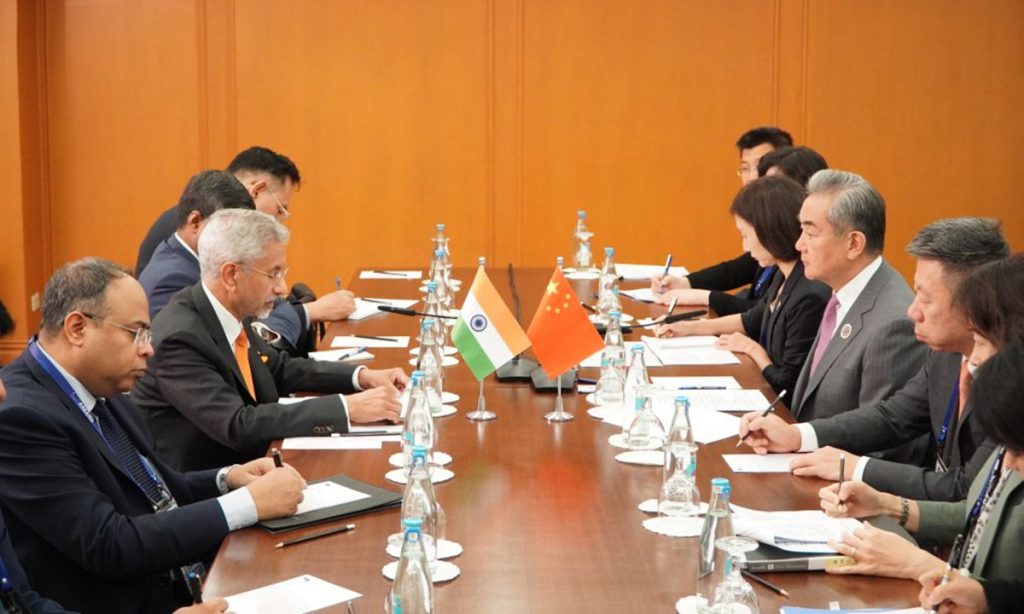
Chinese Vice President Han Zheng met with UK Foreign Secretary Yvette Cooper in Beijing on Tuesday.

The two countries' leaders agreed in January to develop a long-term and consistent comprehensive strategic partnership between China and the UK, opening a new chapter of bilateral relations, Han said.

Noting that improving bilateral ties serves the interests of the people of both countries, Han said both sides should jointly shoulder the responsibilities of major countries, strengthen strategic communication, consolidate the positive momentum of bilateral relations, explore new opportunities, and boost people-to-people exchanges.

He called on both sides to work together to practice true multilateralism, jointly advance global governance reform, and bring greater stability and certainty to the world.

Cooper said the UK and China share broad common interests and cooperation potential in areas such as trade and investment, artificial intelligence, green development and addressing climate change.

The UK is ready to work with China to implement the important consensus reached between the leaders of the two countries, engage in constructive dialogue and cooperation, and jointly address challenges, Cooper said.

Exclusive: Chinese-led HyperMillennium project marks country’s milestone in cosmological simulation and domestic supercomputing capabilities: insider

An international research team led by Chinese scientists at the National Astronomical Observatories of the Chinese Academy of Sciences (NAOC) recently unveiled the first batch of findings of the largest-ever cosmological simulation ever performed, codenamed "HyperMillennium." Its achievements have been hailed by international peers as a "computational marvel."

It also marks an important milestone: China has truly begun to move to the forefront of digital simulation worldwide, project member Wang Qiao,  a research fellow at the NAOC, told the Global Times in an exclusive interview. The achievements of the project mark a major leap for China's cosmological numerical simulations — from long-term reliance on foreign computing resources to conducting frontier research based on domestically developed independent systems, Global Times has learned.

The project uses PhotoNs, software independently developed by the NAOC team, and runs on domestic supercomputers. Over more than a decade, the team has continuously worked on algorithms, programming and optimization, eventually achieving long-duration computing capability using tens of thousands of accelerator cards at a domestic supercomputing center.

"In the past, the common approach was to import ready-made code from abroad, cooperate with domestic computing centers, pay for computing time and then finish the task. But this time is completely different — from the design of the scientific project and software development to deep integration with domestic hardware, everything was built independently from scratch. It can be said that this is a fully domestic, end-to-end solution, and one that has achieved a leading position in this field. It carries clear landmark significance," Wang said.

China's leading supercomputer manufacturer Dawning Information Industry Co. Ltd., or Sugon, has provided key computing and storage support for the project. During the project's long-cycle, high-intensity operation, it offered stable and reliable support for the continuous calculation of gravitational evolution involving ultra-large-scale dark matter particles. In the face of the PB-level massive data generated by the simulation, Sugon's storage system also enabled efficient data reading, writing and processing, as well as long-term secure preservation.

Wang also explained to the Global Times that conducting frontier research for the entire HyperMillennium project on domestically developed independent systems offers another key advantage. "Only by leading the project ourselves can we control its future direction," Wang said.

"Next, we plan to incorporate more physical processes into the simulations, such as adding more gas or magnetic fields. This will make the model more complex and require additional computing power. Now that we have established the current framework, we can build on it to further enrich the content and more self-consistently carry out the full-process simulation from dark matter to luminous galaxies. This is very important," Wang said.

According to a press release provided by the NAOC, the simulation covers a cube with a side length of 12 billion light-years and uses 4.2 trillion virtual dark matter particles. By applying a technique called N-body numerical simulation, the team accurately recreated how large-scale structures in the universe evolved over 10 billion years. In simple terms, they built a virtual universe inside a supercomputer, starting from just after the Big Bang and following the force of gravity step by step, read the release.

This provides theoretical support for research into dark matter and dark energy, and also offers strong support for new-generation galaxy survey programs, such as China Space Station Telescope and the European Space Agency's Euclid mission, according to the NAOC.

We are entering an era where surveys of enormous cosmological volumes have the potential to revolutionize our understanding of dark energy, cosmological inflation, and the properties of neutrinos, said Mike Boylan-Kolchin of the University of Texas at Austin, the US. The professor hailed the simulation a "computational marvel." 

"For this to happen, we need advanced theoretical tools, and the HyperMillennium Simulation is a computational marvel that will help unlock fundamental physics from observations of the cosmos. It has an unprecedented range of volume and mass resolution, enabling detailed predictions about how huge numbers of relatively common galaxies are distributed across the cosmic web and the properties of inherently rare and interesting objects that are inaccessible with smaller volumes. The HyperMillennium Simulation will be a touchstone for the galaxy formation and cosmology communities for years to come," the professor said. 

"The HyperMillennium simulation redefines what is nowadays possible in numerical cosmology. I am extremely impressed that the team could realize this incredibly large and highly accurate simulation. Its enormous statistical power allows us to carry out new precision test of the LambdaCDM cosmological model, something that is very important for the field," said Volker Springel, the director of the Max Planck Institute for Astrophysics in Germany.

By comparing a high-precision virtual universe with real-world observations, the HyperMillennium project provides important support for research into fundamental cosmological questions such as dark matter and dark energy, while deepening understanding of the laws governing galaxy evolution. At the same time, its simulation data will offer important scientific support for major sky survey projects, including the China Space Station Telescope, and the European Space Agency's Euclid space telescope, Wang explained.

"Although cosmological simulations may sound highly sophisticated and far from everyday life, they are in fact closely connected to the public," Wang explained. While the results of numerical simulations are essentially abstract data, they can be transformed through visualization into smooth, cinematic and visually striking images. These images can vividly show the history of cosmic evolution, large-scale structures and the formation of important celestial bodies, presenting a complete history of the universe, he said. 

According to Wang, leveraging this capability, the Qianyan project has already partnered with the Beijing Planetarium, the Shanghai Astronomy Museum, several other science and technology museums, as well as institutions such as the China Academy of Art, to convert data into films, images and artistic creations for science popularization. 

This approach can present the appearance of the universe to the public in a direct and credible way — supported by real data while also carrying artistic appeal. Therefore, it has positive significance in terms of both science communication and cultural outreach, he added. 

Young Chinese volunteer at nursing residences for affordable living, bringing vitality to seniors

On an ordinary afternoon, 26-year-old robotics professional Lin Xiaoyu finished her morning remote meetings and stepped out of her room in a nursing home in Foshan, South China's Guangdong Province. She headed straight to the third-floor communal activity room.

Lin is not there as a visitor, but a full-time resident. In exchange for 30 hours of volunteer service each month, she enjoys accommodation at just 1,000 yuan ($147) per month for one bedroom with bathroom, far below market rates.

Her experience is not unique. On Chinese social platforms such as Xiaohongshu and Douban, "moving into a nursing home" has become a popular lifestyle topic among young people. In late 2025, an East China's Zhejiang Province netizen, 27, posted about moving into a nursing home with her grandmother, garnering over 100,000 likes and sparking widespread attention. She revealed her monthly accommodation cost was only 1,500 yuan.

Recognizing the complementary needs of seniors and youth, nursing institutions in multiple Chinese cities have begun piloting programs open to young people. Through volunteering-for-housing or discounted rent models, they are exploring a new community form known as "youth-elder co-living."

Xinhua Daily reported on May 23 that several cities in East China's Jiangsu Province have launched such programs, allowing young people to live at low or no cost in nursing homes by providing at least 20 hours of volunteer service per month.

A member of the Standing Committee of CPPCC Shanghai Committee proposed earlier in 2026 to pilot an "intergenerational co-living" model in Shanghai's nursing institutions, according to the Shanghai Observer.

Yang Tuan, a researcher at the Chinese Academy of Social Sciences' Social Policy Research Center, described "youth-elder co-living" as both an exploratory attempt by the elderly care industry to optimize resource allocation and upgrade its operations, and a grassroots innovation addressing deeper social issues such as population aging, urban youth loneliness and emotional well-being.

It seeks to reconstruct a micro-social ecosystem of neighborhood mutual assistance and intergenerational integration non-affiliated with blood relations. Its success hinges on a balance between policy guidance, the emotional needs of generations, and market logic, Yang told the Global Times.
New models for nursing homes

In parts of Lishui, Zhejiang, nursing homes are no longer seen solely as places for seniors to spend their later years.

Since February 2024, the Jinyun County Civil Affairs Bureau, in collaboration with local nursing homes, has launched a companionship-based elderly care service. Several designated homes now offer housing to young and middle-aged people aged 18 to 45 at a monthly rent of 1,000 yuan, reported CCTV News.

Li Min (pseudonym), head of a Jinyun county nursing home, told reporters that since the project launched, the facility has become a shared home for dozens of young people and dozens of elderly residents.

From morning till evening, she sees young residents accompanying seniors for walks in the courtyard, teaching them how to make video calls on smartphones, sharing workplace stories or simply chatting. The cafeteria is filled with the aroma of food and the sound of laughter.

"Young people need stable, affordable housing, while they bring fresh knowledge, information, sharp minds and youthful energy - exactly what most seniors who crave social participation and fear loneliness need," Li told the Global Times.

Yang noted that this innovative approach helps alleviate the operational pressure caused by underutilized resources in nursing institutions.

Data from China's Ministry of Civil Affairs shows that in 2024, the average occupancy rate of nursing homes nationwide was below 50 percent, with some regions seeing vacancy rates exceeding 60 percent, as per the China City News in October 2025.

At the same time, demand for elderly care services has grown rapidly. By the end of 2025, China's population aged 60 and above had exceeded 320 million, an increase of 16.49 million from the previous year. It is projected to surpass 400 million by around 2035, reported the Minsheng Weekly on March 30.

Young residents directly improve resource utilization and supplement operating funds, Yang explained. "They also reduce the need to hire additional caregivers, adding fresh caregiving capacity. This gives nursing homes a valuable buffer period to develop service models that better match the real needs and payment ability of the elderly, ultimately attracting more seniors through upgraded offerings."

Intergenerational win-win

Beyond the economic motivations of nursing institutions, the pilot programs for intergenerational integration reflect a mutual pursuit between the younger and older generations.

Lin told the Global Times that her decision to live in a nursing home was driven by both practical and emotional needs.

"Living with the elderly has eased my sense of loneliness from leaving home," she said. "The seniors here are like my own grandparents. They gave me homemade snacks and tell stories from their youth, a warmth you can't get in an ordinary rental apartment."

Among young people who have participated in intergenerational co-living projects, 86 percent reported "enhanced sense of social responsibility," and 72 percent said it "improved their interpersonal skills," reported pension service portal linkolder.com in 2025.

In a Foshan nursing apartment, 68-year-old retired teacher Zhang Weiguo, who lives alone, has felt the warmth of intergenerational companionship since young tenants moved in.

"When I first moved in, I mostly sat alone by the window. My children work in other cities and rarely come back to Foshan," Zhang told the Global Times. "Now, young people teach me how to video call my grandchildren on WeChat, help me book medical check-ups online and pull me into handicraft activities."

While cities across China are actively exploring youth-elder co-living, turning these projects into genuine intergenerational mutual assistance communities is no easy task.
Li said the biggest challenge is balancing supply-demand matching with service standards.

"We invest considerable effort in interviewing and screening young people who are caring, patient and capable of providing companionship," she explained. "We assess whether they have relevant skills, such as digital literacy, musical or dance talent, or gardening knowledge. Many young people are kind and have potential, but lack direct skills, so we can't accept them."

Li hopes for more policy support and societal backing, such as professional intergenerational communication training or partnerships with universities and companies for volunteer programs, to make the model more sustainable.

Yang emphasized that for the model to develop sustainably rather than becoming cheap rental housing or inexpensive caregiving, it is crucial to deeply understand both sides' needs and achieve genuine value matching. This requires more refined project design and management, clear boundaries between "service" and "companionship," and incentive mechanisms that turn volunteers' time and skills into the emotional comfort and social connection seniors truly need, without replacing professional care.

"Intergenerational mutual assistance builds a true sense of community, helping young people rediscover self-worth and belonging beyond their jobs, while bringing seniors respect and joy through companionship," Yang said. "This exploration is just the beginning. We are just starting to see the prototype of a more diverse, integrated, warm and resilient future community."

China's consumption market shows positive signs for upcoming holidays

China's consumption market has shown multiple positive signs as the week-long National Day holiday period is about to start on Tuesday, with industry insiders expecting to see bustling scenes across different sectors, ranging from tourism, transport, movie-going and catering.

As consumption during Golden Week traditionally serves as a barometer for the economy, observers said that the spending surge is likely to send an upbeat signal on the potential of China's consumption market, which remains a key economic driver. 

The consumption rebound, coupled with a slew of pro-growth policies released in recent days, would also inject new impetus to consolidate the recovery of the world's second-largest economy in the fourth quarter, according to analysts.

Travel boom 

Nationwide, Chinese tourists have been in "countdown" mode, eagerly packing their bags in anticipation of the week-long travel adventure during the holiday period. A Beijing-based tour guide surnamed Zhao told the Global Times that reservations for hotels and tickets of popular tourist sites for the upcoming Golden Week has soared significantly. "Tickets for iconic tourist sites in Beijing such as the Forbidden City sold out a week ago," Zhao added.

In addition to traditional popular tourism destinations like Beijing and Shanghai, some third- and fourth-tier cities have also been gaining popularity among tourists for their iconic cultural and culinary attractions. For example, the hit game Black Myth: Wukong has led to more than 30-percent growth in tourism bookings for cities in North China's Shanxi Province, which is rich in cultural legacies, media reported. 

Outbound tourism is also foreseen to continue rebounding during Golden Week. Many of the popular travel products involving destinations in Europe and Africa sold out more than a month before the holidays, data from travel platform Fliggy shows, while flight bookings to destinations such as Egypt, Turkey, Hungary, and Kenya have increased more than threefold compared to the same period in 2023.

Transportation networks of Chinese expressways, railways and civil aviation are also expected to embrace a surge during the holidays. 

It is forecasted that the country's railway will handle 175 million passenger trips during the travel rush period starting from Sunday and lasting until October 8. 

During the holidays, the Beijing Capital International Airport is expected to handle 1.32 million passenger trips, while the annual passenger throughput should exceed 50 million during this National Day holiday period. The number of inbound and outbound passengers at the Beijing Daxing International Airport is expected to reach 105,000, an increase of nearly 60 percent compared with the same period in 2023, the Global Times learned from the airports' operators.

The transport sector overall is expected to handle 1.94 billion passenger trips nationwide during the holidays, with a daily average of 277 million trips. The daily average is expected to rise 0.7 percent year-on-year.

"The average payment price for domestic flights has been reduced by 20 percent compared with last year, while the average price of mid-to-high end hotels also dropped by 20 percent year-on-year," which also helped fuel the Golden Week travel rush, according to a report qunar.com.

Economic gauge

With regards to the movie market, the total pre-sale box office for new releases during the holidays had reached over 100 million yuan ($14.26 million) as of 2:38 pm on Sunday, indicating a potential box-office rebound following a weaker-than-expected summer season.

Meanwhile, multiple localities have been rolling out cultural and tourism activities, among other measures, to further spur a consumption boom during the holidays. 

On Saturday, Shanghai began distributing consumption coupons worth of 500 million yuan, offering residents discounts on a wide range of purchases, from hotels and movies to restaurants and sporting events.

"Ahead of the National Day holidays, the Chinese government released a bunch of supportive policies that have largely stabilized and lifted up social expectations," said Tian Yun, an economist based in Beijing.

The strength of China's holiday consumption rebound may also shed light on the potential and resilience of the country's consumption, which is a key engine driving economic recovery momentum, analysts said. 

They believed the fourth quarter is also a peak season for domestic consumption, with major consumption events like the Double 11 online shopping festival in November set to further ignite a new wave of shopping enthusiasm. 

Global commemorations kick off in Paris to mark ancient Chinese mathematical master Liu Hui

In honor of Liu Hui, a prominent figure in ancient Chinese mathematics, a series of global activities kicked off on Tuesday local time in Paris, marking the beginning of a year-long commemoration of Liu, whose contributions had a profound influence on ancient Chinese mathematics, and continue to inspire today’s scientific progress and civilization exchanges.

The commemorations were co-hosted by the China Association for Science and Technology (CAST), and the Chinese National Commission for UNESCO (The United Nations Educational, Scientific, and Cultural Organization).

The series of events are expected to show the world the remarkable scientific achievements, exceptional ideas, and significant contributions to human civilization made by ancient Chinese scholars like Liu, said He Junke, executive president of the CAST, in a speech he delivered at a launch ceremony of the commemoration on Tuesday, at the headquarters of UNESCO in Paris.

In November 2023, UNESCO held the 42nd session of the General Conference and approved the proposal made by the CAST to celebrate the anniversary of Liu’s birth. It was reportedly the first time China had successfully applied for a birthday anniversary event for a scientist at UNESCO.

This celebration was not only a tribute to Liu’s legacy, but a reminder of the immense value of mathematical sciences in shaping our future, said Lidia Arthur Brito, UNESCO Assistant Director-General for Natural Sciences, in a speech she delivered at the launch ceremony.

“This memorial is a tribute to his lasting impact - a recognition that mathematics, as Liu Hui demonstrated, is not just a theoretical pursuit, but also a vital tool for solving practical problems and advancing societies,” Brito remarked.

Living in the 3rd century, Liu was one of the founders of classical Chinese mathematical theory. He made great contributions to the history of Chinese mathematics and also gained an important position in the history of mathematics globally.

Liu’s commentary in the Nine Chapters on the Mathematical Art had a great influence on a large number of mathematicians and mathematical works in later generations.

Liu also made many great mathematical creations. He created the theory of lü (ratio) about quantitative relationships, first proposed the concept of decimal fractions, and was the first to introduce the idea of limit and infinite division methods into mathematical proofs. He established a unique mathematical theory of measurement (surveying).

Liu had a direct impact on mathematics in ancient China and the entire East Asia, and indirectly influenced other regions as well, said Zou Dahai, a research fellow at the Institute for History of Natural Sciences, Chinese Academy of Sciences (CAS), in a speech he delivered online at Tuesday’s launch ceremony as an expert representative.

“As a representative of outstanding ancient Chinese scientists, Liu is not only a figure of China but also of the world,” Zou told the Global Times.

Following the launch ceremony, an international symposium on Liu’s academic thought was held at the headquarters of UNESCO on Tuesday afternoon, where global experts in the history of science and technology and the history of mathematics, gave multi-dimensional interpretations of and held discussions about Liu’s academic contributions and scientific heritage, as well as their modern value.

Furthermore, they delved into the global dissemination of Liu’s mathematical ideas, and proposed suggestions for the further promotion of China’s classical mathematical heritage.

Andrea Bréard, a professor and the vice president of the University of Erlangen-Nuremberg, gave a keynote speech at the symposium titled “Incognito: The Secret Lives of Liu Hui in the 19th Century.” She mentioned that the name of Liu Hui is rarely seen in late imperial Chinese mathematical sources, but it doesn’t imply that Liu had little influence on mathematical practices in the 19th century and beyond.

Instead, it is possible to uncover the lasting influence of Liu’s thought and writings in the context of a rapidly changing scientific landscape, at a time when China became globally more entangled, Bréard noted.

Zhou Xiaohan, an associate research fellow at the Institute for History of Natural Sciences, CAS, shared his thoughts on the multi-language translations of some terms and arguments in Liu’s commentary on Nine Chapters on the Mathematical Art in his keynote speech at the symposium.

“Liu’s achievements are not only a treasure to China, but also a great legacy of human thought for the world,” Zhou told the Global Times. “His mathematical achievements reflect the diversity of mathematical thought and practice, which requires the free and deep cooperation of scholars around the world to reveal and interpret.”

As another highlight of the commemoration, a themed exhibition featuring Liu’s achievements in mathematics kicked off at Réfectoire des Cordeliers in Paris on Monday, so as to showcase Liu’s mathematical achievements, and to deepen the civilization exchanges and mutual understanding between China and the world, says the exhibition’s foreword.

Yang Xinyu, the Chinese Ambassador and permanent delegate to UNESCO, said in the speech she delivered at the launch ceremony that the International Astronomical Union named a new feature on the moon “Liu Hui” in 2021, in honor of Liu’s accomplishments.

“Today, whenever we look at the moon from afar, we would think of Liu Hui, think of his groundbreaking work, as well as his scientific spirit,” Yang said. “Spirit that is marked by rigorousness, innovation, dedication, and open-mindedness. Spirit that is highly consistent with the general trend of international scientific cooperation.”

China accelerates big data, AI application in ocean industry, anticipating revolutionary changes

China is making significant strides in utilizing big data and artificial intelligence (AI) in the ocean industry, particularly in marine spatial planning. These technologies are significantly enhancing accuracy and efficiency, and are expected to revolutionize deep-sea exploration and the broader marine industry, the Global Times learned at an event held in Beijing on Thursday.

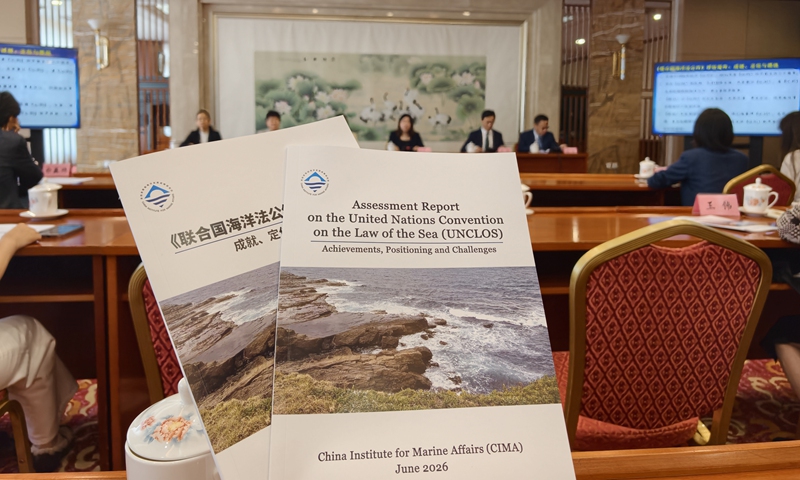
Marine Spatial Planning Cooperation Workshop of Maritime Silk Road Partner Countries kicked off in Beijing on Thursday, hosted by China Oceanic Development Foundation (CODF).

Representatives from the Belt & Road countries attending the event praised China's efforts in helping them build their marine spatial planning capabilities, while calling for deeper cooperation in developing the blue economy. 

Pan Xinchun, Vice President and Secretary General of CODF, told the Global Times that they have employed big data to collect and sort out available information, especially historical records, to analyze the long-term patterns in specific marine areas using AI models. These tools have greatly improved the accuracy and efficiency of studying marine environments, Pan said. 

Drones are used to monitor real-time changes in the ocean. Data collected by the drones is processed using big data, enabling precise assessments of marine conditions. This technology has played a crucial role in the drafting and implementation of marine spatial planning, as the effectiveness of the plan and any potential violations can be evaluated, allowing for more scientific and efficient supervision throughout the process, he said. 

"For instance, in marine aquaculture, traditional methods would generally waste about one-third of the feed, which sinks to the seabed, resulting in both wasted resources and environmental pollution. Now, with the AI monitoring, the amount of feed can be adjusted accordingly, and intelligent technology can retrieve any leftover feed from the seabed," Pan noted. 

China is currently engaged in the R&D of AI-controlled deep-sea robots and is studying the feasibility of deploying them as deep as 10,000 meters below the surface, where the pressure equals 1,000 atmospheres. This would also enable scientists to explore the microorganisms there without having to dive themselves, a task that would be extremely dangerous for humans.

"The development of AI-controlled unmanned underwater vehicles is expected to revolutionize deep-sea exploration and the broader marine industry, achieving goals that were previously unattainable," Pan told the Global Times. "China is making rapid progress in this area, with immense potential for growth."

At Thursday's event, the Global Times learned that the CODF has helped 19 countries form their marine spatial plans, providing assistance in allocating ocean zones based on functions, resources, location, and environment, designating areas for protection or development and ensuring sustainable resource use through policy measures. Among the 19 countries, Cambodia and Thailand have officially implemented their plans as government documents. 

Through such collaboration, the foundation has shared over 40 years of China's marine spatial planning expertise, helping these countries create tailored plans that balance resource development, environmental protection, and economic growth. China's endeavor has been warmly welcomed and highly valued by these countries, who expressed their heartfelt gratitude at the workshop.

Representatives from the partner countries also sought China's expertise in developing the blue economy. China was one of the first countries to implement the concept of the blue economy and has since developed a comprehensive framework of policies, standards, and implementation plans. 

China is eyeing to help developing countries develop their blue economies including deep-sea aquaculture, offshore wind energy, bio-products, modern fisheries, green ports, high-end shipbuilding, desalination, and tourism. These sectors are largely zero-emission, making them highly efficient and sustainable.

The event was attended both online and in person by some 300 government officials, scholars and experts from nearly 60 countries along the Belt & Road, including 19 that have partnered with the foundation on marine spatial planning and 49 involved in coastal sustainable development capacity-building projects.

The event witnessed the launching of the Marine Spatial Planning Alliance, as well as the release of an initiative for promoting sustainable ocean development of B&R countries.

Global companies line up for digital trade expo in Hangzhou

The third Global Digital Trade Expo (GDTE) kicked off on Wednesday in Hangzhou, capital city of East China's Zhejiang Province, the nation's innovation and trade hub, showcasing China's significant new opportunities and latest solutions in the digital economy.

Global digital trade is thriving, becoming an important trend in international trade development and new growth point for the world economy. Meanwhile, China has become one of the most dynamic regions for digital trade, Chinese and foreign officials and business representatives said at the expo.

This event, themed "Digital Trade and Global Access," serves as an important platform for exchanging ideas and sharing the benefits of China's digital development, industry insiders said.

This year's edition has attracted more than 1,500 enterprises from home and abroad, among which over 300 are international companies. A total of 446 new products and technologies will be featured at the five-day expo, which runs from Wednesday to Sunday, the Xinhua News Agency reported.

Over 30,000 purchasers have signed up for the event, with more than 6,000 of them based in foreign countries and regions, Xinhua reported.

Co-hosted by the Zhejiang provincial government and China's Ministry of Commerce, the event is currently China's only digital trade-themed expo at the national level.

This year, special exhibition areas have been dedicated to robots featuring artificial intelligence innovations and smart traffic solutions. Chinese companies have been the highlight in the expo, thanks to their advanced solutions in digitalization.

"At this expo, we are primarily showcasing gene sequencing solutions developed by our company," Charles Lu, director of public affairs at BGI Group, told the Global Times at the event. "They can be provided to our partners in various countries for scientific research, offering them Chinese technologies," Lu noted.

Beyond scientific research, BGI Group has observed a growing trend in the use of these technologies in agriculture. BGI's services cover more than 100 countries and regions, and there has been a steady growth in overseas demand.

"By participating in this expo, we hope to promote these advanced technologies to even more countries worldwide," Lu said.
China's digital industry has seen a robust growth in recent years, notching total revenue of 32.5 trillion yuan ($4.62 trillion) in 2023. Against this backdrop of vast opportunities in digital trade, foreign businesses are also eager to capitalize on the potential of China's digital market.

Speaking with the Global Times at the event, Cheng Fang, head of the regional sales division at Japanese technology firm Yokogawa China Co, said that the world is currently undergoing a wave of digitalization, and China is actively leading the way in this field.

"We are focused on integrating our business with China's digital transformation, and this event represents a great opportunity for us," Cheng said.

Yokogawa China Co has a wide range of business sectors, including energy materials, life sciences, and pharmaceuticals. In recent years, the company's branch in China has consistently ranked as one of the top units in the global group, Cheng said, indicating the importance of the Chinese market to the Japanese company.

Cheng noted that their overall global strategy is increasingly oriented toward the Chinese market, and they will continue to invest and expand their presence in China.

"Over the past 40 years of reform and opening-up, China has attracted significant investment, positioning itself as the world's manufacturing hub. Now, with its consumer market size nearing that of the US, China presents enormous investment opportunities for both itself and the global market," said Wu Yabin, head of Investment and Technology Promotion Office Beijing of United Nations Industrial Development Organization. Wu made these remarks during a roundtable dialogue on the Fourth Industrial Revolution and Digital Transformation held in conjunction with the GDTE, highlighting the vast opportunities presented by the digitalization trend in China.

Life stories of Qing princesses come to Taipei Palace Museum

Based on the voluminous imperial archives in its collection, a new exhibition shedding light on the lives of princesses in the Qing Dynasty (1644-1911) opened at the Taipei Palace ­Museum, the island of Taiwan on Saturday. 

The exhibition consists of five sections: The Emperor's Daughters, Royal Treasures Unveiled, The Marriage Mission, Fleeting Royalty, and In Closing: Princess Reflections. These detail the life journeys of Qing princesses from birth and marriage to their funerals. The exhibition is set to run until December 1.

"History is full of 'unheard voices.' Individuals who, though scarcely mentioned in official records, lived rich lives and shaped their times in unique ways," noted Su Feng-nan, curator of the exhibition. "Women are among those people whose stories often went untold in the male-dominated societies of the past."

Drawing primarily on the museum's collection of Qing imperial archives, the exhibition explores the status, relationships and life stories of these imperial women, examining their roles and significance within the political landscape of the Qing Empire, said the curator.

Some documents are being exhibited for the first time, such as "The List of Dowries for the Marriage of Gulun Princess," which records more than 300 articles ranging from jewelry to toothbrushes. Some historical facts are revealed as well, such as the fact that the average life-span of a Qing princesses was 26 years.

"When I was younger, I thought princesses lived carefree lives. Today, I see a more nuanced and complex picture of their existence, and it leaves me with deeper feelings," said a visitor from Taipei surnamed Lin, according to the Xinhua News Agency. 

In preparing for the exhibition, the museum collaborated with several schools in Taiwan to gather insights from younger generations about their perceptions of princesses. 

"I hope the exhibition not only presents a diverse and compelling portrayal of history, but also encourages visitors to reflect on contemporary life and societal issues," Su said.

Technology unlocks Han Dynasty lifestyle at Mawangdui site for the public in reality

Editor's Note:

Fifty years ago, not only the archaeological community but also ordinary people were stunned by the excavation of the Mawangdui Han Tombs. Among the findings was a remarkable discovery known as China's "Sleeping Beauty" (Lady Xin Zhui), an over 2,100-year-old lady who looks nearly as good as she did when she was buried after her death at the age of about 50, during China's Western Han Dynasty (206BC-AD25). The world has marveled at the mystery behind her body, as well as the numerous precious treasures unearthed from the tombs, including textiles, bamboo and silk manuscripts.

In this Mawangdui trilogy, the Global Times Culture Desk explores how digital technologies have brought the public closer to the heritage and how the "Mawangdui IP" was revived by the creative industries. This is the third installment.
Although there are many sites in China that can embody the country's Han Dynasty (206BC-AD220) history, Mawangdui is the most exceptional one mainly due to its mysterious finds like the 2,100-year-old mummified aristocrat that is known as Lady Xin Zhui.

Three excavations on the site were carried out from 1972 to 1974. At that time, such excavations brought a research craze to the academic field worldwide. Thanks to new means such as the digital technology, such a scholarly craze in the past 50 years has been extended to the public, especially among the young people.

Decoding mystery

Lady Xin Zhui's silk garments are Mawangdui Han Tombs' stellar artifacts. Due to their brittle and fragile nature, many original pieces are now only stored as archives at the Hunan Museum in Changsha, Central China's Hunan Province. To connect the heritage with people, making replication for public display was a crucial task. The task engages both technological tools and the ingenuity of textile experts like Yang Jiyuan.

Yang, a restorer of ancient silk textile in Nanjing, East China's Jiangsu Province, has replicated seven Lady Xin Zhui's garments since 2016. She told the Global Times that the printed and painted floss silk-padded gauze robe was one of the most challenging tasks.

Through examination using a microscope and creating 3D modeling of the original "printed and painted gauze robe," Yang revealed to the Global Times that the piece's air-like fabric actually consists of seven sheerest silk layers, and the thickness of each one of them is like "one-third of the tissue's thickness."

Matching such almost disappearing silk textiles together was not the most challenging task. Yang told the Global Times that the "painting" process was even harder since the colors should keep looking "not too vibrant and new."

She said the gauze needs to be "1:1 the same to the original one" that has more than 2,000 years of history. Thanks to advanced technologies that can decode the ingredients and composition of ancient fabrics, Yang discovered that Lady Xin Zhui's garment was painted in natural mineral dye and was covered with an extra "glue-like substance" to make it look understated while in a good shape. She said that she was only one of the heritage protectors in China, who has "felt the responsibility to show the public a legacy's authentic aesthetics and story."

"Technological tools are our assistants. They ensure the history we deliver to the public is correct," Xiang Benshan, a restorer of underwater ceramic relics, told the Global Times.

Cross-field collaborations

Other than the research sector, technological innovations are now diversely applied on shows that relate to the Mawangdui Han Tombs.

Currently, a blockbuster show called The Art of Life: Multimedia Exhibition of Mawangdui Han Culture is ongoing at the Hunan Museum. The immersive digital project, a collaboration between the Hunan Museum, Digital Library of China, and the Harvard FAS CAMLab, presents a new model for showcasing the Mawangdui Han Tombs through multimedia installations.

The show includes three thematic sections such as "Time and Space." They highlight the artistic grandeur and spiritual reflections of ancient Chinese, giving insight into their concepts of life, death and afterlife.

Lü Chenchen, associate director of Harvard FAS CAMLab, told the Global Times that the future of Mawangdui-themed exhibitions lies in global academic collaboration and the integration of advanced technologies such as VR tools and interactive animations.

"By partnering internationally, institutions can leverage cultural IPs like the Mawangdui Han Tombs and digital tools to broaden access to historical knowledge from different perspectives and different disciplines," Lü told the Global Times.

If the research lab and the museum are where the Mawangdui IP provides intellectual inspirations to people, then the site's cross-field collaborations with the cultural and creative industries have made the heritage a joy of people's everyday lives.

The Hunan Museum recently collaborated with a food brand to launch a "Mawangdui spicy strip," one of the favorite snacks by young people that is also known as La Tiao.

At the museum's "digital Han lifestyle experiencing center," symbols of relics like the round lacquer plate and Lady Xin Zhui's garments have been printed on products like scarves, fans and cakes.

Exhibition kicks off in Beijing to commemorate 60 years of international scientific cooperation

An exhibition themed on the history of cooperation between the China Association for Science and Technology (CAST) and the World Federation of Scientific Workers (WFSW) opened on Tuesday as part of the activities to celebrate the 60th anniversary of the cooperation between the two sides.

The WFSW is the first international organization that CAST joined. In 1964, the Peking Symposium, the first large-scale international academic conference held by China, took place, according to CAST.

Looking back at the history of cooperation between CAST and WFSW, their shared original aspiration and central theme have always been working together for science. Chinese scientists actively participated in the preparation and establishment of WFSW and related activities, promoting scientific and technological cooperation. To facilitate this, China hosted the 1964 Peking Symposium, inviting scholars from around the world to discuss the mission and development of science. Since the start of reform and opening up in 1978, CAST has continued to deepen cooperation with WFSW, committing to international scientific and technological exchanges, advocating trust and cooperation, and contributing to maintaining world peace, addressing global challenges, and promoting the sustainable development of human society, according to a statement from CAST sent to the Global Times.

So far, CAST and other Chinese scientific associations have joined 875 international organizations, and nearly 800 international academic conferences are held in China annually. These achievements and prospects in the field of science and technology demonstrate China's significant progress in opening up to the outside world.

Looking ahead, CAST stated that they are unfolding a new chapter in international scientific cooperation. This year marks the 60th anniversary of the 1964 Peking Symposium, providing an excellent opportunity to review the history of cooperation and create a better future. As part of this commemoration, CAST organized an exhibition themed on the history of cooperation between CAST and WFSW.

China will continue to adhere to a high level of openness to the world. In today's world, cooperation is the only way to achieve win-win results, especially in the field of technology, as science knows no borders, Shi Yigong, deputy president of CAST, said in a speech at the opening ceremony of the exhibition.

In 1964, the WFSW and CAST jointly organized the Peking Symposium, successfully breaking through technological barriers and promoting international scientific exchanges. Today, as we gather here, we are not only commemorating this conference but also reflecting on the past and present, and opening up new pathways for our future cooperation and mutual benefit, Shi noted.

Many valuable materials that document the history of China's scientific cooperation with the world are displayed at the exhibition.

For example, the first picture in the first unit of the exhibition, "The Vision of the World," comes from a report in the British journal Nature on the conference “Science and the Welfare of Mankind,” held in February 1946 in London. Related questions concerning the establishment of WFSW were discussed after the conference. Chinese meteorologist Tu Changwang and the late nuclear physicist Qian Sanqiang attended the conference, representing the Chinese science and technology community.

Another picture in the third unit, "Enhancing International Collaboration," shows then Chinese Premier Zhou Enlai meeting with representatives from various countries attending the inaugural meeting of the WFSW Peking Center and the preparatory meeting of the Peking Symposium in September 1963.
Co-chairman of WFSW, Jean-Paul Lainé, expressed his appreciation for the positive, fruitful, and sincere cooperation between CAST and WFSW over the past 60 years during the exhibition. He emphasized that this collaboration should serve as a model for cooperation between different scientific organizations worldwide.

For example, during the COVID-19 pandemic, China shared information about the virus with the world soon after the pandemic broke out. This is a typical example of the benefits of cooperation, Lainé told the Global Times.

Lainé emphasized the importance of cooperation and communication in addressing global challenges such as the COVID-19 pandemic. He praised China for sharing information about the virus early on, which he believes is a testament to the benefits of working together.

However, Lainé also raised concerns about the threats facing such cooperation, particularly due to geopolitical tensions.

A report published in Nature in July revealed a decline in research collaborations between China and the US. "This decline is a really bad signal. Regardless of the political climate, scientific communication should remain unaffected, as the purpose of science is to benefit people rather than governments," Lainé stressed.

CAST is the largest scientific organization in China, serving as a home for 120 million Chinese science and technology workers. It represents China in 380 international scientific organizations and maintains long-term cooperation with 136 scientific and engineering institutions in 49 countries, according to the association.