China Coast Guard (CCG) said it conducted law-enforcement patrols in the territorial sea of China's Huangyan Dao and its surrounding areas on Sunday.
The service noted it has enhanced law-enforcement patrols since May, and regulated ships engaged in illegal rights-violation activities in accordance with laws and regulations.
Such patrols are meant to further strengthen orderly management of relevant waters and resolutely safeguard China's territorial sovereignty and maritime rights and interests, the CCG stressed.
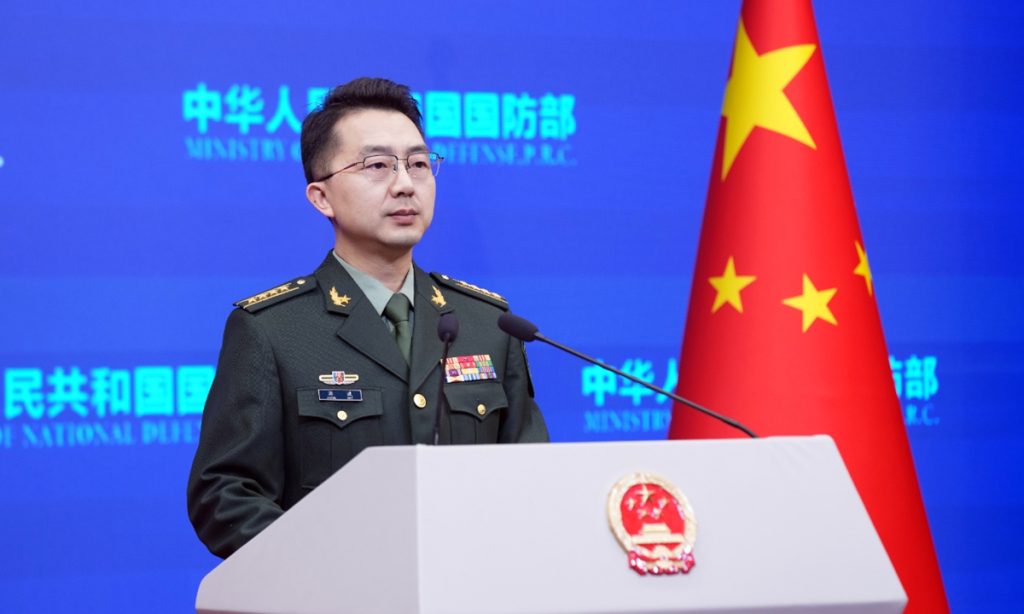
A shipborne helicopter from the Dutch Navy frigate De Ruyter illegally intruded into the airspace over China's Xisha Qundao, seriously violating China's sovereignty and undermining China's security interests, and the Chinese military organized maritime and aerial forces to take effective measures to dispel the helicopter out of the area and has lodged solemn representations with the Dutch side, a spokesperson for the Chinese Ministry of National Defense (MND), said on Thursday.
"The Xisha Qundao is China's inherent territory. The Chinese military remains on high alert and resolutely defends national territorial sovereignty and maritime rights and interests. We urge the Dutch side to stop its infringements, risky and provocative acts, and strictly restrain frontline sea and air forces to avoid any unexpected incidents at sea or in the air," said Jiang Bin, spokesperson for the Chinese Ministry of National Defense.
The response followed on Wednesday a spokesperson for the Chinese People's Liberation Army (PLA) Southern Theater Command also expressed firm opposition to the intrusion.
According to the WeChat account of the Command, Senior Captain Zhai Shichen said that a Dutch Navy frigate, De Ruyter, illegally trespassed into China's Xisha Qundao in the South China Sea and conducted multiple shipborne helicopter operations violating China's territorial airspace.
The PLA Southern Theater Command organized maritime and air forces to take necessary measures in accordance with laws and regulations to expel and drive away the trespassing vessel, according to Zhai.
Troops of the PLA Southern Theater Command remain on high alert and are resolute in their duty to safeguard national sovereignty, security and regional peace and stability, Zhai added.
Five people were dead and another was injured after a fire broke out in a shop in central China's Hunan Province on Sunday, according to local authorities.
The fire broke out in a shop in Qidong County at 12:45 a.m., and the injured person is receiving medical treatment with non-life-threatening injuries, the county's emergency management bureau said.
Relevant aftermath work and investigation of the cause of the accident are underway.
Philippine President Ferdinand Marcos Jr. will undertake a state visit to Japan from May 26 to 29, during which he is set to meet Japanese Prime Minister Sanae Takaichi and they are reportedly expected to discuss "cooperation toward realizing a free and open Indo-Pacific" and "coordinating responses to China's maritime expansion," according to media reports.
Several media reports previewed the agenda for the talks, with Manila Bulletin releasing a report titled "Security ties with Japan top Marcos' agenda during Tokyo trip." Philippine media GMA News reported that the Philippine president and the Japanese prime minister are expected to discuss the future trajectory of the Philippines and Japan's strengthened strategic partnership. The Japan Times reported that Marcos and Takaichi will discuss Japan's evolving defense and security posture, and will also likely to involve another subject that has garnered headlines in recent days: Taiwan.
A Chinese expert said that beyond economic and trade cooperation, the talks between Japan and the Philippines will inevitably involve military and security cooperation, defense exports, particularly on maritime security, the South China Sea, and Taiwan-related issues.
Coordination and cooperation on maritime issues between the Philippines and Japan has been gradually closer, extending into the South China Sea, the East China Sea and even the Taiwan Straits. Against this backdrop, Marcos' repeated claims that he adheres to the one-China principle are fundamentally contradictory and inconsistent to his actual actions, revealing a highly two-faced strategic posture, and the real objective of the Philippines and Japan is to exploit seabed resources and gain access to undersea mineral wealth in waters around the Taiwan Straits, the expert said.
An X user claiming to be Philippine media figure Benjamin Alejandro recently released a report titled "hidden agendas behind Marcos's visit to Japan," claiming that on maritime issues, Philippine and Japan are expected to reaffirm the arbitral ruling on the South China Sea and coordinate positions on the East China Sea and the Taiwan Straits. There is even talk of consultations with Taiwan authorities on maritime delimitation, potentially expanding into the western Pacific east of Taiwan island.
Some netizens expressed their voices of criticism in the comment section under the X of the article, with one saying "Ugly things are never put in the sun!" and another saying "Marcos is crazy to hype up those maritime issues, I expect China to hit back hard."
It is worth noting that in an interview with Japanese media on Monday, Marcos just reaffirmed the Philippines' adherence to the one-China policy and stressed that the country would not interfere in issues concerning Taiwan island, the Philippine News Agency reported.
When asked by foreign media reporter to comment on Marcos's remarks on Monday that his country would likely be involved in any conflict over Taiwan due to his country's proximity to the island, claiming that "we do not have a choice because Taiwan is so close to the Philippines, and we have almost 200,000 Filipino nationals living and working in Taiwan," Chinese Foreign Ministry spokesperson Guo Jiakun said at Tuesday's press briefing that China noted that the Philippine leader reiterates his commitment to the one-China policy and non-interference in China's internal affairs. It should be emphasized that, "large number of Filipinos living and working" on the Taiwan island and "geopolitical proximity" should not serve as the excuse for one country to interfere in another country's internal and sovereign affairs.
We hope the Philippines will honor its commitments, match its words with actions, and abide by the one-China principle through concrete actions, Guo said.
Marcos' remarks exposed contradictions between Manila's repeated claims of adhering to the one-China principle and its actual strategic behavior. If they discuss maritime delimitation issue, it reflects the long-standing ambitions of both the Philippines and Japan to pursue maritime and military expansion, Chen Xiangmiao, a research fellow at the National Institute for South China Sea Studies, told the Global Times on Thursday.
The expert emphasized that the Philippines' real objective is to secure rights to exploit seabed resources and gain access to undersea mineral wealth in waters around Taiwan island. By attempting to use the Japan's defense related-advantages and the Taiwan authorities to expand its own access to mineral resources, the Philippines is in essence interfering in China's internal affairs, Chen said.
Chen noted that with right-wing forces increasingly dominating Japanese politics and pushing what many see as a dangerous revival of militarism, Tokyo has in recent years continuously sought to expand its continental shelf claims. If the Philippines further enables and advances such a proposal, it would first have a severely destabilizing impact on maritime security.
The key issue now is whether Manila will match its public commitment to the one-China principle with concrete actions. If the Philippines continues to insist on such a contradictory approach, it will further erode mutual trust and inevitably bring negative consequences to bilateral ties and regional stability, Chen said.
Chinese President Xi Jinping held a welcome ceremony on Wednesday morning outside the Great Hall of the People in central Beijing for Russian President Vladimir Putin, who is on a state visit to China.
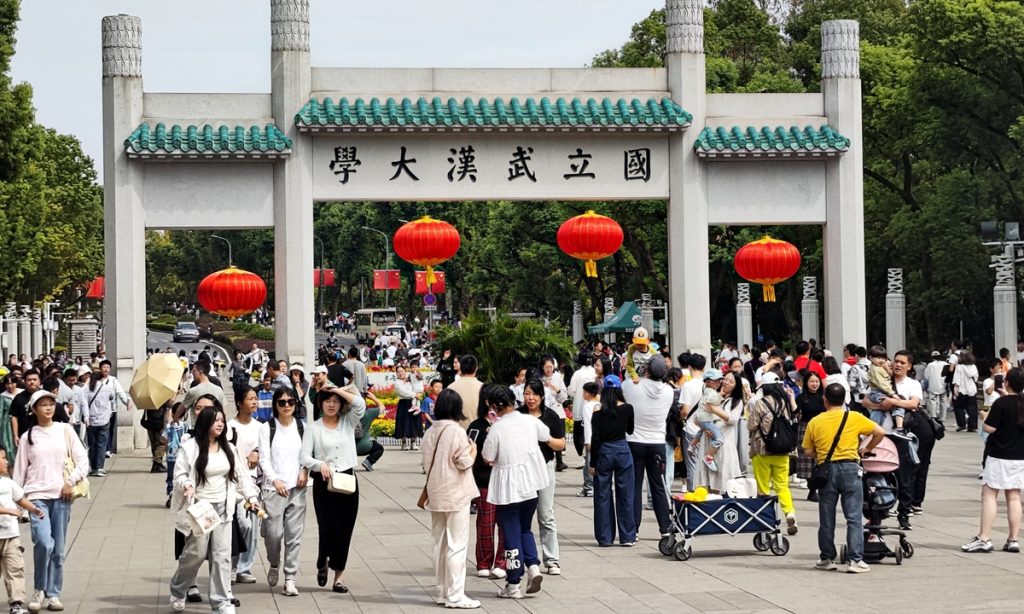
Wuhan University, one of the most prestigious universities in China, officially dropped its reservation requirement for public campus entry on Wednesday. Visitors can now enter on foot through Luojia Gate and Hongyi Gate with valid IDs — no reservations needed - on weekdays, weekends and holidays, reported Hubei Daily, citing sources from the university.
The university introduced a reservation system in July 2023, requiring visitors to book their visits in advance. Access was limited to weekends and holidays, while weekday entry was not allowed. The policy was first eased in September 2024. Visitors were allowed to enter on foot during weekends and holidays by presenting their ID cards without making reservations, although the campus remained closed on weekdays.
"University management should not stop at the campus walls," Chu Zhaohui, a research fellow at the National Institute of Education Sciences, told the Global Times on Thursday, adding that universities need to take on broader social responsibilities and engage more with society, while finding ways to remain open and maintain orderly campus operations.
Wuhan University boasts a rich academic environment and is widely celebrated for its breathtakingly beautiful campus, often hailed as one of China's most beautiful university campuses, according to the Xinhua News Agency.
The cherry blossoms at the university are undoubtedly one of its most spectacular highlights. They usually begin blooming in mid-March, peak in late March and last only about 13 to 20 days. Every year when the cherry blossoms are in full bloom, tourists from all over the country flock to the campus in large numbers, Xinhua said.
The university's decision to reopen its campus more broadly to the public also sparked discussion on social media.
Xu Shunda, a campus-focused blogger who has 2.55 million followers, voiced support for the move. "Breaking down the barriers created by campus walls," Xu wrote, adding that universities are public educational resources and "should not be locked away behind layer upon layer of walls."
Some social media users expressed concerns about the decision, arguing that allowing visitors to enter the campus without reservations could attract large numbers of social media influencers and tourists checking in for photos, potentially disrupting teaching and campus order.
Some students from other universities expressed concern that the policy was impractical, arguing that unrestricted public access could lead to more crowded campuses, reduced order and great in convenient for students.
Chu said people should see the experience as part of a learning process, one that involves mutual respect as well as exposure to and appreciation for campus culture.
According to the official website of Fudan University, visitors who wish to visit the campus are required to register through the university's e-campus WeChat mini program. Information on the platform shows the registration process is relatively simple. After completing registration, visitors can enter the campus during their selected time slot using valid IDs or by scanning a QR code.
Meanwhile, Peking University and Tsinghua University, both popular tourist destinations in Beijing, still require reservations for campus visits, though visitors can enter after completing a similarly simple registration process through their WeChat mini programs.
Former Tsinghua University professor Zheng Yuhuang has posted multiple videos praising Wuhan University for opening its campus to the public. In 2026, Zheng launched a project called the "Campus Gate Experiment," where he has personally taken his mother to visit 26 universities in Beijing, Zhejiang, and Shanghai.
He pointed out online that most Chinese universities are not open to the public, whereas many university campuses abroad are open to society. He hopes that all universities in China can adopt a policy allowing entry simply by scanning an ID card.
Chu suggested that other universities could also consider gradually expanding public access based on practical conditions and social demand. He added that campus openness should go beyond simply allowing public entry, with universities encouraged to organize more public welfare activities and lectures, and create opportunities for students to engage with the broader society, which he said would also benefit talent cultivation and students' personal growth.
Chinese President Xi Jinping will pay a state visit to the United States in autumn this year at the invitation of U.S. President Donald Trump, Chinese top diplomat Wang Yi said on Friday.
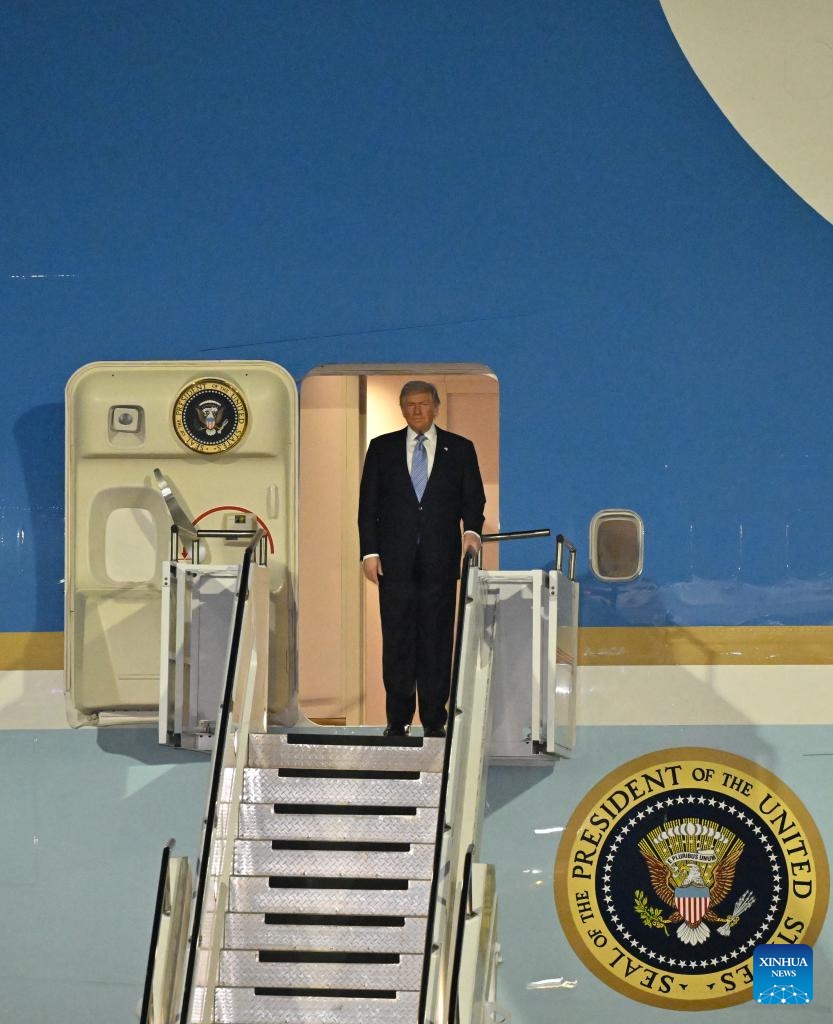
U.S. President Donald Trump arrived in Beijing on Wednesday evening for a state visit to China.
At the invitation of Chinese President Xi Jinping, Trump is visiting China from May 13 to 15.
This is the first U.S. presidential visit to China in almost nine years and Trump's second since November 2017.
The two leaders will have an in-depth exchange of views on major issues concerning bilateral relations and world peace and development, according to China's foreign ministry.
Trump was welcomed by Chinese Vice President Han Zheng at the airport.
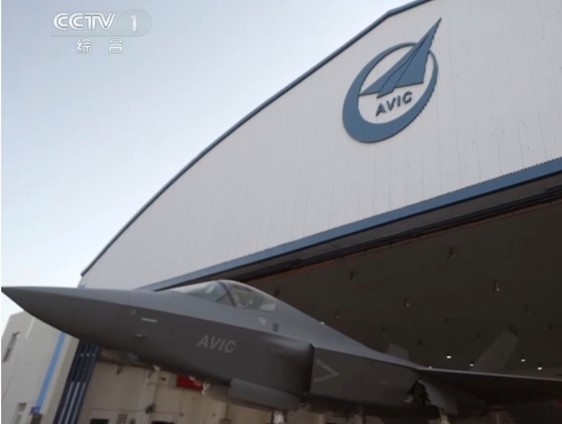
A J-35 stealth fighter jet bearing the number "0001" was spotted taxiing out of a hangar in a recent CCTV News program. A Chinese military affairs expert was quoted as saying in the CCTV report on Friday that signs in the footage suggests this particular J-35 could be an export version of the J-35 series, making it a likely candidate for China's next major export fighter.
According to the CCTV report, this was no ordinary equipment display. The aircraft lacked the Chinese People's Liberation Army (PLA) Air Force insignia, its paint scheme differed from the military's standard version, but the highly visible "AVIC" (Aviation Industry Corporation of China) acronym printed on the nose was prominent.
The report noted that these details have captured viewers' attention, raising questions about whether an official export version of the J-35A has been finalized and how this uniquely numbered stealth fighter might reshape the global airpower landscape.
The J-35A is the second type of fifth-generation stealth fighter jet independently developed by China, featuring the experience and the PLA Air Force's feedback on the J-20, China's first type of stealth fighter jet. The J-35A is designed with a balanced consideration of performance, reliability, maintainability and cost, Wang Ya'nan, editor-in-chief of Beijing-based Aerospace Knowledge magazine, told the Global Times.
Chinese military affairs expert Fu Qianshao said in the CCTV News report that this particular J-35 has certain differences from J-35A or J-35 aircraft previously shown to the public.
The aircraft's nose landing gear strut is relatively slender and features a single wheel, suggesting it is a modified version of the air force's J-35A, rather than the carrier-based variant of the navy. Additionally, its paint scheme differs from both current air force and navy colors, Fu said, per the CCTV report.
The aircraft's coating is relatively simple — light gray overall — indicating it has clearly not been painted according to any specific customer's requirements. The final paint job will ultimately depend on the needs of the buyer, said Fu, according to the report.
The carrier-based J-35 must withstand the enormous impact of landing, therefore it employs a stronger, dual-wheel nose landing gear equipped with catapult launch hooks. This J-35's single-wheel design is evidently optimized for land-based runway operations. This structural feature, combined with the "raw" appearance of its unpainted final coating, further suggests it is not a service model but an aircraft in the final "pre-delivery" stage awaiting customer handover, the expert said, the CCTV report showed.
Fu said that beyond the landing gear and paint scheme serving as directional clues, this new J-35 bears the number "0001" - different from previous numbers - makes it easy to infer that it is very likely an export version. Considering that the J-35's technology demonstrator, the FC-31, had its sights set on the export market since its early development stages, and now that this fighter has matured and been fielded by both the air force and navy, a new export version is likely to emerge, Fu said, per the CCTV report.
Meanwhile, the expert noted that PLA Air Force service aircraft never featured the AVIC logo, yet this J-35 not only bears the acronym but also taxied out of a hangar displaying the logo. All these details indicate that the J-35 series has fully achieved the capability for mass-produced export versions.
At the 10th Singapore Airshow in February 2026, the J-35A took center stage at the booth of AVIC. While the J-35A AVIC showcased on this occasion was a 1:2 scale model, the aircraft still emerged as a star exhibit of this year's Singapore Airshow, drawing numerous visitors who stopped to view and discuss it.
As China's independently developed fifth-generation stealth fighter, the J-35 series is likely to become a key export model in the next phase, Fu added.