Japan’s failed bid for formal US meeting ‘reflects diplomatic anxiety’
Japanese Prime Minister Sanae Takaichi had initially sought to arrange a formal bilateral meeting with US President Donald Trump during the recent ASEAN meetings in Manila, Philippines, Japanese media reported on Wednesday. However, according to the Mainichi Shimbun, the two sides were unable to coordinate their schedules, and the two leaders instead held a brief exchange during a dinner held during the meetings. 

Chinese experts noted that the fact that Japan had been eager to secure a formal bilateral meeting but ultimately had to settle for a brief exchange squeezed into a dinner schedule is telling, and reflects Tokyo's acute diplomatic anxiety. Heavily reliant on its security alliance with the US while remaining wary of shifts in Washington's policies, Japan hopes to use multilateral platforms to reinforce and secure US commitments, they said.

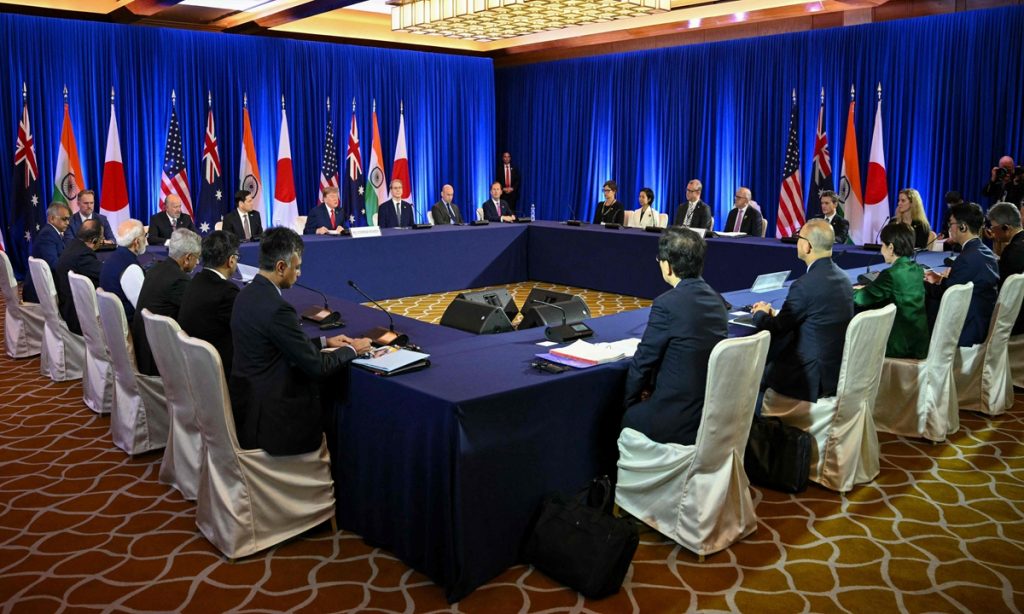
The brief exchange took place on the sidelines of a series of ASEAN-related summits in Manila. On the same day, leaders of the Quadrilateral Security Dialogue (Quad), comprising the US, Japan, Australia and India, held a summit and issued a joint statement voicing so-called "grave concerns about economic coercion, including through arbitrary export restrictions." 

The statement did not name any country, however, major Japanese media outlets, including the Yomiuri Shimbun, Mainichi Shimbun and NHK, interpreted the language as targeting China, with attention focused on export restrictions and supply-chain issues. However, the statement itself made no explicit reference to China or rare earths.

Lü Chao, a professor at the Liaoning Academy of Social Sciences, told the Global Times that the Quad statement largely follows policy positions the four countries had consistently articulated in recent years, with little new or groundbreaking content. Although the document avoided naming any specific country, Japanese media seized on its ambiguous wording to amplify geopolitical narratives, exposing the diplomatic anxiety of Japan's current administration, Lü said.

The contradiction lies in Japan's attempt to strengthen its security alignment with the US while preserving its extensive economic ties with China. Japan's industrial and supply-chain ties with China remain deeply intertwined, and Japanese business circles have little appetite for economic decoupling. This leaves Tokyo seeking to maintain engagement and preserve economic cooperation with China while aligning itself with Washington on security and geopolitical issues, effectively pursuing a two-track approach, Lü said.

Beyond the language on economic coercion, the joint press release outlined initiatives to expand cooperation in maritime surveillance, cybersecurity and regional connectivity. These include plans for Quad maritime patrol aircraft to participate in a maritime exercise in 2027 and the launch of the first Quad Business Leaders' Forum in early 2027. The four countries also pledged to deepen cooperation on cable connectivity and resilience, including undersea cable projects in the Indian Ocean.

The Quad's own limitations, however, raise questions on how far it can serve as a unified strategic platform. Chinese observers noted that the grouping remains a loose arrangement rather than a genuine alliance, with members prioritizing their respective national interests and many cooperation initiatives failing to translate into tangible results. Even if the latest summit delivers progress on some projects, the Quad is unlikely to develop into a unified mechanism, they said, as geopolitical competition conflicts with the economic cooperation needed to drive growth.

This divergence in interests limits the appeal of the Quad's efforts to frame trade and economic issues in geopolitical terms. Lü said the term "economic coercion" is an attempt to politicize normal trade and economic management measures. Most Asia-Pacific countries favor avoiding bloc confrontation and being forced to choose sides, making it difficult for exclusive groupings such as the Quad to gain broad regional support, he added.

For Japan, however, embracing such a confrontational narrative while seeking to retain the economic benefits of ties with China presents a dilemma. Its attempt to echo Washington's position on geopolitical and security issues while maintaining economic engagement with China would only further narrow Tokyo's diplomatic room for maneuver and undermine regional peace and stability, Lü said.

The "brief exchange" reflects this underlying dilemma: Japan is seeking stronger security commitments from Washington while facing the constraints of its own economic interdependence with China. This dilemma is likely to persist, the expert added.

Ceuta migrant crisis exposes divisions within Europe, deepens tensions between Spain, the US: Chinese experts

Driven by hunger, exhaustion and hostility, migrants who swam or climbed over fences to enter Spain's North African enclave of Ceuta were returning home on Saturday, Reuters reported. But the fallout from the crisis is expected to linger. Chinese experts said it has not only heightened tensions among European countries, but also provided fresh ammunition for Europe's rising right-wing parties, allowing them to further weaponize migration as a political issue.

"Selfish, polarizing and unlawful reaction" were the words Spain's Prime Minister Pedro Sánchez used in a letter to condemn EU countries, after Italy temporarily placed some border controls on travel from Spain, while France's Interior Minister Laurent Nunez ordered extra checks along the countries' shared border. Italian Prime Minister Giorgia Meloni also called for Spain's membership of the Schengen agreement to be suspended, CNN reported on Saturday. 

Sánchez said in his letter that "such an attitude" was "driven by prejudice, fake news, ignorance or political interest." "In the current international context, the European Union cannot afford this kind of selfish, polarizing and unlawful reaction," he added, per CNN. 

The surge of undocumented migrants crossing from Morocco into Ceuta triggered one of the most serious border crises Spain has faced in recent years, according to the Xinhua News Agency on Sunday.

The influx prompted Madrid to deploy military support, tighten border controls and strengthen coordination with Rabat. "Practically the entirety of those who entered Ceuta have already returned to Morocco," Spanish Foreign Minister Jose Manuel Albares wrote on X on Saturday. "It is not possible to travel from Ceuta and Melilla to the Peninsula without identifying oneself at a police checkpoint. The integrity of the Schengen Area is absolutely guaranteed."

Ceuta and Melilla, another Spanish territory 250 miles to the east along North Africa's Mediterranean coast, constitute the EU's only land borders with Africa, according to the Guardian.

"The latest figure that we have is 72," the Spanish government's delegate to Ceuta, Miguel Angel Perez Triano, told reporters, when asked about the number of fatalities, AFP reported. The previous toll was 67 deaths.

On Saturday, leaders from 22 European Union nations called for an emergency meeting to discuss the bloc's response to the Ceuta crisis. In the letter, which sources told Euronews was initiated by Italy and Denmark, member states called for "an extraordinary videoconference of the Ministers of the Interior," describing it as a "matter of urgency."

"We cannot allow uncontrolled mass crossings, the instrumentalization of migration or other hybrid threats to create the perception that illegal entry into the European Union is possible," the letter said, adding that they would consider "any necessary measures" to address such risks, "including through reinforcing or reintroducing temporary internal border controls."

Ireland, which currently holds the EU's rotating presidency, said a video meeting would take place on Tuesday, according to Euronews.

Tension inside and outside of Europe

The Ceuta crisis has prompted discussion about unity of the EU. Fox News reported that "the crisis is reverberating far beyond Spain because it challenges one of the European Union's central promises: that member states can maintain open internal borders while jointly protecting the bloc's external frontier."

"The international right has moved quickly too, highlighting the wider risk to European cohesion… The situation is a challenge to the free-movement settlement of a kind not seen since the 2015 crisis, whose reverberations included the UK's Brexit referendum the following year," according to an article published by Chatham House, a policy institute based in London. 

The Ceuta crisis has laid bare the shortcomings of the EU's post-2015 migration reforms, underscoring the bloc's continued struggle to build a unified response to migration, Cui Hongjian, a professor at the Academy of Regional and Global Governance at Beijing Foreign Studies University, told the Global Times.

While the EU has spent years refining its migration rules, asylum system and burden-sharing mechanisms, those reforms have failed to address the bloc's deep-seated structural divisions, Cui said. The crisis demonstrates that when confronted with a sudden influx of migrants, longstanding disputes between frontline border states and inland member states over responsibility-sharing quickly resurfaced, with national interests once again outweighing collective European solidarity.

Moreover, the crisis has become a new point of contention among political forces across Europe.

In France, French far-right leader Marine Le Pen, who is running for president a fourth time, signaled she was planning to turn the Spanish crisis into a campaign theme.

"Faced with the massive and coordinated influx of migrants into Spain, encouraged by the Spanish government, France must without delay strengthen controls at its borders," she said on social media on July 31. 

In Germany, the far-right party Alternative for Germany made major inroads in a federal election in 2017 by exploiting fears of uncontrolled immigration, and could win state elections for the first time this fall in eastern Germany, according to New York Times.

In Spain, Santiago Abascal, leader of the far-right Vox party, also accused Sánchez of inciting "an invasion" with his migration policies. "This national emergency can only be resolved by kicking him out" before Spain's next election next year, Abascal concluded, according to Politico. 

Spain remains one of the few major EU member states still governed by a left-wing administration, making the Ceuta crisis a potent political weapon for right-wing parties seeking to challenge its migration policies, Jiang Feng, a researcher at Shanghai International Studies University and president of the Shanghai Regional Studies Association, told the Global Times. 

With national and regional elections approaching in several European countries, where support for right-wing and far-right parties is rising, the crisis handed those parties a timely political issue. For them, migration has evolved beyond a humanitarian challenge into a powerful symbol of public insecurity, Jiang said. 

Beyond Europe, officials in the US, which has been at odds with Spain over tariffs, also seized on the Ceuta crisis to criticize the Sánchez government and further politicize the immigration issue at home.

"I saw Spain yesterday, and I watched the catastrophe that took place," US President Donald Trump told a meeting of his cabinet at the presidential Camp David retreat in Maryland on Friday.

"It looks like an invasion of a country by hundreds of thousands of people, and that same thing's going to happen to us if the Republicans don't get elected, except worse, much bigger."

The Trump administration has long criticized what it describes as the permissive immigration policies adopted by some European countries, arguing that they have undermined social stability and weakened Western civilization. Against that backdrop, the Ceuta crisis has provided a timely example to reinforce that narrative, Cui said.

At the same time, Cui said, the political fallout from criticism of the Sánchez government by officials in the US could extend well beyond the migration crisis itself. If the issue continues to be exploited for political purposes, it risks further straining Madrid's relations with Washington and could lead to broader diplomatic tensions.

China calls for equal AI sovereignty via position paper to UN

The Chinese delegation submitted a position paper on the country's approach to global cyber governance in the digital intelligence era to the first meeting of the Global Mechanism on developments in the field of ICTs, held from July 20 to 24 at the UN headquarters in New York, the Xinhua News Agency reported on Wednesday. Experts said the position paper aims to guide artificial intelligence (AI), a powerful technological capability, to become a tool that benefits human society, rather than one to attack, control and suppress other countries.

Responding to a question on the matter at a regular press conference on Wednesday, Chinese Foreign Ministry spokesperson Lin Jian said that as the latest step to implement the Global Governance Initiative and build a community with a shared future in cyberspace, China submitted a position paper to the Global Mechanism on developments in the field of ICTs in the context of international security and advancing responsible State behavior in the use of ICTs to share China's latest position and propositions on global cyber governance in the digital intelligent age.

He noted this is another important principle after cyber sovereignty that China put forward on global cyber governance. The document stresses that all countries should observe the purposes and principles of the UN Charter in cyberspace to jointly safeguard peace and stability. It also calls for upholding multilateralism and addressing effectively the disruptive impact of emerging technologies such as AI on cyber security, and formulate international cyberspace rules that keep pace with the times.

Inclusive proposal

The document points out that the digital intelligence revolution, with AI at its core, is developing rapidly. Cybersecurity concerns the sovereignty, security and development interests of all countries. The taboo of "cyber warfare" has been broken, industrial and supply chains have been artificially severed, and the digital intelligence world faces the danger of division and disorder.

Following the vision of building a community with a shared future in cyberspace, China put forward three major propositions - abiding by international rules and safeguarding peace and stability, respecting digital sovereignty and jointly promoting inclusive development and upholding multilateralism and effectively addressing risks.

It specifies that all countries should abide by the purposes and principles of the UN Charter in cyberspace, prevent a cyber arms race, and refrain from using cyber means to damage other countries' critical infrastructure. Countries have the right to independently choose their paths of digital intelligent technology development including AI, as well as to independently choose AI technologies, products, and services in light of their respective national conditions. No country should be forced to take sides. Countries should not engage in any technological monopolies and exclusive arrangements, or pursue digital intelligence hegemony in the name of national priority.

International rules for cyberspace should be formulated in keeping with the times, and a global testing and evaluation standard and system for cybersecurity risk levels of large AI models should be established to ensure that AI becomes a new shield for cybersecurity, rather than a new tool for seeking hegemony, according to the document.

The document concludes that a secure, stable and prosperous cyberspace is of great significance to all countries and the world. China stands ready to work hand in hand with the international community to strengthen communication and promote cooperation, jointly improve a more just, equitable and effective international order in cyberspace, and jointly build a community with a shared future in cyberspace.

Xiang Ligang, a veteran industry analyst, said that China's position paper represents not only a position on AI, but also a position on relations among countries: nations should respect each other and pursue common development, turning this valuable technology into a capability that enhances social capacity, improves social efficiency and reduces society operating costs.

"Therefore, at the very beginning of the rise of this capability, it is necessary to form institutional consensus and shared principles. AI should not become a tool for a few major powers or interest groups to control the entire world," Xiang said.

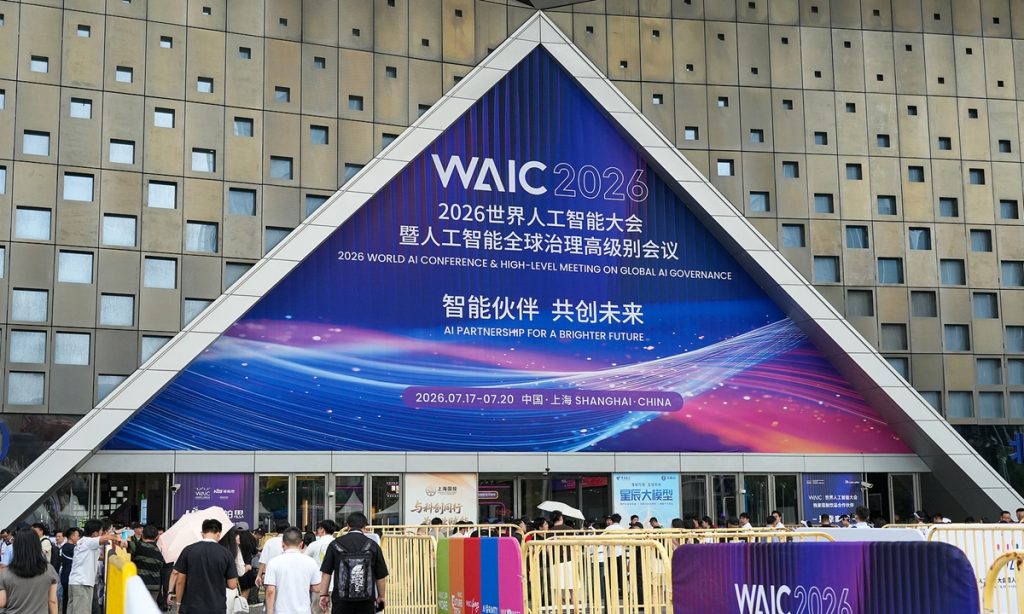
The position paper comes after the creation of the World Artificial Intelligence Cooperation Organization (WAICO) at the just-concluded 2026 World AI Conference (WAIC) and High-Level Meeting on Global AI Governance in Shanghai. Twenty-nine countries signed the agreement on the organization's creation as its founding members, Xinhua reported.

With the arrival of the large language model era, how to define rules regarding data jurisdiction and control rights remains an issue that needs further improvement, Zhang Linghan, dean of the Institute of AI Law of China University of Political Science and Law, told the Global Times. "The most important aspect of China's approach to digital sovereignty is balancing security and development," said Zhang.

Hegemony a dead end

The position paper's release comes at a time when international media outlets have been paying increasing attention to the performance, cost advantages and rapid iteration of Chinese AI models. The Guardian on Tuesday reported that "It's been the general strategy of Chinese AI companies: open-source and open-weight models, beating US AI companies on price as Chinese manufacturers do."

The New York Times compared the US' and China's AI products strategy, saying that while "companies like Anthropic, OpenAI and Google hope to recoup their aggressive spending by selling increasingly useful but often expensive technologies to businesses and consumers, China is offering similar technology free of charge."

"The world is entering what we call the digital era. The only system that is truly independent from the US system is China's. In AI, China emphasizes genuine openness, serving the people, and balancing regulation, development and security. This is different from the US approach of 'all in AI' - China advocates 'AI in all,'" Wang Yiwei, a professor at the School of International Studies, the Renmin University of China, told the Global Times.

Xiang pointed out that China's large models are developing rapidly with distinctive features, and a large number of enterprises are developing in different directions, which is precisely the value of open collaboration. US companies started earlier with a higher starting point, but the reason they are now resorting to suppression is anxiety that China has caught up.

The US administration's June 12 move to block non-US residents from Anthropic's most advanced models, Mythos and Fable, on national security grounds prompted the AI company to abruptly suspend access to the models globally, according to Reuters. European lawmakers redoubled their calls for digital independence from ⁠the US.

"The US approach is US-dominated, turning AI into a weapon to attack, control and suppress others so that other countries can't develop. China's rules, by contrast, are common development, mutual support and mutual collaboration, turning AI into a valuable capability," Xiang noted.

China’s top diplomat meets Indian counterpart, calls for enhanced cooperation

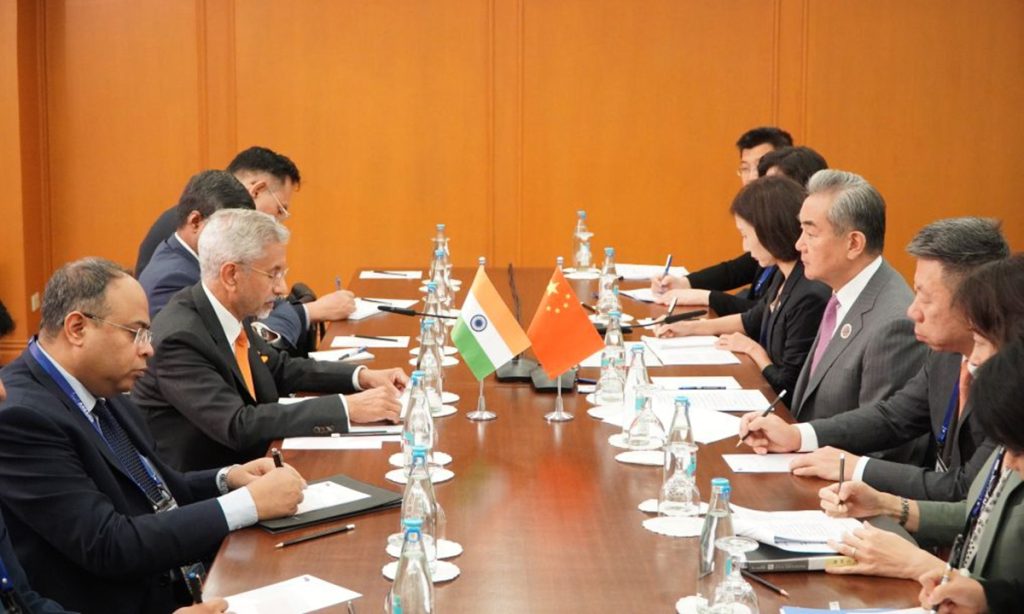
China stands ready to work with India to implement the important common understandings reached by the leaders of the two countries, maintain close high-level exchanges, strengthen cooperation in areas including economy and trade, media, and people-to-people and cultural exchanges, and properly handle sensitive issues, Chinese Foreign Minister Wang Yi said on Wednesday, according to a readout released by Chinese Foreign Ministry earlier on Thursday.

Wang, also a member of the Political Bureau of the Communist Party of China Central Committee, made the remarks when meeting with Indian External Affairs Minister Subrahmanyam Jaishankar.

Chinese experts noted that these remarks clearly outlined the current trajectory of China-India relations, which have overcome difficulties, seen an overall improvement and stabilization, and are advancing practical cooperation.

Wang said China and India should bear the well-being of humanity in mind, demonstrate a sense of responsibility as major countries, consolidate the positive momentum in bilateral relations, and strengthen coordination and cooperation in international and regional affairs.

He called on the two countries to make positive contributions to advancing multipolarity and greater democracy in international relations.

China will continue to support India in hosting a successful BRICS summit this year, Wang added.

According to Xinhua, Jaishankar said that India's positions on issues concerning Taiwan and Xizang have not changed, and India respects China's sovereignty. He added that India has consistently advanced a positive and cooperative bilateral relationship with a forward-looking approach.

The meeting between the two foreign ministers was the latest in a series of recent high-level interactions between China and India, and was held in a highly positive tone. The focus was on consolidating the strategic consensus reached by the leaders of the two countries and mapping out future cooperation, injecting new momentum into bilateral ties, Lan Jianxue, director of the Department of Asia-Pacific Studies at the China Institute of International Studies, told the Global Times.

Chinese foreign minister reviewed the past development of China-India relations while also outlining the "correct way for the two countries to get along." He stressed that the improvement of China-India relations was hard-won and should be cherished. Taking a broader global perspective and elevating the strategic dimension, Wang highlighted the need for China and India, as representatives of emerging economies, to strengthen "greater BRICS cooperation" amid "profound changes unseen in a century" and the rise of the Global South, reflecting the shared interests of the two countries within multilateral frameworks, Lan said.

Earlier, India has offered various signals of an intention to strengthen economic cooperation with China. Rakesh Mohan, a part-time member of Indian Prime Minister Narendra Modi's Economic Advisory Council, said New Delhi should use its low-cost manufacturing base to attract investment from Chinese companies instead of relying mainly on protectionist measures. Such a strategy, he said, could help create jobs, strengthen exports and make India more competitive in global supply chains, according to The Economic Times.

China and India have taken various measures to rebuild strategic trust and promote the recovery of bilateral ties in recent years, Qian Feng, director of the Research Department at Tsinghua University's National Strategy Institute, told the Global Times on Thursday. 

Experts noted that India last year resumed issuing tourist visas to Chinese citizens, simplified procedures for technology and business visas, and agreed to resume direct flights in October. 

Meanwhile, China has also made a series of goodwill gestures, including resuming Indian pilgrims' visits to Mount Gang Renpoche and Lake Mapam Yun Tso in Xizang, and adjusting visa policies to facilitate people-to-people exchanges, experts said. 

Regarding Jaishankar's remarks, Lan noted that they were generally positive, clearly stating that India's position on issues including Taiwan and Xizang had not changed and that India respects China's sovereignty. This was undoubtedly an important positive signal from the Indian side. At the same time, Jaishankar stressed the need to "maintain peace and stability along the border and properly handle differences", showing that India also recognizes the need to pursue cooperation while managing divergences, Lan stressed.

Qian particularly highlighted Jaishankar's reaffirmation of the positioning of China and India as "partners rather than rivals" and his emphasis that China-India relations carry regional and global significance. "This shows that the Indian government views bilateral ties from a strategic perspective and is willing to work with China in both bilateral and multilateral areas, creating a positive atmosphere for the continued improvement of relations," expert said.

Pew survey shows Americans see China as more advanced on AI than US

By a three-to-one margin, Americans are more likely to say that China, not the US, is more advanced when it comes to developing artificial intelligence, according to a Pew Research Centre survey.

Released on Thursday, the survey was conducted in June and polled a total of 3,488 adult participants.

According to the survey, 36 percent of Americans think that China is further advanced than the US when it comes to developing AI, while only 12 percent hold the view that the US is more advanced than China. 

Another 18 percent say the two countries are about equally advanced, while 33 percent are not sure which nation is more advanced in developing AI, per the survey.

A closer look at the survey also revealed that both men and women tend to support China's advancement in AI, with 31 percent of men and 41 percent of women holding this view respectively.

While the survey said that there are also some differences based on whether people ever use AI chatbots, an identical 36 percent of US adults, regardless of whether they use such tools or not, believe China is more advanced than the US.

In recent years, a growing array of Chinese AI products have been deployed on a large scale across industrial operations, urban governance and other real-world scenarios, giving the general public a more tangible sense of China's AI advancement. This trend has also caught the eye of overseas netizens via social media platforms, serving as a factor behind the improved global perception of China's artificial intelligence sector, Liu Wei, director of the Human-Machine Interaction and Cognitive Engineering Laboratory at the Beijing University of Posts and Telecommunications, told the Global Times on Friday.

In addition, the intensive release of domestic open‑source models with massive parameter counts, coupled with the global dissemination of cutting‑edge technological breakthroughs, has further prompted foreigners to recognize the sophistication of China's AI development, Liu added.

Chinese AI startup Moonshot AI on July 16 released its latest model, Kimi K3, which features 2.8 trillion parameters, making it the largest-parameter open-source AI model globally, the company said, the Xinhua News Agency reported.

Kimi K3 natively supports visual understanding and boasts a context window of 1 million tokens. It has been optimized for complex tasks including software engineering, knowledge-intensive work, deep research and multimodal understanding, Moonshot AI noted.

Benchmark AI products such as Kimi K3 can drastically cut operational costs. Their prowess in handling intricate, multifaceted tasks amplifies the global outreach of Chinese AI offerings, emerging as a pivotal force reshaping international perceptions of China's artificial intelligence prowess, Liu said.

The expert also noted that China's consistent innovation capacity in AI, sound industrial ecosystem, and sustained state investment in technological advancement have laid bare the sector's immense potential to global audiences, who have grown increasingly convinced of China's robust AI development momentum.

However, the survey also said that "as the US and China compete for AI dominance, 43 percent of Americans say it is extremely or very important that the US is the world's leader in developing AI."

While some in the US are uneasy about China's breakneck progress in AI, China's practical applications and its global initiatives should make it clear that its AI drive has consistently been oriented toward serving the wider public good, said the expert.

The development of AI in China comes from greater self-reliance and strength in science and technology, and is fueled by China's vision of extensive consultation and joint contribution for shared benefit, Chinese Foreign Ministry spokesperson Lin Jian said on Thursday, in response to a question regarding a top White House official accusing Chinese AI start-up Moonshot AI of covertly copying the most advanced model of an American company.

All countries should take a people-centered approach and develop AI for the positive and for good to ensure the open and inclusive development of AI for good and for all so as to better contribute to social progress and the common welfare of the international community, Lin added.

Shanghai Jiao Tong University medical school vows thorough probe into clinical case following reports of death of 6-year-old girl after gene-editing trial

Shanghai Jiao Tong University School of Medicine vowed thorough investigation regarding recent reports circulating online about medical research paper published by Qiu, a researcher at the school, as well as a clinical study conducted at Xinhua Hospital, an affiliated hospital of the school, according to the website of the school.  

According to the academic journal Science and academic integrity watchdog Retraction Watch, a six-year-old girl died after undergoing a gene-editing trial at Xinhua Hospital in Shanghai in March 2025. The case has drawn widespread attention online, CCTV News reported.

The school statement said it attaches great importance to the matter and has established a special working group to conduct a comprehensive investigation into the case.

According to the statement, the school said it has always placed great emphasis on research integrity and research standards, and firmly opposes conducting medical research in violation of research ethics and regulations. It vowed to handle the matter seriously based on the findings of the investigation and thanked all sectors of society for their attention and oversight.

DPP authorities rush to hype up attack on former Japanese journalist to stoke cross-Straits friction: mainland spokesperson

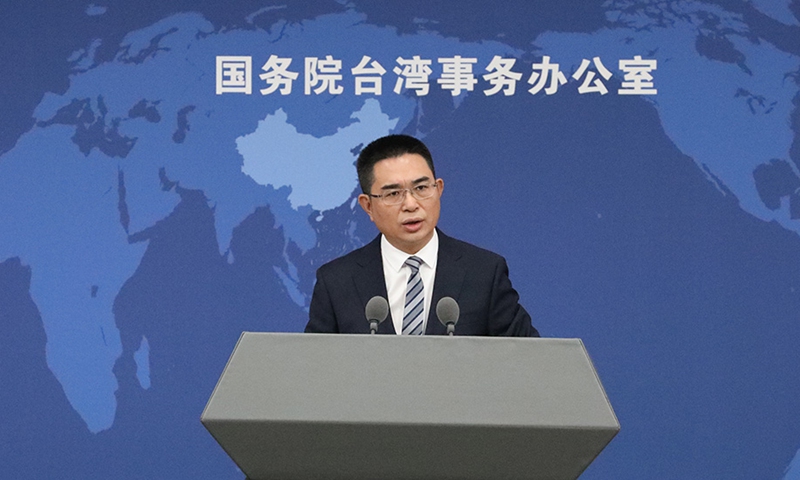
The Democratic Progressive Party (DPP) authorities have rushed to hype up an incident in which Japanese former reporter Akio Yaita, who supports the DPP's secessionist agenda, was reportedly attacked by a Hong Kong resident in Taichung, Taiwan region, using it to smear the Ethnic Unity and Progress Promotion Law with the aim to stoke cross-Straits friction while misleading and intimidating Taiwan residents, a spokesperson for the State Council Taiwan Affairs Office said on Wednesday.

The remarks were made when asked to comment on the incident, with Taiwan regional authorities describing the incident as the "first cross-border repression case" seen since the law was put into effect and claimed possibility of using Hong Kong resident's convenience on the island for relevant cases. 

The spokesperson Chen Binhua said during Wednesday's press conference that the man from Hong Kong acted out of righteous indignation, and the episode amounts to nothing more than an isolated ordinary public security incident. 

"The DPP's malicious acts have drawn disapproval even from people in Taiwan. We solemnly caution the DPP authorities against violating the Hong Kong man's legitimate rights and interests and demand they guarantee the inviolability of his personal and property safety," Chen added.

The 33-year-old suspect, surnamed Liu from Hong Kong, was arrested Monday afternoon after he punched Yaita in the face on Monday, per Taiwan local media on Wednesday. The attack occurred following the Japanese figure delivered a speech at a hotel in Taichung. An investigation is underway to establish a motive for the attack and whether Liu had an accomplice, police said.

Holding Hong Kong permanent residency, Liu arrived in the Taiwan region on Thursday as a tourist and checked into a Taichung hotel. Police said Liu had attempted to leave Taiwan from the Taichung airport before being arrested, per the media report.

The matter has been reported by multiple Taiwan media outlets, with the Taiwan regional authorities hyping up the law in connection with the attack.

Zheng Jian, a professor at the Graduate Institute for Taiwan Studies of Xiamen University, told the Global Times on Wednesday that the DPP authorities rely on anti-mainland confrontation to sustain their rule, so they connect any policy and measure rolled out by the Chinese mainland to the island.  

Their deliberate smear of the law stems from a simple truth - the more united and cohesive the country and Chinese nation become, the less room there will be for separatist forces, Zheng said.

Furthermore, Yaita has also repeatedly issued hostile remarks targeting China, and he once claimed that there existed no credible evidence to confirm the exact death toll of victims in the Nanjing Massacre, one of the most barbaric episodes of World War II, according to media reports. Zheng said that people with a sense of justice, will all hold grievances against his acts, whether they are from the mainland, or compatriots from Hong Kong, Macao or Taiwan island.

Regarding the law, Chen also said on Wednesday that it clearly stipulates that legal means shall be adopted to counter all illegal acts involving ethnic affairs. Rooted in China's national conditions, consistent with legal principles and aligned with international common practices, this law constitutes a just and necessary measure to safeguard national sovereignty, unity and territorial integrity, Chen said.

DPP attacks on the law are aimed to fabricate excuses for its acts that betray the nation, separate the country, jeopardize cross-Straits relations and restrict exchanges. 

"Should 'Taiwan independence' forces dare to engage in acts that split the nation and undermine ethnic unity, we will impose resolute punishment on them in accordance with the law," Chen added.

Populations of 19 nationally protected bird species, including crested ibis, remain stable or continue to grow

China has consistently attached great importance to bird conservation over the years, noted the National Forestry and Grassland Administration (NFGA) at a news conference on the achievements of bird conservation in 2026.

In particular, in September 2025, 17 government departments jointly launched a three-year bird conservation campaign and a special campaign to crack down on the illegal hunting and trade of birds.

Focusing on three core tasks - bird conservation activities, special enforcement actions, and publicity and education - the departments worked closely together and coordinated their efforts to combat the illegal hunting, trading and transportation of wild birds and other related violations throughout the entire chain, while striving to establish a long-term mechanism for regular supervision and governance.

The efforts have achieved phased results, with the populations of 19 nationally protected bird species, including the crested ibis, remaining stable or continuing to grow.
Home to rich bird resources

Wang Zhen, director of the publicity center of the NFGA, pointed out at the news conference that birds are an important component of natural ecosystems.

Protecting bird resources is an important part of promoting ecological conservation, as well as an important measure to preserve biodiversity and safeguard the community of life on Earth.

China is one of the countries with the richest bird resources in the world, with 1,505 bird species, accounting for about one-sixth of the world's total bird species.

More than 800 species are migratory birds. China is also an important corridor for the cross-border migration of migratory birds. Of the world's nine major migratory bird flyways, four pass through China, covering almost the country's entire land territory and territorial waters.

Building a conservation framework

Wang Weisheng, director-general of the department of wildlife conservation of the NFGA, introduced that a three-year nationwide bird conservation campaign and a special campaign were launched in September 2025.

The campaign has severely cracked down on illegal hunting and trading, promoted the improvement of regular and long-term conservation mechanisms, carried out extensive publicity and science education on bird conservation, built a joint conservation framework featuring multi-department coordination, rapid response and full-chain supervision, and effectively safeguarded the safety of bird populations, including migratory birds, and their habitats.

The country has also strengthened the legal foundation for bird conservation. China revised and adopted the Wildlife Protection Law of the People's Republic of China in 2022.

In 2021 and 2023, respectively, it adjusted and released the List of National Key Protected Wild Animals and the List of Terrestrial Wild Animals of Important Ecological, Scientific and Social Value.

The number of nationally protected bird species has been expanded to 394, while the number of birds among China's "three haves" list, of animals considered to have ecological, scientific or social value, has increased to 1,028.

A total of 98.4 percent of bird species are now covered by legal protection, laying a solid legal foundation for bird conservation.
Conservation monitoring network

China has identified 1,140 important habitats along migratory bird flyways and further selected 821 key habitats, comprehensively strengthening protection and restoration, improving the conservation monitoring network, and providing a favorable ecological environment for migration, breeding and wintering.

Fourteen bird species, including the crested ibis, green peafowl and red-crowned crane, have been included in the scope of emergency conservation species during the 14th Five-Year Plan period (2021-25).

Efforts are also underway to include another 21 bird species, including Baer's pochard and the Oriental stork, in the scope of emergency conservation species under the 15th Five-Year Plan (2026-30), while comprehensively strengthening surveys and monitoring, patrols and guarding, rescue and rehabilitation, captive breeding and release, and habitat restoration.

Cracking down on illegal and criminal activities that damage bird resources, China has carried out special campaigns for six consecutive years, strengthening joint law enforcement by multiple departments and severely cracking down on illegal and criminal activities that damage bird resources.

In particular, the three-year nationwide bird conservation campaign and special campaign to crack down on the illegal hunting and trade of birds have promoted coordinated efforts both online and offline and established a full-chain supervision system covering field patrols, market regulation and judicial accountability.

Deepening international cooperation, publicity and education, China has joined multilateral agreements such as the East Asian-Australasian Flyway Partnership and signed bilateral agreements with Japan, South Korea, Singapore, Russia and New Zealand on the protection of the crested ibis and other migratory birds and their habitats.

Together with the international community, China has promoted cooperation in bird banding, population monitoring, information sharing, scientific research and joint conservation.

Every year, China organizes themed publicity campaigns such as World Wildlife Day, Bird-loving Week and Wildlife Protection Publicity Month, and carries out a wide range of science popularization and public awareness activities both online and offline.

Since the spring of 2026, it has organized Bird-loving Week activities nationwide under the theme "protecting feathered spirits, painting an ecological landscape together," further fostering a stronger public atmosphere for loving and protecting birds. The populations of 19 nationally protected bird species have remained stable or increased.

China's Ethnic Unity and Progress Promotion Law takes effect as local measures roll out

China's Ethnic Unity and Progress Promotion Law officially took effect on Wednesday, with multiple regions in the country introducing measures to implement it, including ethnic autonomous regions such as Inner Mongolia and Xizang, as well as ethnic autonomous prefectures, counties and townships.

The law helps further clarify China's position and approach on ethnic affairs, promotes ethnic unity and common development, and provides a stronger legal basis for advancing the building of the Chinese national community, Wang Jiang, deputy director of the Institute of China's Borderland Studies at Zhejiang Normal University, told the Global Times on Wednesday.

China's National Ethnic Affairs Commission said on Tuesday that local government departments in Inner Mongolia Autonomous Region had put forward 23 specific measures to promote the study, publicity and implementation of the law. The measures cover legal education, implementation of the law, and coordination among relevant departments to ensure that the law is carried out effectively.

According to the commission, Inner Mongolia will organize study and publicity activities to foster a sound atmosphere of respecting, studying, observing and applying the law. The region will also strengthen the alignment between institutions and regulations, review relevant local regulations, government rules and normative documents, and promote revisions to local regulations related to ethnic unity and progress.

The measures also include pushing the revision of regulations of the Inner Mongolia Autonomous Region on promoting ethnic unity and progress, promoting extensive interaction, exchange and integration among all ethnic groups, and steadily advancing common modernization among all ethnic groups.

In Xizang Autonomous Region, local government departments have also introduced 20 measures to promote the law's implementation. The regional ethnic affairs department said the measures are designed to create a sound legal environment for safeguarding ethnic unity, improve institutional systems and strengthen legal guarantees.

The relevant measures in Xizang also focus on the development of all ethnic groups, including coordinating infrastructure construction, public services, border stability and border-area development. They also call for solid efforts to promote the shared modernization of all ethnic groups and to integrate the study, publicity and implementation of the law into the daily production and life of people of all ethnic groups.

The implementation of the law comes after it was adopted at the annual session of the National People's Congress in March. The law contains chapters on building a shared spiritual home, promoting interaction, exchange and integration among all ethnic groups, advancing common prosperity and development, and strengthening guarantees and supervision.

On June 24, Vice Minister of Justice Hu Weilie said China's provision in its Ethnic Unity and Progress Promotion Law holding organizations and individuals outside the country legally accountable for engaging in ethnic separatism is justified, lawful and necessary, according to Xinhua News Agency.

"We also firmly oppose all acts of smearing, suppression, infiltration and sabotage targeting China under the guise of ethnic, religious, human rights, or other issues," Hu said.