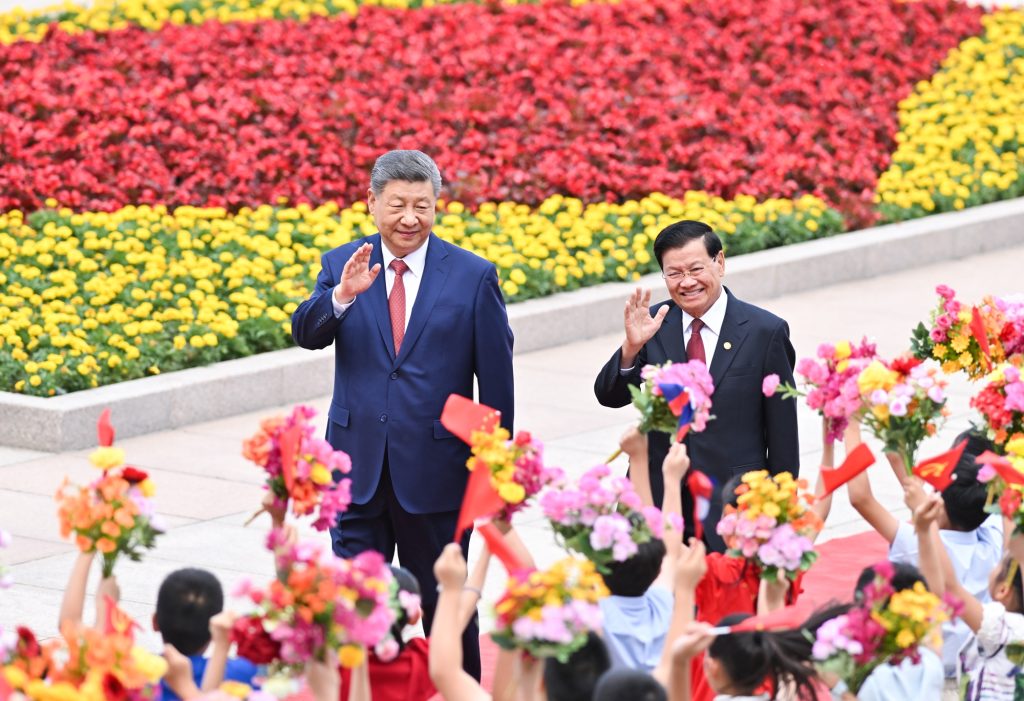
General Secretary of the Lao People's Revolutionary Party Central Committee and Lao President Thongloun Sisoulith lays a wreath at the Monument to the People's Heroes on Tian'anmen Square in Beijing, capital of China, June 5, 2026. (Xinhua/Dai Tianfang)
General Secretary of the Communist Party of China Central Committee and Chinese President Xi Jinping held talks with General Secretary of the Lao People's Revolutionary Party Central Committee and Lao President Thongloun Sisoulith in Beijing on Friday, the Xinhua News Agency reported.
According to Xinhua, Xi said China is willing to work with Laos to achieve a new leap in bilateral ties and build an all-weather China-Laos community with a shared future in the new era.
Laos fully agrees with China and supports the upgrading of bilateral ties, and stands ready to work with China to consolidate high-level political mutual trust, Thongloun said, per Xinhua.
After the talks concluded, the two sides jointly witnessed the signing of cooperation documents covering areas such as inter-party exchanges, people's wellbeing, finance, customs, trade, youth exchanges and media.
2026 marks the 65th anniversary of diplomatic relations between Laos and China and the China-Laos Friendship Year. Standing at a new historic juncture, experts note the two countries will not only expand pragmatic cooperation to nurture new growth drivers, but also ramp up regional coordination. Leveraging the exemplary role of their bilateral partnership in the neighborhood, China and Laos are poised to inject positive momentum into regional peace, stability and development.
Promising prospects
During the talks, the Chinese leader made four points to advance bilateral ties, which included keeping to the socialist path, building a strong foundation for mutually beneficial cooperation, strengthening the traditional friendship between the two peoples, and improving coordination on foreign policies, according to Xinhua.
He called on the two sides to take the establishment of the "3+3" strategic dialogue on diplomacy, defense and public security as an opportunity to deepen law enforcement and security cooperation, and resolutely crack down on cross-border crimes.
Noting that China is ready to work with Laos to upgrade the China-Laos Economic Corridor cooperation, Xi said the two sides should accelerate railway connectivity among China, Laos and Thailand and achieve greater regional connectivity at an early date, according to Xinhua.
China and Laos should boost cooperation in traditional areas such as agriculture and electricity, and tap into emerging fields like artificial intelligence and the digital economy, Xi said, adding that China will continue to provide assistance to Laos within its capacity.
Xi said that the two countries should take the Year of China-Laos Friendship in 2026 as an opportunity to expand cooperation in culture, education, health, and at subnational levels.
China now stands as the leading banner for the socialist system and developing countries, and a mainstay in safeguarding world peace and promoting the building of a multipolar world, said Thongloun, adding that China's development has provided valuable experience for the vast number of developing countries, including Laos.
He stressed that the Lao side firmly adheres to the one-China principle and supports the series of major global initiatives put forward by General Secretary Xi.
Xu Liping, director of the Center for Southeast Asian Studies at the Chinese Academy of Social Sciences, told the Global Times that guided by head-of-state diplomacy, political mutual trust between China and Laos has continued to deepen.
Drawing on the institutional strengths inherent to socialist systems, the two sides can further align their medium- and long-term development strategies to pursue common development, Xu added.
Ahead of his summit with Chinese leaders in Beijing, Thongloun kicked off his China itinerary with visits to Hangzhou in East China's Zhejiang Province. While touring the country's renowned tech hub, the Lao leader paid site visits to Deep Robotics as well as Alibaba. His cheerful laugh while testing out domestically developed Chinese quadruped robots has gone viral across Chinese social media platforms.
In Zhejiang, the Lao leader also learned about China's practices in green development at Yucun village in Anji county, the birthplace of the concept of "lucid waters and lush mountains are invaluable assets," which has guided the village to pursue an eco-friendly development path.
Upon his arrival in Beijing on Thursday, Thongloun visited the Party School of the CPC Central Committee, and returned to the room where he stayed for one month 26 years ago when he studied for an exchange program, as well as the China Academy of Space Technology.
Per Thongloun's visit itinerary and bilateral official statements, China-Laos cooperation is expanding beyond traditional sectors into emerging fields, said Xu. "Boasting strong complementarities in emerging growth drivers including green economy, digital economy as well as aerospace, the two nations enjoy enormous room for collaboration, promising deeper and more substantial pragmatic cooperation ahead."
According to China's Foreign Ministry, China-Laos economic and trade ties have continued to deepen in recent years, with China now serving as Laos' largest source of foreign investment and second-largest trading partner.
Bilateral trade reached $9.82 billion in 2025, up 19.3 percent year-on-year. China's exports to Laos totaled $4.32 billion, an increase of 17.6 percent, while imports from Laos rose 20.7 percent to $5.5 billion, according to the ministry.
Positive demonstration effect
During the Friday meeting with Thongloun, Xi said that China has always regarded Laos as a priority in its neighborhood diplomacy, Xinhua reported.
China hopes to see Laos play a bigger role in international and regional affairs, and the two sides should work closely in multilateral settings to safeguard the common interests of the Global South, the Chinese leader added.
Along with Cambodia, Laos was one of the first countries among ASEAN members to sign an agreement to build a community with a shared future with China. Transcending bilateral ties, China-Laos pragmatic cooperation plays a leading and exemplary role in China-ASEAN relations, analysts said.
China's first 500-kV cross-border alternating-current power link went into operation in April this year, marking a new step in energy cooperation between China and Laos.
The project, the largest and highest-voltage power connection between the two countries, triples cross-border transmission capacity from 50 megawatts to 150 megawatts. It is expected to transmit 3 billion kWh of clean electricity annually, 30 times the capacity of previous lines, according to Xinhua.
As an important member of the Lancang-Mekong Cooperation, Laos boasts abundant hydropower resources and functions as a regional energy "battery" for the ASEAN Power Grid initiative, Xu said.
Deep bilateral energy cooperation and cross-border grid upgrades between China and Laos facilitate regional integration, complementary growth and offer a robust benchmark for China-ASEAN cooperation on infrastructure, green transition and capacity synergy, Xu noted.
The year 2026 also celebrates five years since the China-Laos Railway went into service. According to a statement sent to the Global Times by China Railway Kunming Group on May 28, the China-Laos Railway has reached a new milestone, with cumulative passenger train runs surpassing 100,000 since its launch on December 3, 2021. The flagship project under the Belt and Road Initiative has handled 73 million passenger trips.
"Beyond transforming Laos from a landlocked country into a land-linked hub, the railway has boosted regional trade and economic integration and become a flagship project for regional cooperation," Ma Bo, an associate professor with the School of International Studies, Nanjing University, told the Global Times on Friday.
Boasting fruitful cooperation spanning infrastructure, clean energy and modern agriculture as well as the promising emerging track of artificial intelligence, China and Laos have yielded substantial achievements across diverse fields, said Ma. "Expected to keep delivering exemplary effects, Laos will serve as a key practical model for China's efforts to advance the building of a community with a shared future with neighboring countries."
In a signed article by Thongloun released by Lao News Agency on Friday, the Lao leader said that "Today, the Laos-China relationship stands at its highest point in history, serving as a model of equality, mutual respect and mutually beneficial cooperation."
Chinese Vice President Han Zheng met with UK Foreign Secretary Yvette Cooper in Beijing on Tuesday.
The two countries' leaders agreed in January to develop a long-term and consistent comprehensive strategic partnership between China and the UK, opening a new chapter of bilateral relations, Han said.
Noting that improving bilateral ties serves the interests of the people of both countries, Han said both sides should jointly shoulder the responsibilities of major countries, strengthen strategic communication, consolidate the positive momentum of bilateral relations, explore new opportunities, and boost people-to-people exchanges.
He called on both sides to work together to practice true multilateralism, jointly advance global governance reform, and bring greater stability and certainty to the world.
Cooper said the UK and China share broad common interests and cooperation potential in areas such as trade and investment, artificial intelligence, green development and addressing climate change.
The UK is ready to work with China to implement the important consensus reached between the leaders of the two countries, engage in constructive dialogue and cooperation, and jointly address challenges, Cooper said.
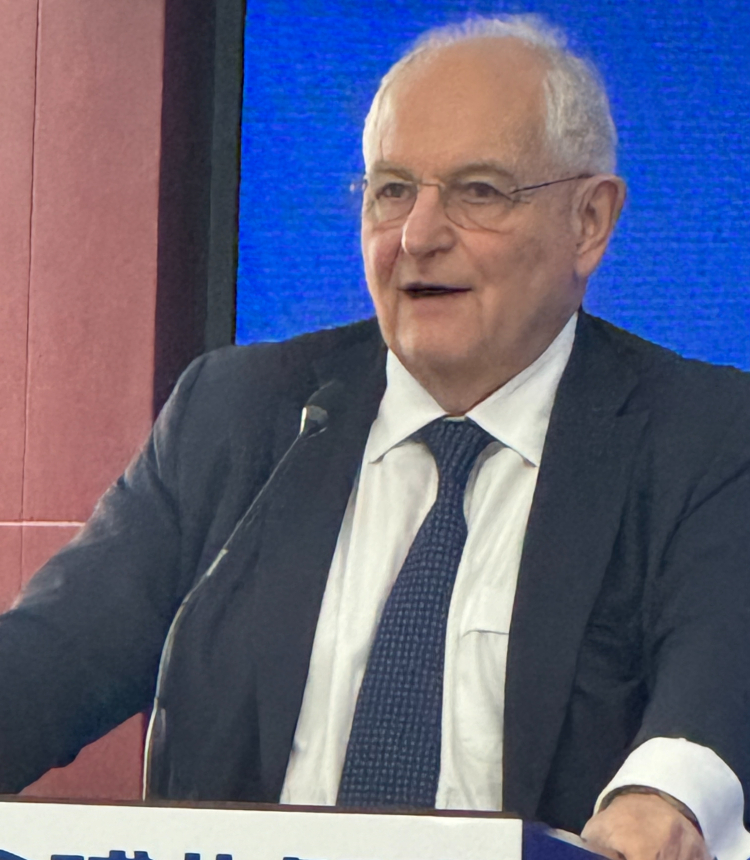
Compared with Japan in 1990s, China's economic growth potential is substantially greater. So, with the right policies, China should not end up like Japan, renowned British economist Martin Wolf, associate editor, and chief economics commentator at the Financial Times, told the Global Times in Beijing.
He suggested that China should reduce the national savings rate and stimulate consumption. And a key lesson is not to "allow deflation to set in," otherwise monetary policy will become very ineffective. If this happens, policymakers will be forced to use fiscal policies massively, which is very expensive.
Wolf made the remarks in an interview with the Global Times on the sidelines of a seminar on Globalization and the Chinese Economy organized by the think tank Center for China and Globalization (CCG).
"Today is a moment in Chinese economic history that may be quite important for the next 10 or 20 years," he said.
"China is, relatively speaking, much further from high-income status than Japan was in 1990. So its growth potential is substantially greater. There is much less reason for the productivity slowdown that occurred in Japan. In that sense, with the right policies, China should not end up like Japan," Wolf told the Global Times.
He pointed out that the similarity between Japan and China in history is that they both have very high savings rates. The saving rate stood at about 40 percent of its GDP at its peak in Japan. This is great for a rapidly developing manufacturing country building a modern economy from scratch, as these savings can be converted into investments when it grows at 10 percent.
However, when Japan became a high-income country and caught up with most of Europe, its savings rate still accounted for 35 percent of GDP, but the investment rate declined and the account surplus exploded.
At that time, Japan did not make the wise decision to reduce the savings rate in a timely fashion, but instead decided to expand domestic investment, aggressively lower interest rates, and expand credit, leading to Japan experiencing the largest real estate boom in world history, reaching its peak in 1990. However, this economic bubble burst in the 1990s. When the economic bubble collapsed, the Japanese government did not implement effective artificial stimulus, nor did it change the macroeconomic structure in the early 1990s, leading to deflation.
"This is the lesson from Japan's experience," Wolf told the Global Times.
"Do not allow deflation to set in. It's very important not to let it because then you've got falling prices. If you've got expectations of falling prices, monetary policy becomes very ineffective. You then are forced to use fiscal policies massively, which is very expensive," he said.
The British economist believes that a key goal of China's macroeconomic policy is to transform the country into a full, all-around, and high-income nation. Despite facing more challenges at present, this goal is still achievable.
He argues that in order to achieve this goal, an important task is to improve underlying productivity, namely Total Factor Productivity (TFP). TFP is an indicator that measures the ratio of total output to all factor inputs.
In recent years, China's total factor productivity has not been growing rapidly, mainly due to the country's previous high investment rates. However, in recent years, the investment rate has been slowing down, mainly due to declining profits and instances of "overinvestment" in some regions in previous years.
Wolf told the Global Times that China can seek new large-scale domestic investment projects that are efficient and productive, absorbing resources and savings that cannot currently be effectively absorbed. "In my view, the most plausible large-scale investment that is already happening is various forms of renewable energy."
He noted that China can also increase investment in manufacturing. However, it is important to be aware that investing in manufacturing may lead to overcapacity. If this excess capacity is exported to Europe or the US, it will face fierce resistance. At the same time, other developing markets are not that big and have a limit.
In the field of investment, He said that two issues need to be emphasized. First, as most of China's infrastructure has already been built, real estate will no longer play a significant role in investment.
Second, it is important to produce good "valuable GDP," which means generating GDP that actually benefits the current or future welfare of the Chinese people, rather than creating things that will never be used in reality.
The creation of useless GDP should be avoided, he warned. For instance, if you build vast numbers of tower blocks which are not occupied, that is not productive GDP," he said.
Compared with investment, the more important thing is to drive up consumption, he stressed to the Global Times.
Currently, China's national savings rate is the highest in the history of the world for a country at this level of development and size, comparably.
"The national savings rate is too high to be productively absorbed in the economy at current levels of GDP. There is no plausible investment with one exception which can offset that. And the last one that did absorb a lot of these savings is this huge real estate building boom. But that's pretty clearly coming to an end," he told the Global Times.
Therefore, there is an urgency to boost consumption. "Consumption has to rise and the drivers [for economic growth] will be consumption because that's what they've been for every country that got to the sort of level of GDP that China has now. The question is only how it's done."
According to him, the consumption could be public consumption or private consumption. Public consumption, it means taxation, while for the private consumption, it means some combination of lower household savings and redistribution of income.
"This is going to be fantastically difficult," he said, adding that driving consumptions can be done in many different ways.
When discussing globalization and China's role in the world economy, Wolf believes that the fundamental driving forces of the process of global economic integration over the last two centuries have been the resource and cost advantages, transportation and communication technology innovations, and policy and political openness.
In recent years, the vitality of these driving factors has weakened, leading to a slowdown in globalization. However, the end of the "hyper-globalization" era does not mean the end of globalization. Despite facing pressures from economic adjustment costs and tensions among major powers, the momentum of globalization remains strong.
In recent years, Western companies have increasingly focused on political risks and sought to diversify supply chains for hedging purposes, but this does not mean de-globalization. The current issue lies in whether a framework of trust and cooperation can be established, for which both China and the West must work very hard, he noted.
Skyscrapers fill the screen. Under the intensive high-rise buildings, Mac Candee and his friend walk on the street. "Today, we have arrived in Shanghai, China." They say, angling the camera to show a view of their surroundings.
Then, there come clips of Western media reporting on China, with some negative tones that overseas audiences have probably been very familiar with. Only seconds later, Candee reappears on the screen: He stands at The Bund in downtown Shanghai, and behind him is the Huangpu River glistening under the clear blue sky.
"We're going to be showing you if what you're told in the media and what you know about China actually match up with what life is like here," Candee says to the camera.
This is a four-hour video about Candee's Shanghai trip that he made after he had stayed in the city for six days.
Candee, a 31-year-old US travel vlogger whose accounts "WorldNomac" have some 2.5 million followers on various social media platforms, is among a surging number of foreign tourists coming to China after the country relaxed its entry policies in recent months.
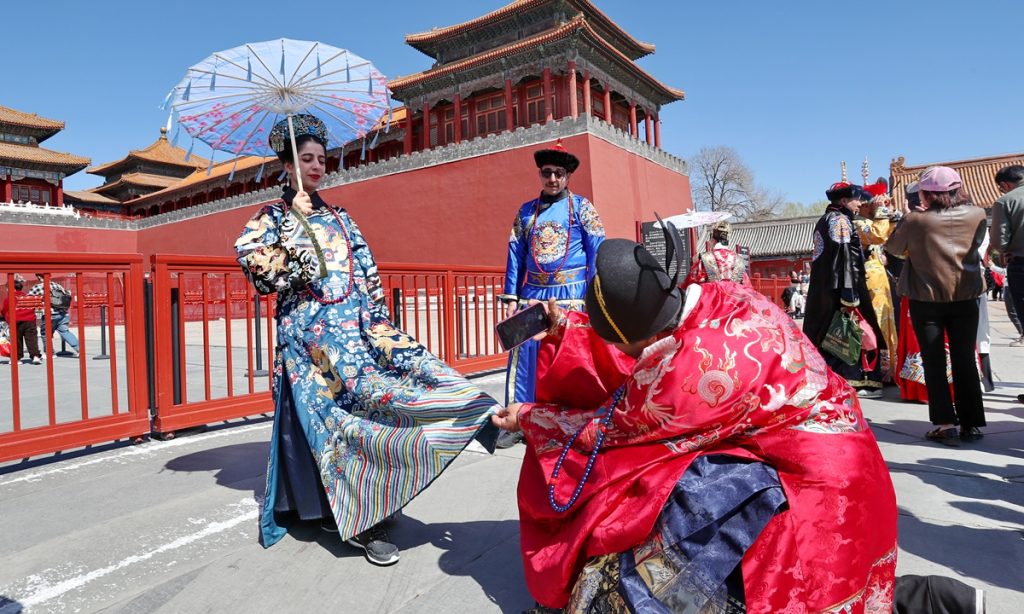
2024 has become a remarkable year for inbound tourism, since China expanded its 144-hour visa-free transit policy to more countries. In some major transit stops and also tourist destinations, like Beijing, Shanghai, and Chengdu, visitors from different countries and regions carrying travel bags and cameras flood landmarks and popular restaurants in these cities. They have become witnesses of China's prosperous tourism market, and have provided some vivid, individual windows for the world to take a closer look at this big Eastern country.
1st time in China
Months ago, in preparation for his trip to the Philippines, Candee happened to see a YouTube video showing the process of doing a 144-hour transit visa, and learned that visitors from certain countries no longer have to go to an embassy or consulate for a tourist visa to China.
The video inspired Candee to add "China" to his itinerary. "I was like, Oh, I'm actually going to the Philippines. This would be a great time to also at least visit Shanghai and see what China is like," he recalled.
Candee had always wanted to visit China. He told the Global Times that China has always been a very interesting country for him with how massive it is, and how big of a percentage of the world's population is from China. "I wanted to get a small taste of what the culture was like over there," he said.
In his Shanghai trip vlog, Candee showed how he explored many aspects of the metropolis with his friends. They went to Shanghai's iconic places like the Bund, the Oriental Pearl Tower, and Jing'an Temple, and tasted lots of food including sheng jian bao (pan-fried pork bun), hot pot, and a McDonald's restaurant with localized food. They experienced the city's public transport from metro trains to the maglev, and talked to many local residents.
As the first stop for many overseas tourists' trips to China, Shanghai is "a melting pot for multiple cultures" in Candee's eyes. "It's a very beautiful city from the standpoint of there's so much modern architecture, but then you'll see temples built into the city as well, so you get a mix of old times and new times and modern living," he told the Global Times. Candee added that he also encountered lots of similar European architectural styles with a Chinese twist.
A frequent global traveler, Candee said that in Shanghai he didn't encounter massive challenges brought about by cultural differences. Some interesting experiences nonetheless gave him a unique angle to know about Chinese people.
During his stay in Shanghai, Candee went to the "marriage market" in People's Park, a regular matchmaking venue where locals look for spouses for themselves as well as for their adult children.
"I thought that was fascinating, that parents of Chinese people will go and essentially advertise all of their children's qualifications without a photo in order to look for a husband or a wife for them," he recalled.
"This, for me, was a big culture shock to learn about how they do that, and it was really cool to go and experience that."
Candee concluded that he likes Shanghai, as "there's so much to do there."
His love for this city was somewhat reflected in the length of his Shanghai trip video: four hours, the longest ever travel vlog he had ever made.
The length of the vlog seems not to be attractive in today's fast-paced era of hand-held devices. However, the video has attracted more than 200,000 views on YouTube.
"If you are crazy enough to upload a four-hour long vlog, I am crazy enough to watch it all," one commented under the video.
Candee felt great about this vlog.
"A lot of people decided to watch the full length of four hours, which is a large time commitment," he told the Global Times.
"This means the country [China] was very interesting, and [in this vlog] there were a lot of perception=changing moments," he noted. Warming market
More foreigners like Candee coming to China indicates that, after four years since the outbreak of the COVID-19 pandemic, inbound tourism in China has finally entered the fast recovery channel.
The Global Times learned from domestic travel platform Ctrip that the number of inbound tourists to China in the first four months of 2014 (including air and rail travel) has increased by 244 percent compared to the same period in 2023. The top 10 most popular Chinese travel destinations for inbound tourists include Shenzhen, Shanghai, Guangzhou, and Beijing. Inbound tourists mainly come from South Korea, the US, and Singapore, among others.
Inbound tourism has always been an important symbol of China's opening-up to the outside world, Jiang Yiyi, vice president and professor of School of Leisure Sports and Tourism, Beijing Sport University, told the Global Times.
Since 2022, China has taken many measures to further promote China's opening-up level, such as visa facilitation, international flights resumption, and more convenient payment for inbound tourists.
China's tourism industry is also undergoing a transformation. In the past, foreign tourists came to China mainly for sightseeing. Now, through the restructuring of the domestic industry system, China has provided more diversified products for foreign tourists. Foreign tourists can come for vacation, to participate in sports activities or events, such as marathons and skiing.
Tourists from Hong Kong and Macao can conveniently go to provinces around the Greater Bay Area such as Guangdong and Hunan for leisure vacations.
These policies and changes in product systems and industry structures come together and lay a very good foundation for foreign tourists to have more diversified choices, and it is the same with tourists from Hong Kong and Mocao, according to Jiang.
Data from flight tracker Umetrip shows that as of April 5, the number of inbound flights this year has exceeded 86,000, more than three times that of the same period in 2023, and has recovered to about 70 percent of the same period in 2019; the number of inbound tourists has reached 7.7 million, more than three times the increase compared to 2023, New Weekly reported.
As the inbound tourism market gradually heats up, Chinese travel agencies are getting busier receiving tourist inquiries, launching new inbound products, and developing travel routes during the traditional off-season. A shortage of English-speaking guides and lesser-known languages also occurred.
According to New Weekly, the daily salary of foreign language tour guides in various languages has generally increased. Taking the East China market for example, previously, one could hire an English-speaking tour guide for 500-600 yuan ($69-83) per day before the pandemic, but now it may cost 800-900 yuan; for guides of less common languages, taking Indonesian as an example, the fee can reach 1,000 yuan per day.
The COVID-9 pandemic had a significant impact on China's inbound and outbound tourism market, leading to disruptions in the industry chain and talent loss. However, the tourism industry is very resilient. With a good business model and development opportunities, talents will definitely come back, Jiang said.
Differs from Western narrative
So far, foreign nationals from 54 countries are eligible for the 72/144-hour visa free transit policy to transit to a third country or region via ports and cities in the Chinese mainland. China has also expanded its unilateral or mutual visa-free travel policies to more countries.
Following the new policies is a dramatic increase in the number of overseas vloggers visiting China. According to data by statistics platform Meltwater, during the first quarter of 2024, there were about 2,420 YouTube and TikTok videos containing key words like "China," "trip," and "travel" in their titles, five times higher than the same period in 2023.
With more global visitors uploading online their China trip videos with key words like "China is so safe," and "Riding with world's fastest bullet train," overseas audiences find that through these videos, they see a real, fast-developing China that differs from the one under the mainstream narrative in the West.
"I have friends who came to visit China 20 years ago, and they thought China is still the same as 20 years ago because they trust the media 100 percent," a YouTube user commented under a video of vlogger Alina Mcleod's trip to Southwest China's Chongqing.
"I have been to China so many times," the user wrote. "If you have not been to the same cities for 10 years, you will see there are big changes."
Mcleod, the 33-year-old Canadian travel vlogger with some 300,000 subscribers on YouTube, said that her recent trip to China had definitely changed her perception of the country.
"In North America there is a lot of negative press around China," Mcleod told the Global Times via email. But now after exploring the country in person, she feels that China is quite modern and beautiful.
"I was very impressed with how much technology and infrastructure they have built in the last few decades, and what a wide range there is of things to see and do in the country," she said.
Inbound tourism is a very good window for overseas tourists to "enter" China, get to know China and understand China, because only through this kind of close contact can foreigners know what the real China is like. If they know China only from reports in foreign media, then their understanding of China may be one-sided or fragmentary. Only after truly coming to China and seeing China's development with their own eyes can they truly see China's current achievements in all aspects, Jiang noted.
Candee talked about a major misconception that some Westerners may have on China.
"I think that around the world, a lot of people feel that if you visit China, you'll be under extreme surveillance and you'll be, you know, getting in trouble for filming," he said. "But my experience in Shanghai was that it was a lot less strict than I had imagined," he told the Global Times. "I filmed a lot. People were really friendly. I think overall everyone was welcoming and happy to welcome foreigners."
With beautiful memories of his previous trip to Shanghai, Candee said he wants to visit China again in the near future, and would love to have a local who shares more places with him.
"Hopefully that'll be within the next 12 months," he said.
At the end of Candee's four-hour Shanghai trip vlog, he walks along the Huangpu River under the clear blue sky, and smiles to the camera.
"In every country I've been to, especially ones that have intense perceptions about them, I've always found a completely different atmosphere than what the mainstream will share." he says. "For those of you who have made this so far into the video, you probably are seeing a different look at what China is like."
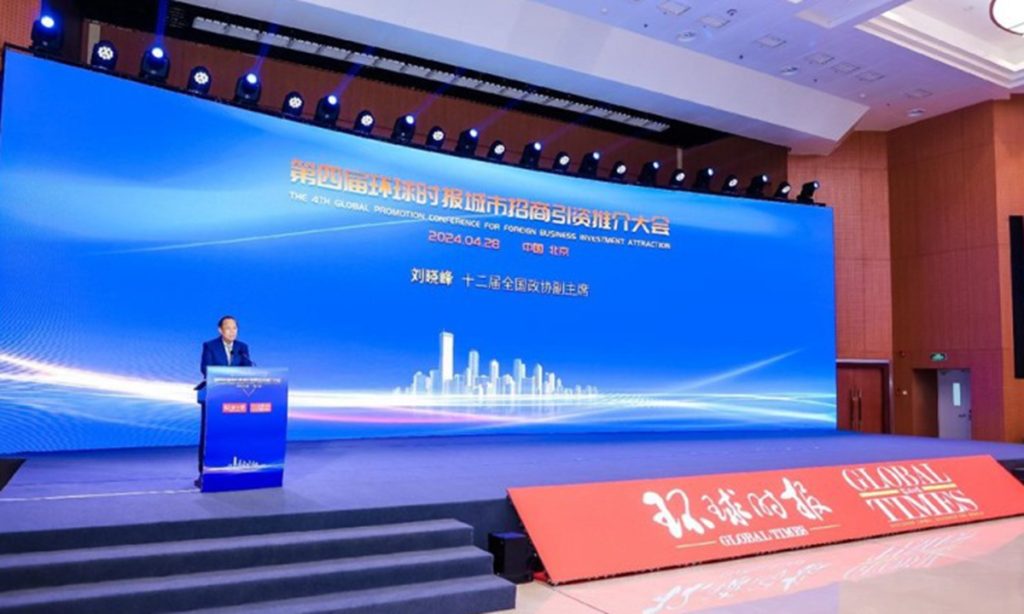
China Association of Science and Technology System Reform and research fellow with China Science Center of International Eurasian Academy of Sciences reviewed the development experience of China's economy over the past 40 years and proposed three opinions based on the current situation in China.
Liu Quanhong, director of Industrial Economics and Technical Economics Institute of Chinese Academy of Macroeconomic Research, said that in order to develop new quality productive forces, it is necessary to innovate the industrial development model comprehensively.
Peng Juan, chairperson of Women's Federation in Changsha, Central China's Hunan Province told the Global Times that the development of new quality productive forces cannot be achieved without the strength of women. According to Peng, the proportion of female talents in Changsha is now at 51.34 percent, and female scientific and technological workers account for 35 percent, and the net inflow rate of middle- and high-end talents to Changsha ranks among the top three in the country.
Representatives from various cities across China also discussed their economic strength, resources, and investment promotion policies, and efforts to create a favorable business environment and achieve high-quality urban development. Cities such as Huaihua in Hunan Province, Jinan and Qingdao in East China's Shandong Province, Shishi in East China's Fujian Province, highlighted their strategic industries and development goals, inviting domestic and international investors to explore opportunities in their regions.
Suzhou Industrial Park, Lanzhou New Area, Gongshu district of Hangzhou, and Huadu district of Guangzhou also conducted investment promotion events during the conference.
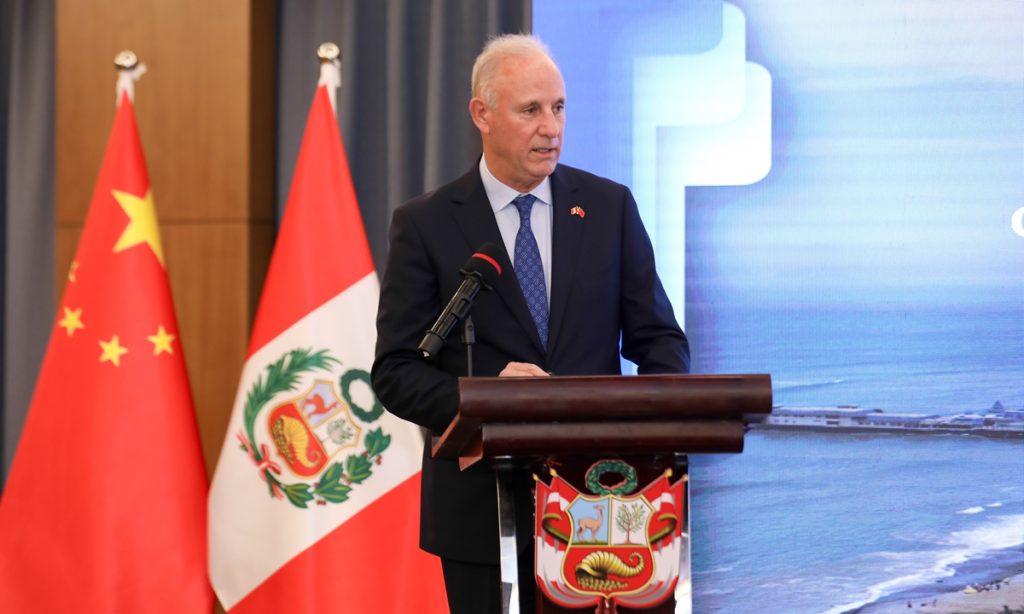
Peru and China are pursuing green transformation and high-quality development. In this regard, there are many opportunities for enhanced collaboration in the green economy, Peruvian Foreign Minister Javier González-Olaechea Franco told the Global Times in an exclusive interview.
The remarks came after his official visit to China from April 28 to 30 - his first visit to the country since he took office - with the clear objective of addressing with the Chinese government the challenges world peace faces. He also dealt with a wide variety of topics related to cooperation and investment in a significant number of priority sectors for Peru and of interest to China, the foreign minister said.
While speaking about the need for cooperation in the green sector, González-Olaechea responded to some "overcapacity" fallacies targeting China's new-energy vehicle (NEV) industry.
Chinese NEVs are setting trends that lead to the green transformation of Latin American countries. Regional countries such as Peru, Chile and Brazil have been among the top destination markets for Chinese NEVs.
During a meeting between Chinese Foreign Minister Wang Yi and González-Olaechea in Beijing, the two sides agreed to deepen cooperation in fields such as green development, in addition to other sectors including infrastructure construction, the digital economy and health, the Xinhua News Agency reported.
The Peruvian foreign minister also highlighted Peru's keen interest in Chinese NEVs. He told the Global Times that the reason for this interest is "quite simple."
Chinese NEVs have become a popular choice for many developing countries because of their cost-effectiveness and environmental friendliness, González-Olaechea said.
Responding to the "overcapacity" rhetoric, the Peruvian foreign minister said that "evidence shows that, despite the rapid growth of Chinese electric vehicle exports, there remains a consistent global demand that far exceeds current production capacity. Reality and potential must drive our decisions."
"In addition, let us remember that there is a consensus on climate change and the urgent need to triple renewable energy capacity by 2030," González-Olaechea said, adding that Peru commits its words and its policy to this global goal for the benefit of humanity.
China has been Peru's largest trading partner for nine consecutive years, and Peru is China's second-largest investment destination and fourth-largest trading partner in Latin America.
In the first quarter, bilateral trade between China and Peru reached 70.97 billion yuan ($9.82 billion), a year-on-year increase of 14.3 percent, with both imports and exports expanding, according to the data from China's General Administration of Customs.
In addition to traditional sectors, new energy offers potential for cooperation in sectors where both sides can further tap into the market for win-win outcomes, Chinese experts said.
Many developing countries in Latin America, including Peru, are embracing green development to a significant extent, comparable to many developed countries worldwide, Wang Youming, director of the Institute of Developing Countries at the China Institute of International Studies in Beijing, told the Global Times on Wednesday.
The demand for green transformation in the region aligns with the advantages that Chinese companies offer, not only in the NEV industry but also in the solar and wind power sectors, Wang said.
As Chinese companies expand their global presence with competitive products, Latin American countries could enhance their industry upgrades by deepening cooperation with Chinese investors in the new-energy sector, Wang said, noting that this collaboration could also reduce regional countries' heavy reliance on exporting raw materials for economic development.
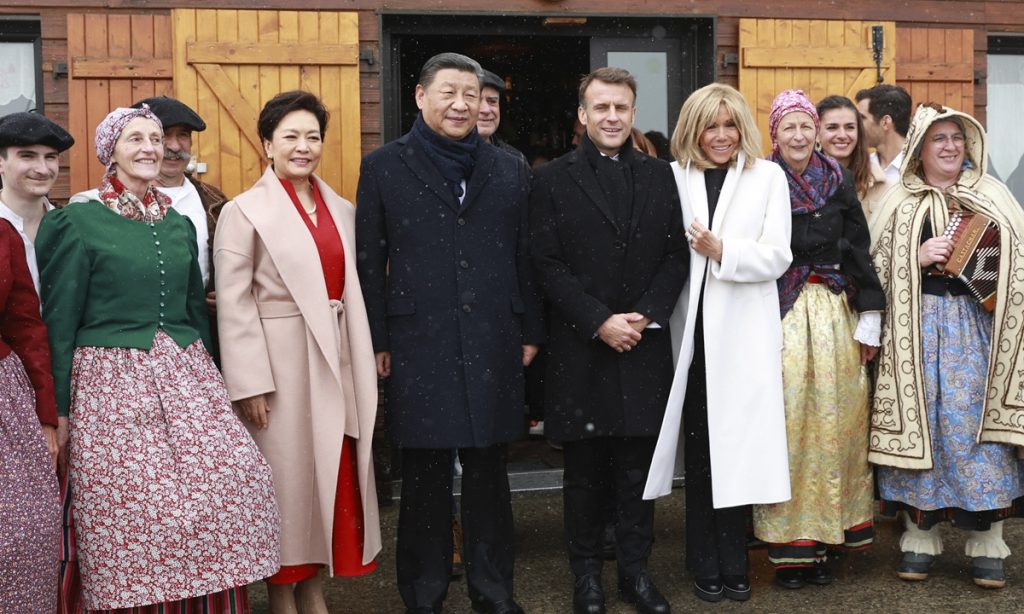
Chinese President Xi Jinping arrived in Tarbes, Hautes-Pyrenees Department of France on Tuesday, as part of his state visit to the European country. Xi and his wife Peng Liyuan were welcomed by French President Emmanuel Macron and his wife, Brigitte Macron, at the airport.
Nearly 300 overseas Chinese from southern French cities such as Toulouse, Lyon and Cannes, holding Chinese and French national flags, welcomed Xi at Tarbes airport.
The Pyrenees is the birthplace of Macron's maternal grandmother, who was from the Pyrenean town of Bagnères-de-Bigorre. In his childhood, the French president commonly visited the town to see his grandmother.
Xi and Macron - together with their wives - visited a mountain restaurant. Before lunch, they watched a traditional folk dance performance and took a picture together, media reported.
"Arranging a meeting in the Pyrenees shows that President Macron attaches great importance to the effect of head-of-state diplomacy on elevating China-France relations. He also hopes that his personal relationship will allow the two sides to discuss global governance issues, bilateral issues and the regional situation in a more relaxing manner," Dong Yifan, a research fellow at the Institute of European Studies, China Institutes of Contemporary International Relations, told the Global Times.
A new climax in high-level exchanges
The talks in the Pyrenees are reminiscent of the scenario in April 2023 when the Chinese and French top leaders met for informal talks in Guangzhou, capital of South China's Guangdong Province. The two leaders strolled through the Pine Garden close to Baiyun Mountain, chatting and stopping at times to enjoy the unique scenery of the southern Chinese garden. They had tea by the water, enjoying the view and discussing the past and present. Xi and Macron listened to the guqin (Chinese zither) melody "High Mountain and Flowing Water" at Baiyun Hall. Xi then invited Macron to dinner.
The similar interaction between the Chinese and French leaders can also date back to 2019 when in the French city of Nice in March, Macron received Xi at Villa Kerylos, a century-old house overlooking the Mediterranean and seen as a microcosm reflecting European civilization.
Later that year, in November, President Xi and his wife Peng Liyuan met with Macron and his wife Brigitte Macron in the Yuyuan Garden in Shanghai. The two couples walked in the garden and enjoyed the unique night scape.
Song Luzheng, a Chinese scholar residing in France and a research fellow at the China Institute of Fudan University, believes that arranging a meeting in the Pyrenees intends to show that the two leaders have broad visions and mind-sets to see things from a global perspective, as there is a Chinese saying, "stand tall and see far."
"Mutual trust and mutual understanding between leaders can help the two countries to face up to common challenges and solve problems," Song told the Global Times, adding that he sees the Pyrenees meeting between Xi and Macron as a display of high-level mutual trust between the two countries.
Keeping momentum
Xi and Macron held talks at the Elysee Palace on Monday. President Xi said that the two sides should stay committed to the spirit that guided the establishment of their diplomatic ties, namely, independence, mutual understanding, long-term vision and mutual benefit, and enrich it with new features of the new era.
The two sides should continue to understand each other, jointly promote harmonious coexistence in a colorful world, stick to taking a long view and work together for an equal and orderly multipolar world, he said.
China is willing to maintain strategic communication with France, respect each other's core interests, consolidate the strategic stability of bilateral relations, tap the vast potential of mutually beneficial cooperation and facilitate growth and balance in bilateral trade, Xi said.
Macron said that France and China, through mutual respect, a long-term perspective and strengthened cooperation, will play an important and positive role in addressing global challenges and opposing any logic of bloc confrontation.
France would like to have closer economic ties and multilateral communication and collaboration with China, and work for more outcomes in the France-China strategic partnership, he said.
At the joint meeting with the press with Macron after their talks, President Xi said that the two sides have agreed on consolidating the strategic stability of bilateral relations, exploring the great potential for mutually beneficial cooperation, accelerating people-to-people exchanges and building greater consensus on global cooperation.
Pierre Picquart, an expert in geopolitics and human geography from the University of Paris-VIII, told the Global Times that despite certain differences between China and France, maintaining high-level dialogue between the two sides is of paramount importance.
"Preserving this high-level dialogue is essential to promoting cooperation on critical issues, thereby contributing to regional and global stability," said Picquart.
Xi left France and headed for Serbia on Tuesday evening local time.
The end of the year and the start of a new one is a time for reflection and anticipation. Throughout 2023, the Chinese society has undergone various developments and changes, which manifests the exploration and practice of the Chinese path to modernization.
In light of this, the Global Times is launching a series that elaborates on this unique path through the stories of ordinary people's New Year's wishes. These wishes serve as a window to the changes and achievements of Chinese society as Chinese modernization has brought Chinese people more concrete consensus, a more vibrant countryside, more imaginative innovation, more balanced education, a more dignified old age with stronger security, and a more confident civilization. This shows that Chinese modernization is the prerequisite and driving force for the great rejuvenation of the Chinese nation.
This is the second installment in the "Wish List" series, telling the story of a soccer player from the Village Super League in Southwest China's Guizhou Province who has realized his dreams through sports over the year and witnessed the tremendous changes in his hometown. As 2024 approaches, he makes a wish to score more goals with his teammates and lift the championship trophy. If possible, he also dreams of competing with world-class soccer stars. His wish portrays a more vibrant countryside brought about by Chinese modernization. As the year ends, Dong Yongheng busies himself with the year's final to-do list.
Media line up to interview him, eager to hear a rundown of the last year from the Village Super League top scorer; after being hired as a soccer consultant for local primary and secondary schools, he has assumed the role of instructor, teaching students about soccer in a weekly class; his family's rice starch roll diner is booming, and equally demands his attention… At the beginning of the year, Dong didn't imagine such an eventful life.
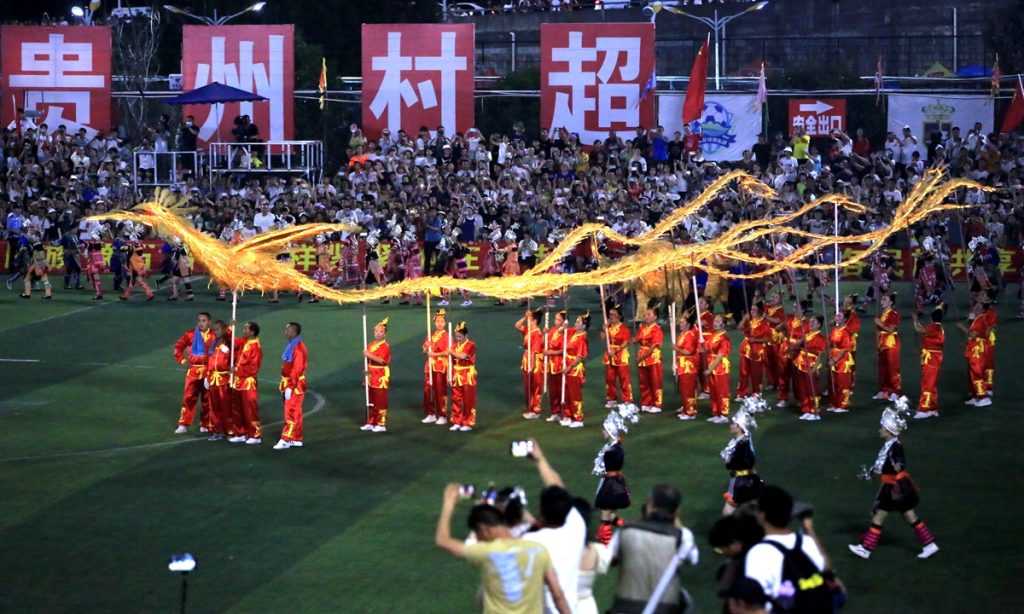
Back to the end of July, on a sultry night, the open-air sports stadium in Rongjiang county, Qiandongnan Miao and Dong Autonomous Prefecture of Guizhou was transformed into a spectacular carnival site. Crowds surged, drums roared, and locals dressed in splendid ethnic attire, singing and dancing. Tens of thousands of spectators arrived, eagerly anticipating the birth of the first Village Super League champion.
As the leader of the "Loyalty" team, Dong and his teammates - friends with whom he has played street soccer for years - emerged under the pitch floodlights. For two months prior, they had been striving toward this very goal.
An opening goal, an equalizer, a comeback, a buzzer-beater… no winner emerged from the 90-minute match. In the penalty shootout round, the "Loyalty" team narrowly lost.
After failing to lift the championship trophy with his teammates, Dong felt a sense of regret. "The ball is round," he consoled himself with the famous words of Sepp Herberger, the former West Germany national team coach who created the "Miracle of Bern."
Soon after, however, he was happily lifting the tournament's top scorer prize - several Rongjiang small fragrant chickens - and was overcome by the joy of soccer.
That match became the most memorable moment of 2023 for him.
Dong recalled that at the beginning of the Village Super League competition, only team cheerleaders would be present at the stadium, but as the competition's popularity grew through social media and celebrity visits, the fame of the Village Super League also increased. "One afternoon, as I drove past a bridge near the stadium, I found the whole place filled with spectators."
"I realized that our Village Super League had really shot to fame, which was unbelievable," he told the Global Times.
Dong started playing soccer during the 2002 Korea-Japan World Cup. Never having received professional soccer training, he has always been a street soccer kid. At the beginning of the Village Super League competition, he just wanted to participate as part of a fitness kick.
As the event gained more attention, he began to build team stamina by reviewing past game footage, and studying opponents' weaknesses. "As a soccer enthusiast, I can show my skills and keep fit; and for Rongjiang, we have really made a name for ourselves," he said.
After a year of "craziness," Dong feels his life has become more fulfilling. "Before, life might have been just about daily necessities, but through the Village Super League, I began to pursue my passion. My life has become more colorful," he said.
Dong still runs his rice starch roll diner. He is personally overseeing everything from the rice wrapping to the filling and the cooking of the establishment's offerings.
"Making rice starch rolls is a very tedious task, similar to challenges in soccer, but once you get through them, you will be pleasantly surprised," he said.
Dong's carefully made rice noodles have received high praise from customers and he was even crowned the "Rice Starch Roll King" of Rongjiang in 2022. Becoming a top scorer in the Village Super League made his shop even more popular, selling out every day by 10 am.
"I am the best soccer player among those who wrap rice starch rolls, and the best at wrapping rice starch rolls among soccer players," he laughed.
When asked about his dream in soccer, Dong said: "I want inspire young people to persist and not give up in the face of difficulties with my personal experience. If I have the chance, I want to compete with my idol Messi."
And his goal for the New Year is clear - to win the Village Super League championship alongside his teammates. A colorful fest
The Village Super League, or "Cun Chao," was created by the locals and primarily features village players in Rongjiang. Since its inception in May, it has rapidly gained popularity online, attracting numerous soccer tourists. It has brought joy to the villagers and spectators, and boosted the local economy, allowing the world to recognize the colorful culture of Rongjiang and Guizhou, and showcasing the happiness of Chinese rural life.
Match venues are regularly packed, with tens of thousands of spectators per game, sometimes exceeding 50,000 fans at peak times. The event has enjoyed sustained online popularity, with over a hundred related topics on Douyin alone, garnering over 5 billion views.
Notable figures, including Chinese soccer commentator Han Qiaosheng, Foreign Ministry spokesperson Hua Chunying, and British football legend Michael Owen, have all praised the event on their social media accounts, showing its immense influence and widespread appeal.
A Yahoo Finance article stated that the Village Super League is a passion that transcends sports. The simple times are history; villagers no longer worry about affording food or clothing. They have more confidence in their lives and strive for better things. The Village Super League showcases the vitality of rural life and people's hopes for the future.
Similarly, An Asia International News article mentioned that this rural soccer event has awakened a sleepy Chinese county amid a tourism boom. The surge in tourists has been a boon for Rongjiang's economy, with visitors flocking to rural areas, purchasing local delicacies, staying in villagers' homes for a fee, and engaging with local ethnic minorities to learn about their respective cultures.
The success of the Village Super League goes beyond the soccer field. During the event, the area around the field becomes a stage for cultural display, allowing spectators to enjoy not only exciting soccer matches but also local ethnic minority cultures. Vibrant ethnic costumes, melodious music, and enthusiastic dances all showcase the area's rich cultural heritage. Moreover, local specialties have found a great platform for display and sale during the event.
The Village Super League has helped locals create new income sources, bolstering the local economy and promoting rural tourism and cultural industries. During the 2023 Dragon Boat Festival in June alone, Rongjiang, a small county with a population of just 385,000, welcomed 358,900 visitors, a 345.84 percent increase compared to 2022, generating a total tourism revenue of 444 million yuan ($62.2 million).
The success of the Village Super League reflects the stability and development of the nation. In November 2020, Rongjiang county, as one of the last nine counties to be removed from the poverty list in Guizhou, marked a significant milestone. The unprecedented poverty alleviation campaign has helped Guizhou shed its old label and leap forward by centuries. According to the Xinhua News Agency, since the 18th CPC National Congress in 2012, Guizhou has lifted 9.23 million people out of poverty at a rate of over 1 million people annually, the highest number in China.
The report to the 20th CPC National Congress also highlights the comprehensive promotion of rural revitalization, calling for coordinated rural infrastructure and public service layout to build livable and business-friendly beautiful villages. In recent years, culture, sports, and technology have continuously empowered rural revitalization, increasing people's happiness and creating a more vibrant rural atmosphere in China.
Dong feels deeply about the changes in his hometown. "When I was in college, it took over 8 hours to travel from Rongjiang to Guiyang, the capital of Guizhou. Now, with highways and high-speed rail, it only takes a little over an hour."
"It is only because the country is prosperous and the hometown has shaken off poverty that we have enough time to participate in such competitions and have such enthusiasm and unity. The success of the Village Super League is the result of everyone's joint efforts," he said.
According to Dong, the new season of the Village Super League will kick off in January 2024 and last until about May, "to avoid clashing with major sports events like the European Championship held in the summer." Rongjiang will also host an invitation tournament in the second half of the year. He heard that teams from countries participating in the Belt and Road Initiative (BRI) will also come to compete.
The Premier League of England has already taken action. In late November, a delegation from the Premier League, led by senior international advisor Graham Robinson, conducted a cooperation survey in Rongjiang county. They subsequently signed a strategic cooperation memorandum with the Village Super League management center to aid the sustainable and healthy development of Chinese soccer. In mid-December, the first training session organized by the Premier League commenced in Rongjiang, where 44 soccer players, referees, and coaches from the Village Super League learned about training techniques and coaching philosophies. Showing vitality to world
The Village Super League is just one of many examples that showcase the vitality of rural China.
This spring, a young model from the rural area of South China's Guangxi Zhuang Autonomous Region took Paris Fashion Week by storm.
Lu Xianren, born in 1999 in Hengxian county, Guangxi, stood out with his meticulously tailored black suit, pristine white trousers, and unique hairstyle.
Unlike traditional models, Lu's journey began on a country road in Guangxi. In 2019, he left his job in Guangdong and returned to Guangxi with dreams of making short videos. His fashion creations, made entirely by hand using materials from woven bags to old lampshades, leaves, and branches, revealed his unique fashion sense.
In the vast fields, Lu Xianren showcased the "mod" of China's countryside to the world. In a recent interview, he said that as a new face on the international runway circuit, he represents a new force, a driving power, and new opportunities.
The growing popularity of short video content creators has thrust the likes of Lu Xianren to the fore, introducing a vibrant and colorful rural world that is not only rich but also culturally diverse to the international stage. In recent years, with the acceleration of rural revitalization, a new generation of young people's innovative ideas has flocked to the countryside, injecting fresh energy and vitality into rural development. Their new ideas and technologies have further boosted the momentum of rural revitalization.
The Global Times learned from the China Agricultural University that the school established its first "science and technology backyard" in Quzhou county, North China's Hebei Province, in 2009, and the project has expanded nationwide, seeing the establishment of 139 courtyards across 91 counties in 24 provinces. These have not only solved practical agricultural problems but also cultivated a group of idealistic and capable agricultural science and technology talents.
In Xihuai village, Tongzhou district, in the suburbs of Beijing, a new variety of ice cream-flavored radish was introduced through the "science and technology backyard," enhancing the market competitiveness of local agricultural products. Students also teach farmers how to use online platforms to sell products, opening up new channels of income.
In Gusheng village, Dali of Southwest China's Yunnan Province, the focus was on the environmental protection of Erhai Lake and green agriculture. Students worked daily with villagers to test water quality and explore sustainable development models.
Hao Jiaxuan, a graduate student from the China Agricultural University stationed in Gusheng village, shared with the Global Times that initially, it was not easy to join the villagers' tables. However, through continuous communication, they became friends.
Hao and his team have provided the locals with healthier and more environmentally friendly dietary suggestions related to Erhai Lake. The "science and technology backyard" there also organized various training programs according to the actual needs of the villagers, including water saving, hydration and nutrition knowledge popularization, and waste management.
The influence of the "science and technology backyard" has crossed national borders and extended to international cooperation projects. A student from Burkina Faso who studied at the Sino-African Science and Technology Courtyard in Quzhou county, Hebei Province, for example, learned the entire process of growing grains, from seed selection to plowing and fertilizing. After returning home, he applied these techniques, doubling millet yields.
In recent years, more and more young people have been pouring into underdeveloped areas of China, venturing into rural communities, becoming a new force in the process of rural revitalization. Their arrival not only injects vitality into rural areas previously plagued by the issue of workforce flight, but also helps young people to "remember their hometowns." Those who choose to work and develop in rural areas grow in their roles, finding a sense of belonging and achievement.
Indeed, every innovative step on this vibrant land is a testament to the rhythm of the Chinese path to Modernization. This is not just a story of rural revitalization but also about a nation keeping pace with the times, drawing its grand blueprint in the process of national inheritance. This land reflects the soul of modern China - a magnificent panorama of a nation forging ahead in pursuit of its dreams through down-to-earth work.
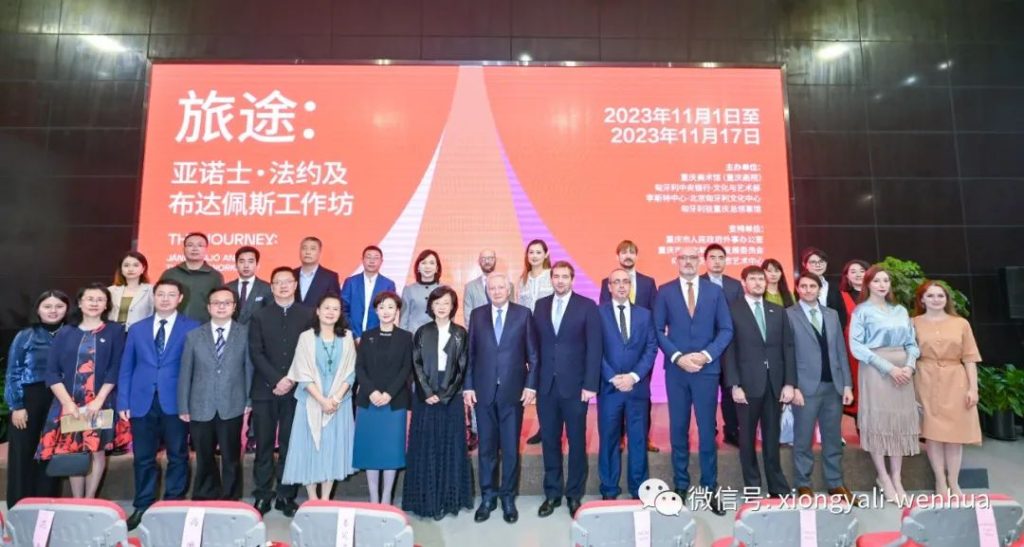
A total of 50 Hungarian art works were featured on Tuesday at the Chongqing Art Museum. The 2023 Western China Hungarian Cultural Festival and the 2nd Chongqing Urban Arts Festival with the theme "The Journey: Janos Fajo and The Pesti Workshop," were co-organized by the Chongqing Art Museum, the Liszt Institute Hungarian Cultural Center Beijing, the Consulate General of Hungary in Chongqing, and Central Bank of Hungary. Czégel Bálint, consul general of Hungary in Chongqing, Kohári Lajos, head of Department at the National Assembly of Hungary, Wang Rongfa, director of Chongqing Art Museum, and other guests attended the ceremony.
This exhibition is to implement the Belt and Road Initiative (BRI) development strategy, strengthen the mutual understanding of civilizations and people-to-people communication with Belt and Road countries, and enrich the series of exhibitions of the 2nd Chongqing Urban Arts Festival to meet the high-quality spiritual and cultural needs of the public.
More than 50 pieces were put on display at the exhibition ranging from oil painting to printmaking and other media. The works are rich in context, experimental, and of high artistic value, reflecting the contemporary style and unique artistic characteristics of Hungarian contemporary painting.
The exhibition runs until November 17, according to official Wechat account of Liszt Institute Hungarian Cultural Center Beijing.